Both called "going to Tibet," some people go for forest valleys, some for sacred temples, some for the roof of the world. These regions differ completely in scenery, culture, and altitude.
Region 01
Nyingchi
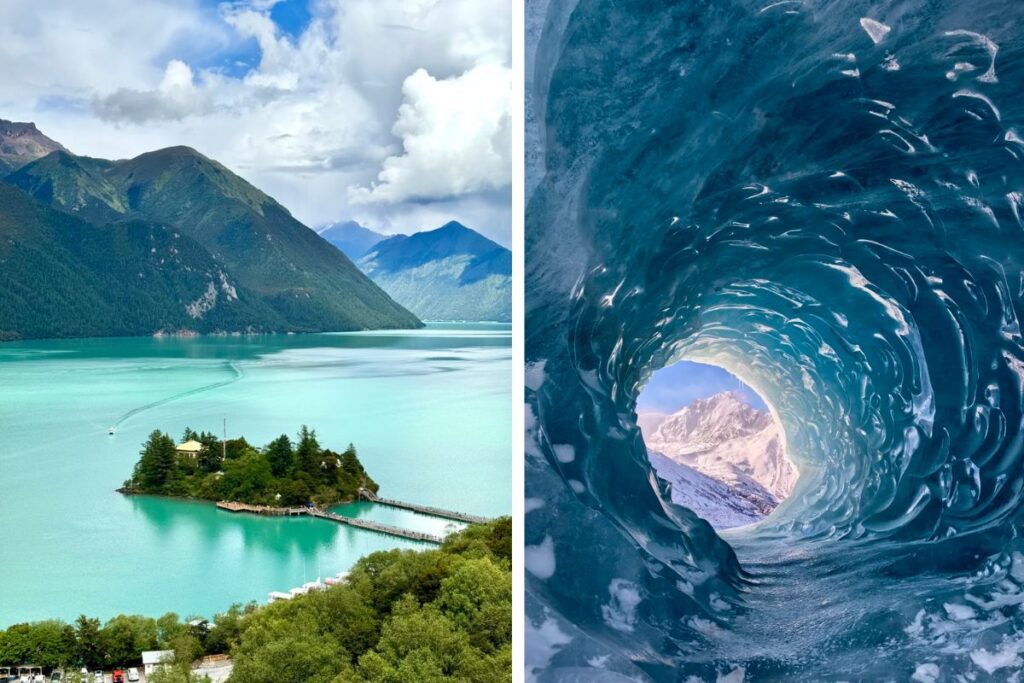
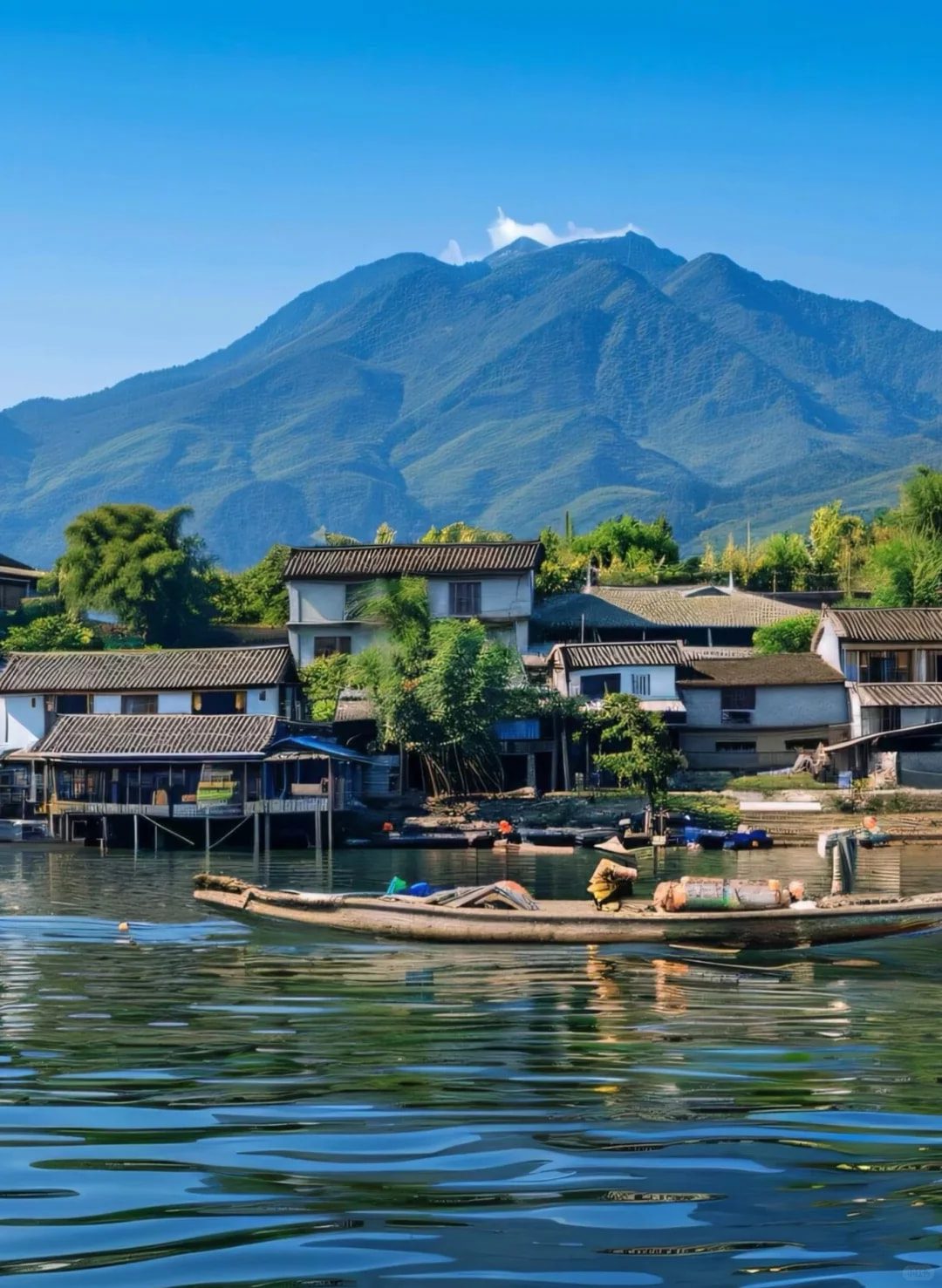
Altitude: ~2,900mMany people never imagined Tibet could have a place like this. Linzhi has the Yarlung Tsangpo Grand Canyon, the southern Tibetan forest, peach blossoms covering the mountains in spring, and is known as the "Jiangnan of Tibet." Basum Tso is the most sacred lake of the Bon religion in Tibet, with crystal clear waters and a thousand-year-old ancient temple quietly sitting on Zhaxi Island, a place where one can get lost. Seku Ancient Fort has weathered 1,600 years of wind and rain, carrying the historical memories of the Ancient Tea Horse Road. At an altitude of 2,900m, Linzhi is the most suitable starting point for first-time visitors to Tibet, allowing your body to acclimatize here before heading to higher places.
Region 02
Bomi · National Highway 318
Altitude: ~2,700mBomi is the most spectacular section of National Highway 318 — setting off from Chengdu and heading west along the Sichuan-Tibet Highway, Bomi sits at the final high plateau section known as "China's Most Beautiful Road." This is the area with the highest concentration of glaciers in Tibet.古冰川 is the largest glacier group in Tibet, with year-round silver-white grandeur. In winter, the rare Yalong Glacier Blue Ice Cave appears — sunlight refracts through hundreds of meters of ice, casting out sapphire-blue pools — a highland wonder that is disappearing, worth seeing now.
Region 03
Lhasa
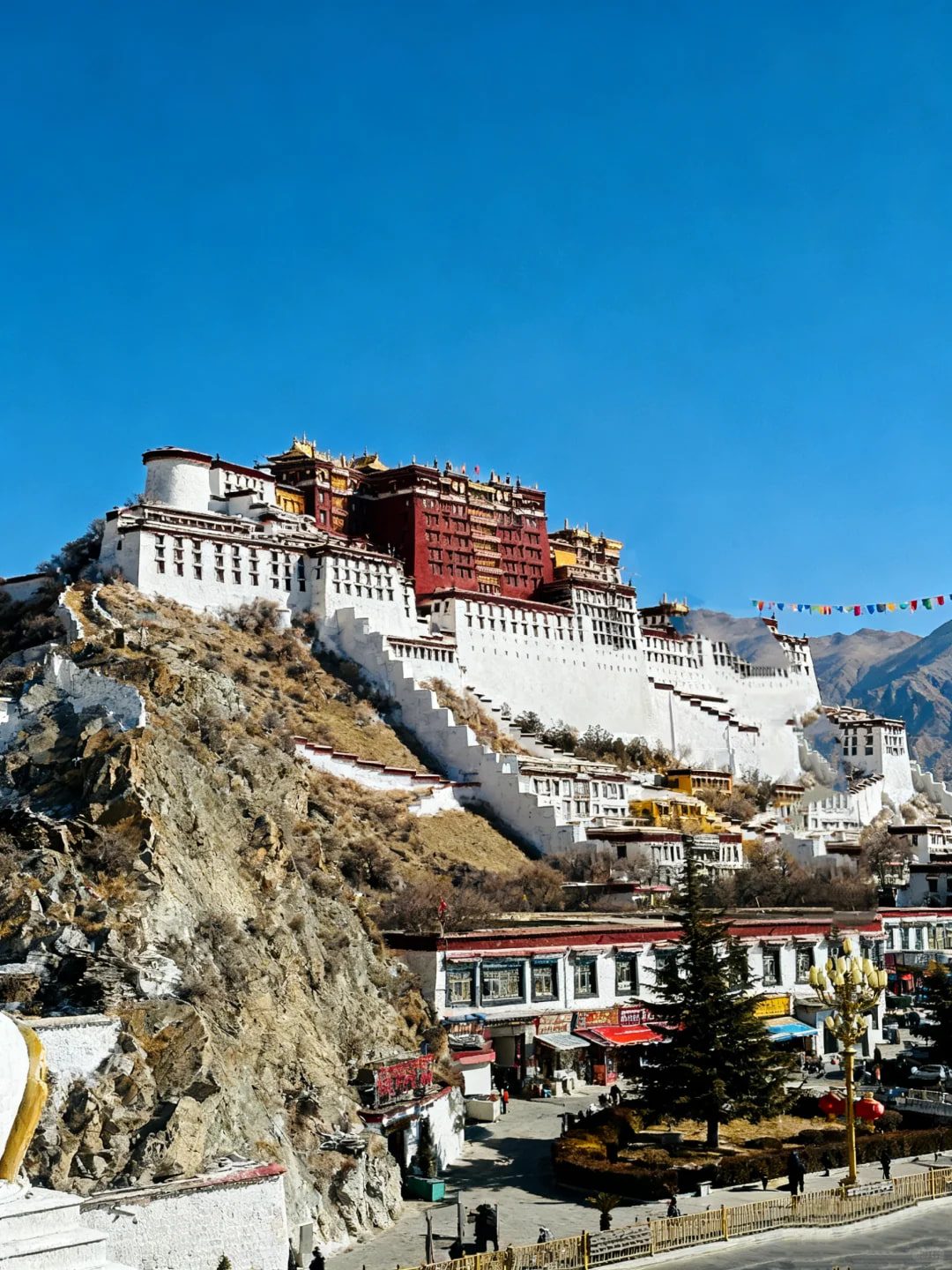
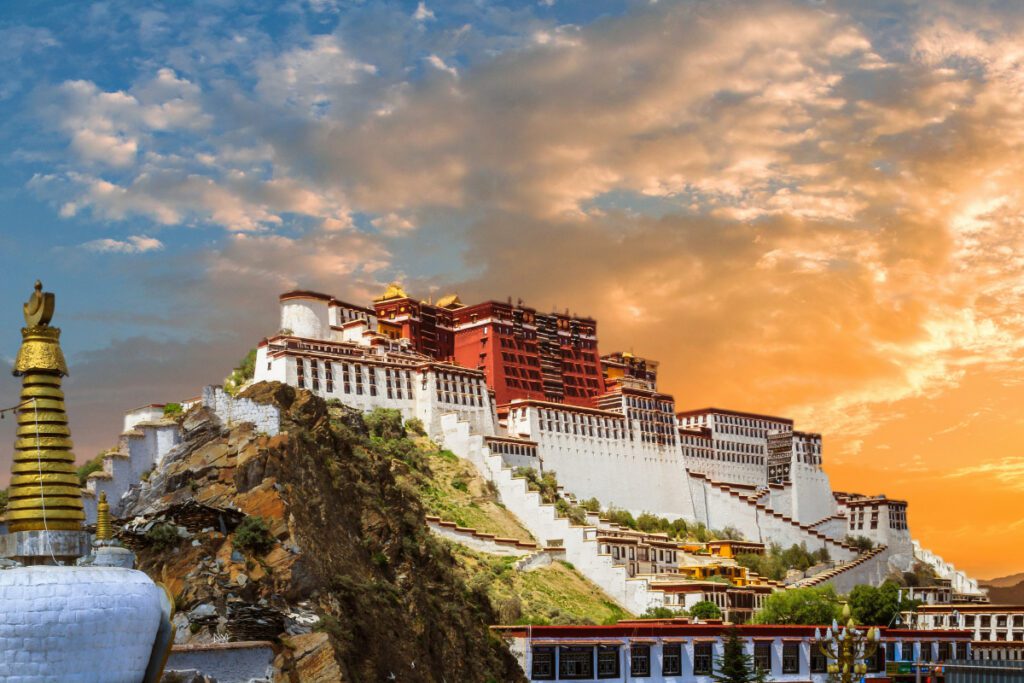
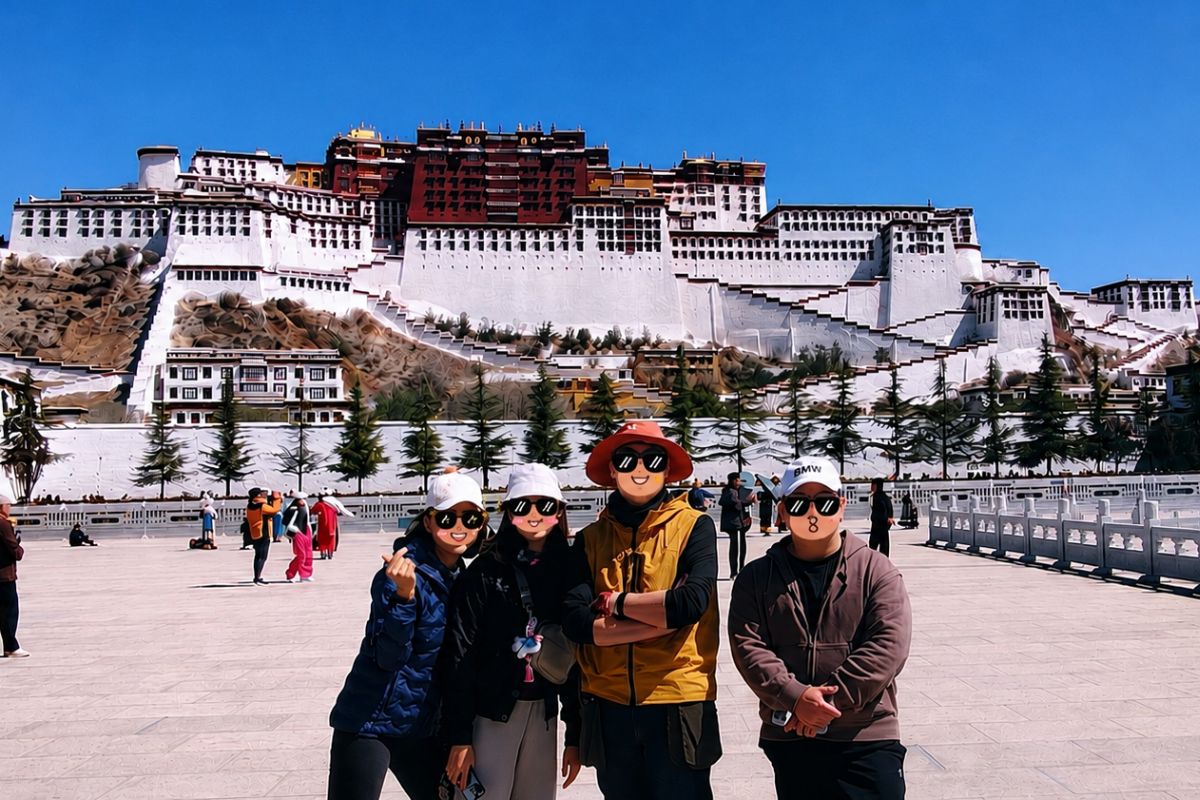
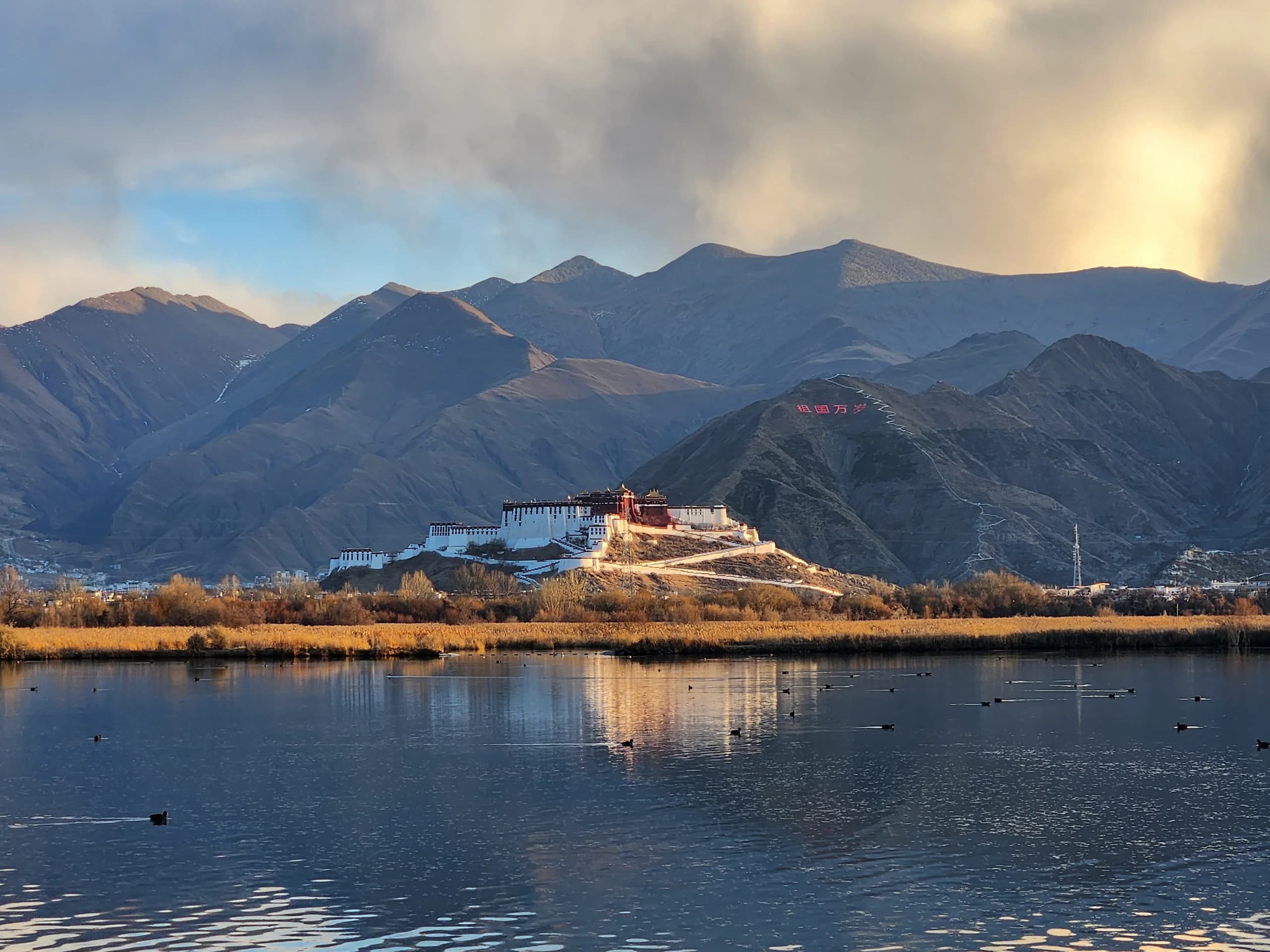
Altitude: ~3,600mThere is a saying: first comes the Jokhang Temple, then comes Lhasa City. The Jokhang Temple was built in the 7th century AD and is the origin of the entire city, the core of Tibetan Buddhist faith, enshrining statues of Jowo Rinpoche and others brought to Tibet by Princess Wencheng. The atmosphere of the Potala Palace, the spinning prayer wheels of Barkhor Street, the chanting of Sera Monastery echoing for centuries — no matter the length of your journey, Lhasa is always the unbreakable core of every Tibet route.
Region 04
Shannan
Altitude: 4,000–4,500mOn the road from Lhasa to Shigatse, many say this stretch is the most visually stunning moment in all of Tibet. Crossing Mila Mountain Pass, you overlook the deep blue of Yamdrok Lake and the gleaming white of Karola Glacier in sunlight, with the majestic sight of Pelkor Chode Monastery's Kumbum Pagoda — a scene locals say is beyond words. Shannan is also the region with the deepest history in Tibet. Yumbulagang is the first palace in Tibet, Samye Monastery is the first formal monastery in Tibet, and for those who want to go deep into Tibetan culture, this place cannot be skipped.
Region 05
Shigatse
Altitude: ~3,836mThe jewel-adorned Tashilhunpo Monastery with its historic Panchen Lama stupas is one of the most well-preserved monasteries in Tibet. Sakya Monastery houses over 80,000 scrolls of scripture, stacked to the ceiling, earning it the title "Library of Tibet." Shigatse is also a must-pass destination on the way to Everest — only with the right permits can you continue walking toward the roof of the world.
Region 06
Everest Region Base Camp
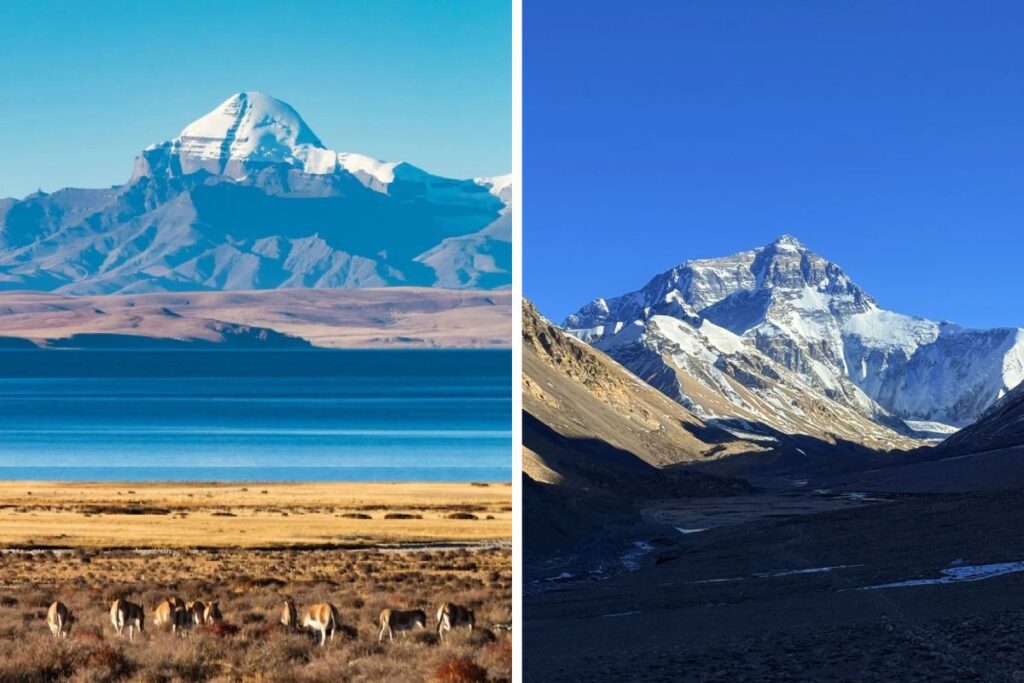
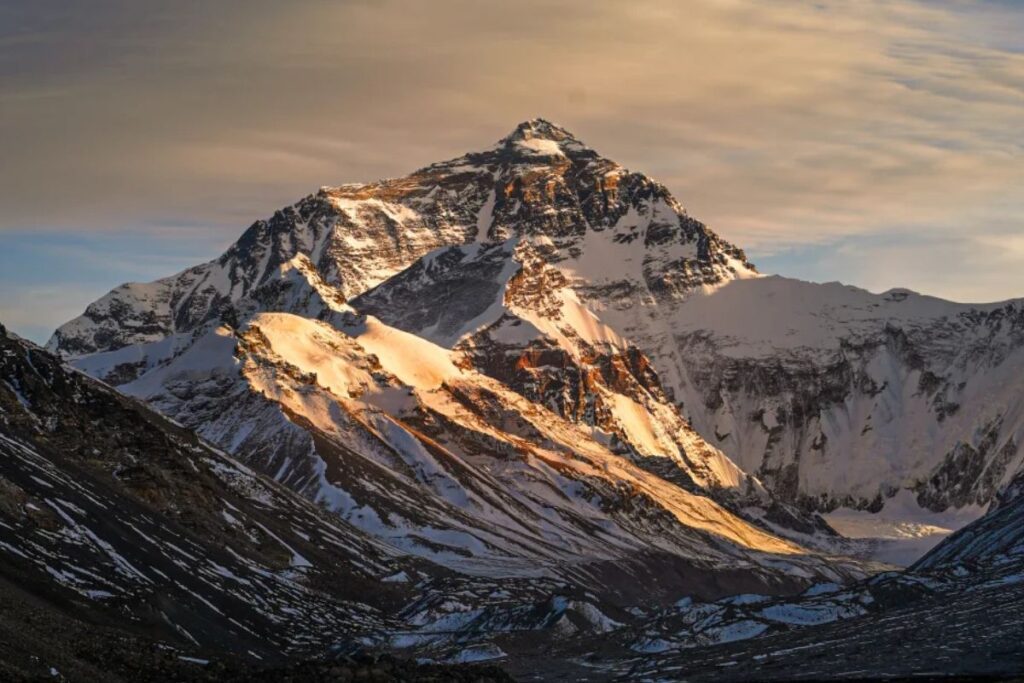
Altitude: ~5,200mThis is not a scenic spot — it is a place that lets you re-measure yourself. At Gawula Pass you can see five 8,000m peaks including Makalu and Lhotse all at once. Rongbuk Monastery is the highest monastery in the world. At sunset, golden light washes over the mountain top, and at night the Milky Way with no light pollution hangs above the tent — many say this is the most unforgettable night of their lives.
Region 07
Ali Region
Altitude: 4,500m and aboveAli is the Tibet within Tibet. Mount Kailash is the shared sacred mountain of four major religions — Tibetan Buddhism, Hinduism, Bon, and Jainism. Pilgrims from Hong Kong, Taiwan, Malaysia, Singapore and around the world come to circumambulate its 52km circuit. Manasarovar is known as the "King of Holy Lakes," its clear waters reflecting the divine silhouette of the mountain. The colorful desert, ancient Guge Kingdom ruins, Tholing Monastery — all of this is for those who have already been to Tibet and want to go one layer deeper.
Region 08
Nagqu Altitude
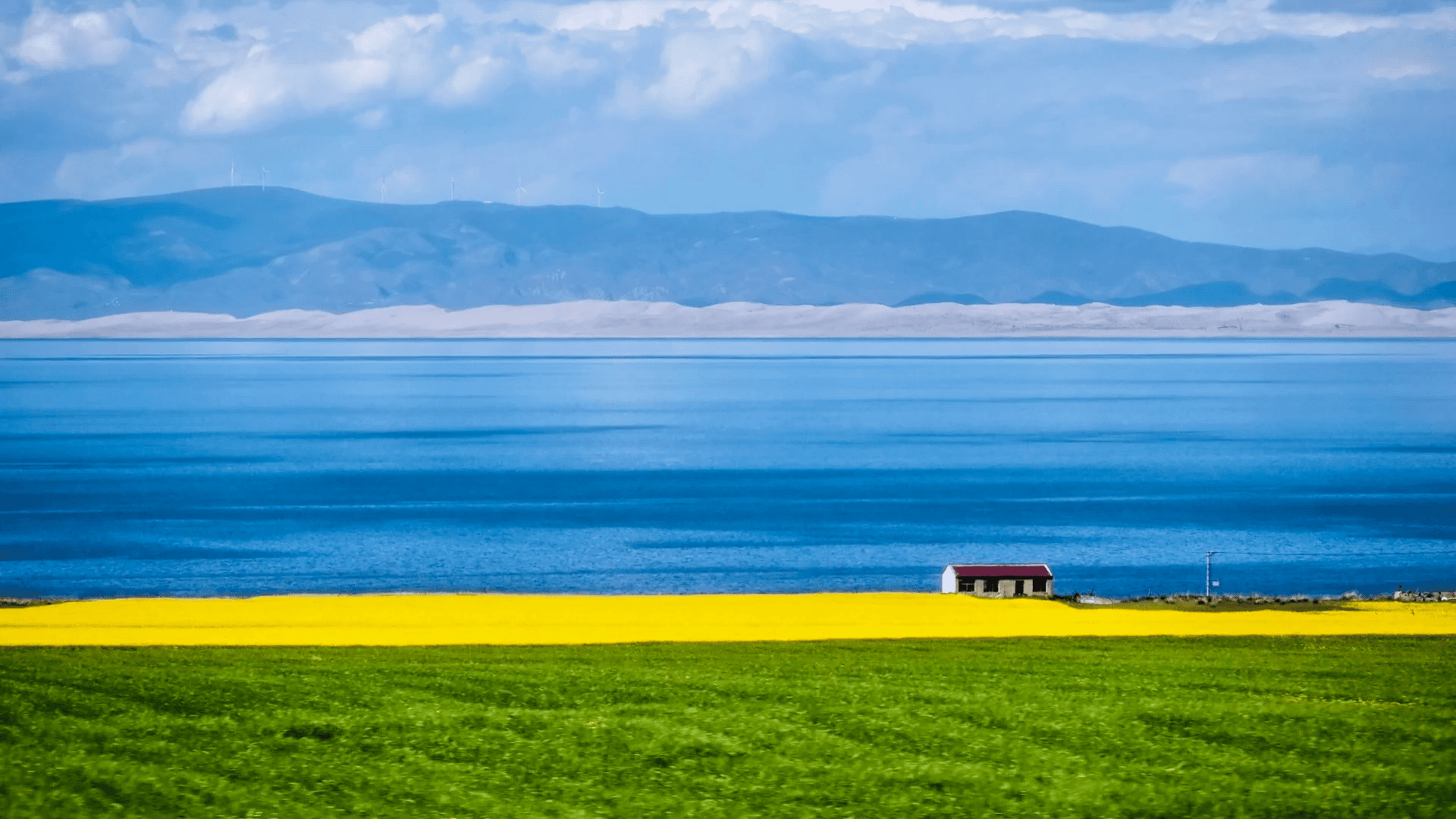
Altitude: ~4,500mNagqu is the vast high plateau grassland in northern Tibet, where the northern grasslands stretch endlessly to the horizon. Lake Siling Co is the largest lake in Tibet and an important resting ground for black-necked cranes. Every August, the Nagqu Horse Racing Festival is the largest traditional festival in Tibet — horse racing, tent villages, singing and dancing, and prayers — this is the most authentic expression of nomadic culture. It is not on typical tourist routes, and precisely because of that, its rawness and remoteness make it all the more unforgettable.
Region 09
Chamdo
Altitude: ~3,240mChamdo is located in eastern Tibet and is the first stop on the Sichuan-Tibet Highway (National Highway 318) entering Tibet, as well as an important center of Kham Tibetan culture. The Karuo Site is a major discovery of prehistoric civilization in Tibet, bearing witness to over 4,000 years of human history on this land. Leiqiong Monastery is an important monastery of the Kagyu school of Tibetan Buddhism. Chamdo has complex terrain with deep valleys — the Lancang River, Nu River, and Jinsha River all converge here, making it one of China's famous World Heritage landscapes.
Five Tibet tour routes, matching five travel rhythms. It's not about which one is better, only which one suits your current state.
How many days for Tibet? Five routes, matching five timeframes and travel rhythms.
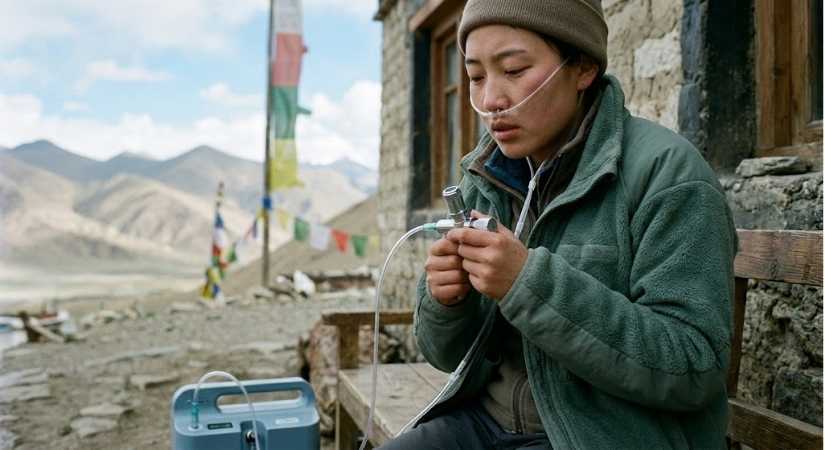
Altitude sickness varies from person to person and has little to do with age or fitness level. However, there are a few things you can do before traveling to Tibet that will significantly reduce the chance of severe altitude sickness.
Two Weeks Before Departure
Avoid late nights, alcohol, and intense exercise. Consider aerobic exercise to improve lung capacity.
Choose Nyingchi as Entry Poin
At 2,900m, it is the most gentle starting point — giving your body more time to acclimatize compared to flying directly into Lhasa (3,600m
First Two Days After Arrival
Drink plenty of water, walk slowly, avoid showering (first 24 hours), avoid intense activity — let your body quietly adjust.
Medication Consultation
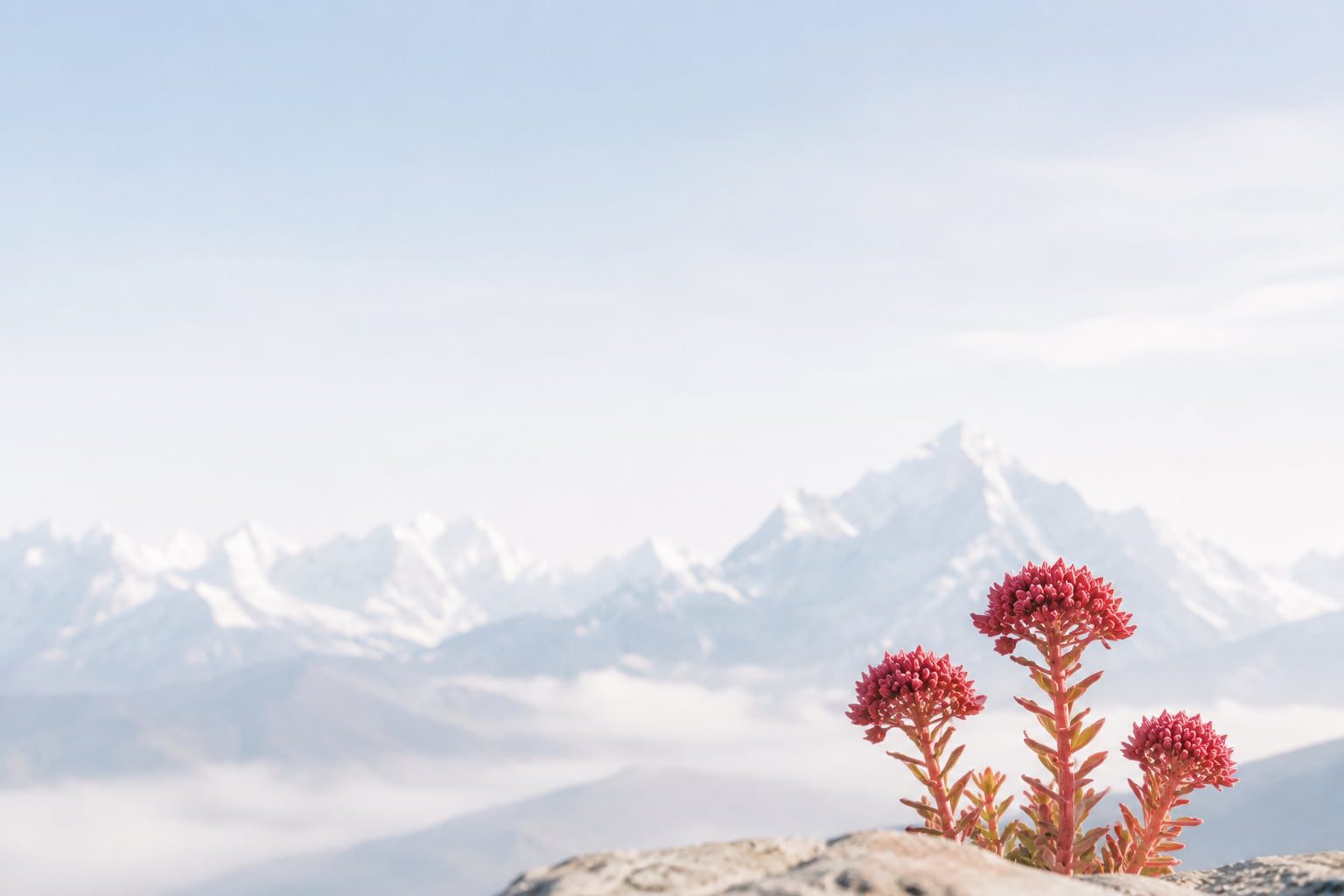
Consult a doctor in advance about using Rhodiola or Diamox. Keep medical oxygen canisters and glucose on hand.
China2Go · CITS China International Travel Service
Not Sure Which One to Choose?
Tell us your available dates — we'll figure it out for you.
All five routes include a dedicated guide and oxygen-supplied accommodation throughout
Minimum 4 people to confirm, maximum 10 people limited small group, full purchase protection with contractual guarantee
Join a group — max 10 limited small group Private group customisation available The local Tibet team that knows you best
WeChat: china2go-cits