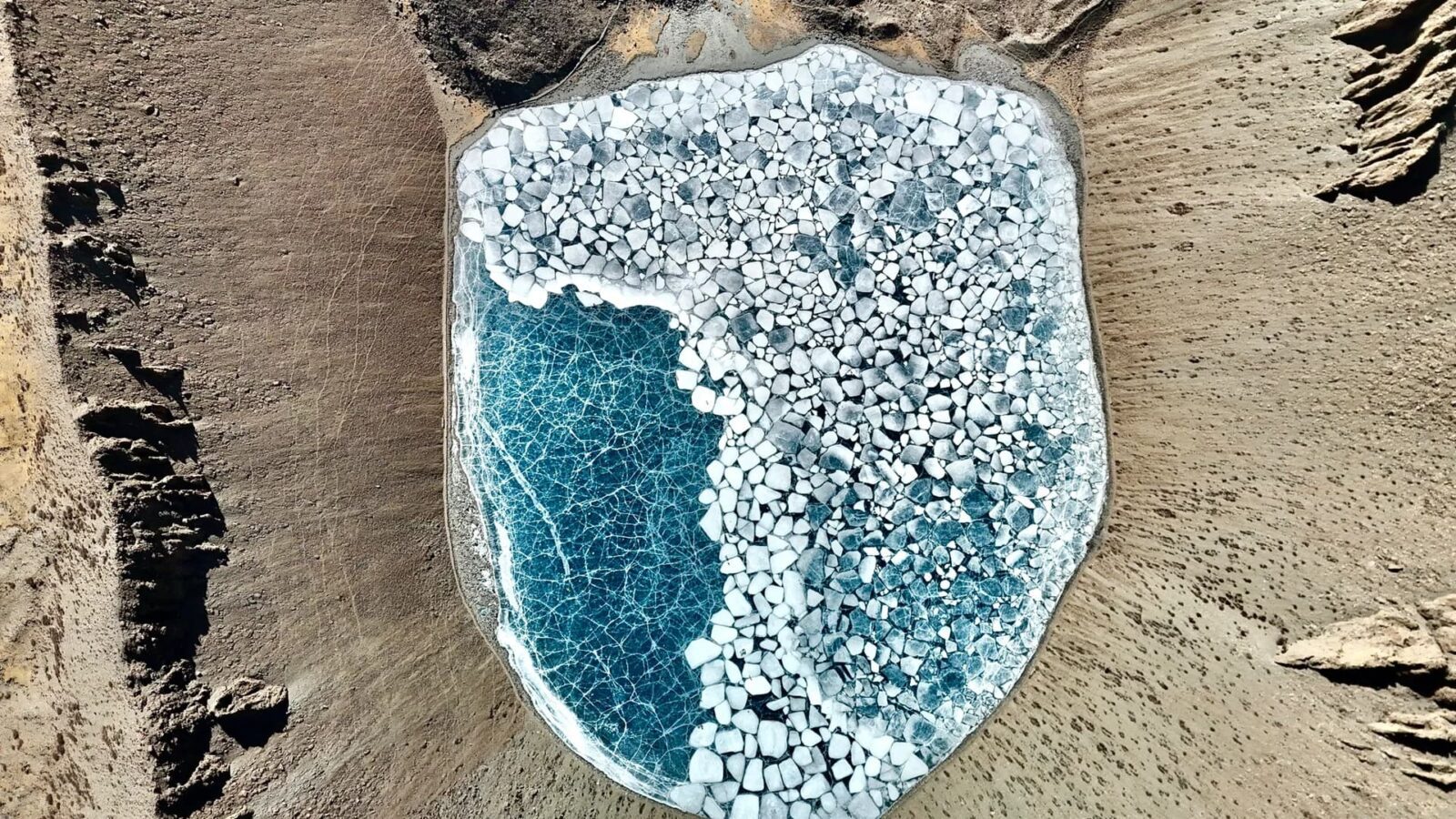
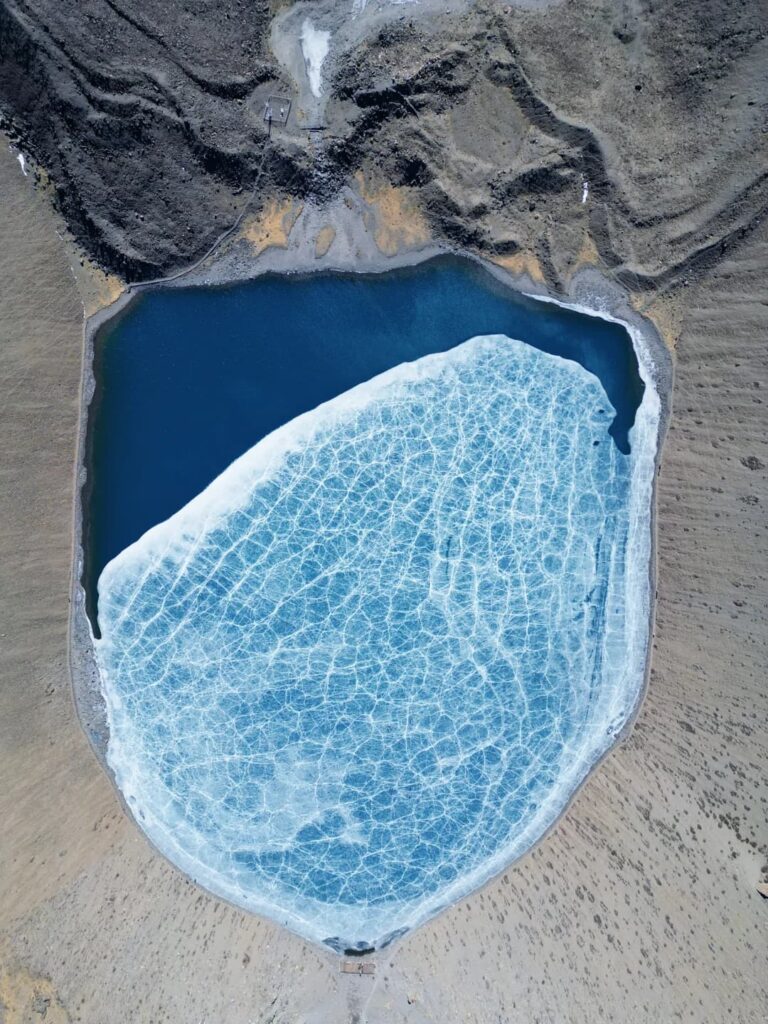
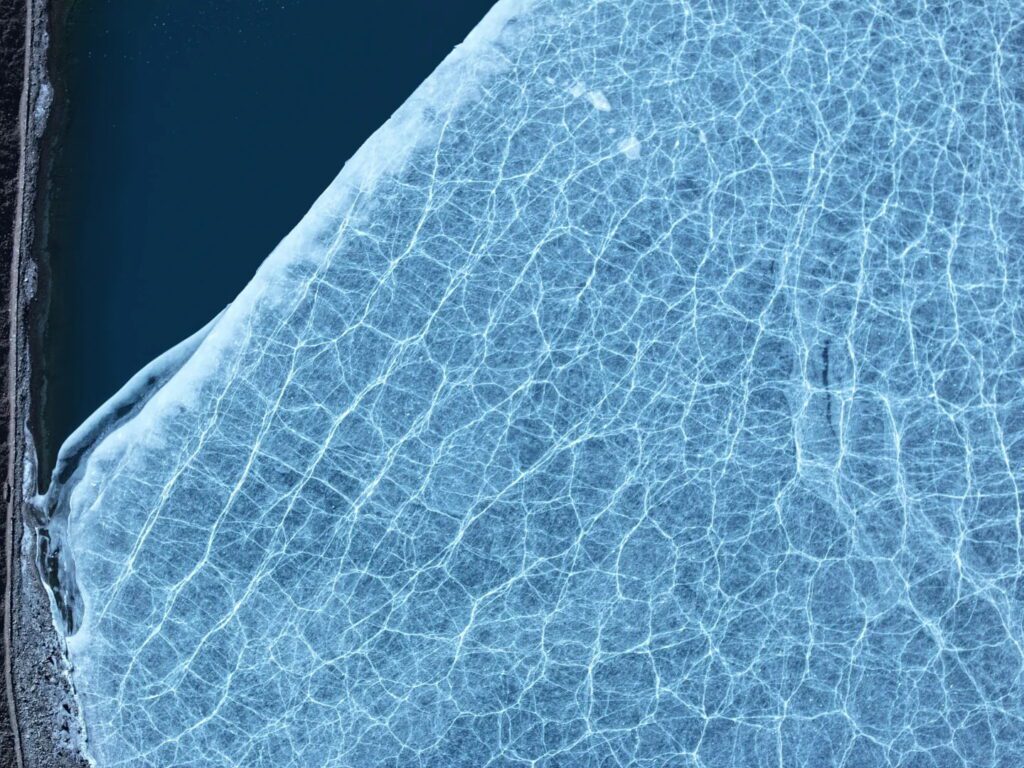
Qia Yangcuo, located in Langka County, Shannan Prefecture, Tibet, is a hidden winter gem that has only recently been discovered by travelers. Every year from December to February, the lake freezes into a single, transparent sheet of ice. In the sunlight, the ice glows a translucent blue, and with its naturally formed cracks, it looks from the air like a giant, cracked shield!
Unlike Yamdrok Lake or the Potala Palace, which are teeming with tourists, this place—precisely because it’s off the beaten path and unspoiled—has become a new favorite among those seeking in-depth travel experiences in Tibet over the past couple of years, spreading by word of mouth.
Of course; only travel agencies that are sufficiently professional and familiar with the local area are best suited to arrange itineraries here.
I. Overview of viewpoints
Qia Yangcuo is located in Langka County, Shannan Prefecture, Tibet Autonomous Region,In Tibetan, it means “The Lake That Brings Wealth and Treasure,”The lake remains crystal-clear and azure all year round; it is a hidden gem of the plateau that has only gradually been discovered by adventure travelers in recent years. What truly draws attention to Qia Yangcuo is the transparent, multi-layered, deep blue hue that appears each winter after the lake freezes over—it is not the “blue ice” formed by millennia of compressed glacial layers, but rather the transparent ice that forms on this high-altitude lake when it freezes in winter.
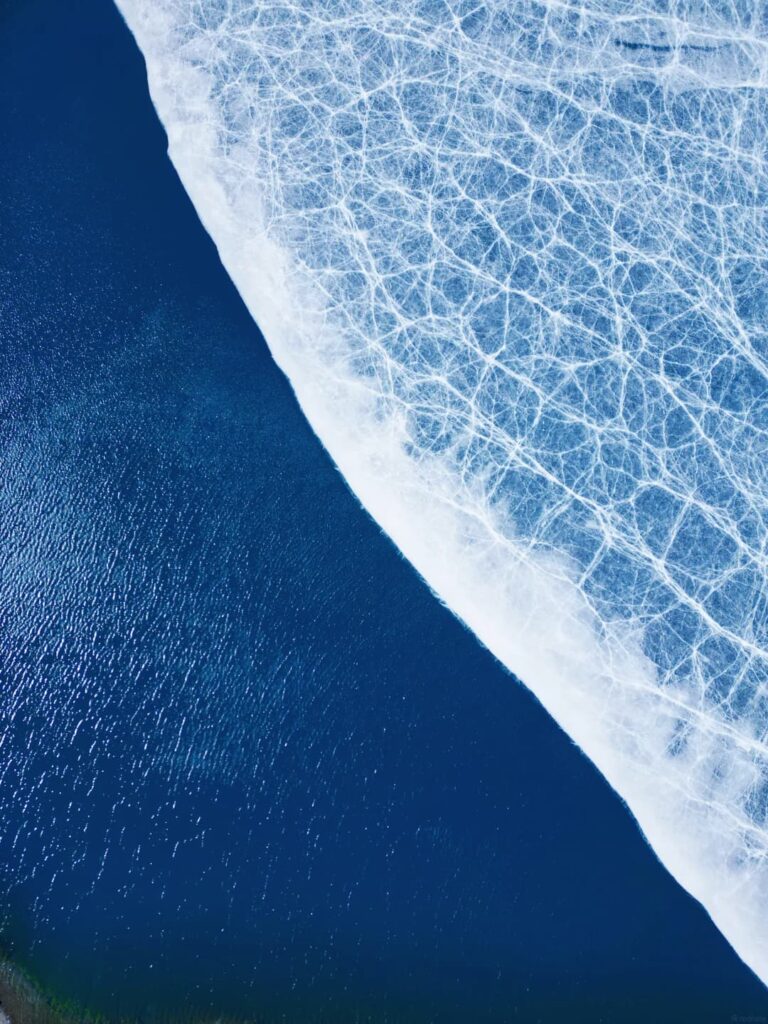
The phenomenon is similar to that of Lake Baikal in Russia, which is more familiar to many: the lake water is pure and becomes almost transparent when frozen; as the ice expands and contracts with temperature changes, it naturally cracks into patterns of varying depths, and when sunlight penetrates it, the water shimmers with a gem-like blue hue. Viewed from an aerial perspective, the ice surface of Qia Yang Co resembles a giant, cracked shield, as if belonging to a colossal spirit that guards this sacred land… In early 2025, a series of aerial photos of Chayangco Lake taken on location by a Xinhua News Agency reporter went viral online. This lake, once known only to locals, has gradually become the new favorite destination for in-depth, locally-run winter tour operators in Tibet.
Of course, compared to well-known attractions like Yamdrok Lake and the Lagu Glacier, Qiayang Lake is much less well-known, Many third-party tour operators don’t have staff who have personally walked this route, which is why it retains a sense of unspoiled wilderness—there are no noisy commercial facilities along the lakeshore. Standing by the water’s edge, all you can hear is the sound of the wind and the occasional faint creaking of the ice beneath your feet.
There is a local legend among the Tibetan people that if you make a wish by the shores of Lake Qia Yang Cuo, you will be able to see the one you long for. This is a belief passed down through local word of mouth, and it lends Chayangco—beyond its stunning scenery as a frozen lake—an additional aura as a sacred Tibetan lake for prayer. This is precisely the kind of diverse and mysterious attraction found only in Tibet.
II. Geographic Location and Characteristics of the Lake
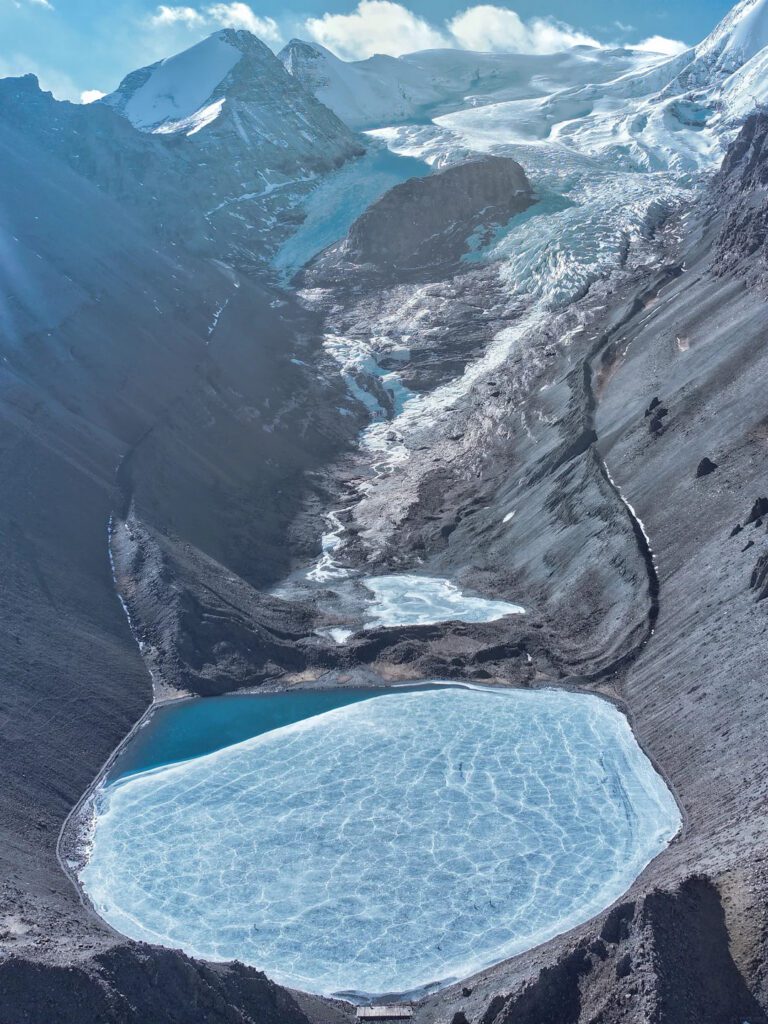
Langka County, where Qia Yangcuo is located, is a plateau region in the southwestern part of Shannan Prefecture with an average elevation exceeding 4,500 meters; it is also home to famous sacred lakes such as Yamdrok Lake and Pumo Yumco. Qia Yangcuo is situated right along this “Sacred Lakes Cluster” route, sharing the same region as Yamdrok Lake, Pumo Yumco, the Ningjin Kangsang Scenic Area, and the Quzeng Hot Springs. It stands as one of the must-see natural attractions in Shannan Prefecture—a region widely regarded as “culture-centric.”
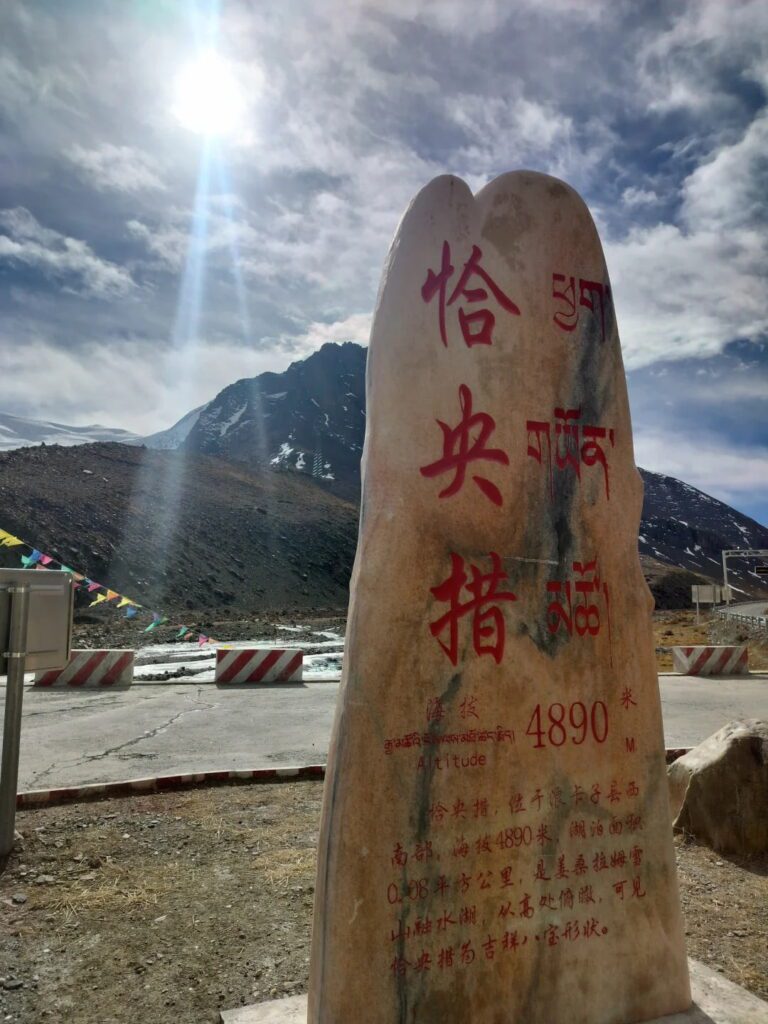
Lake Qia Yangcuo lies at an elevation of approximately 5,100 meters and covers an area of just over 70,000 square meters; officials describe it as being shaped like an earring. Unlike other alpine lakes,Qia Yangcuo is actually a glacial lake,The lake’s water is not simply rain or snowmelt, but meltwater from the Jangsang Lam Glacier above—the glacier’s tongue is split into two streams by the mountain rocks, with ice towers densely arranged like fish scales. These form the heart of Chayang Co’s landscape and establish a direct geographical link between the lake and the “glacier.”
The lake itself is surrounded on three sides by snow-capped mountains. Viewed from above, the shoreline of Qiaoyangco resembles a shield—wider at the top and narrower at the bottom, with a slight indentation at the top—which is why it is often described as a “giant shield.” Furthermore,Interestingly, the ice on the same lake often exhibits two completely different textures.: On one side was a smooth, translucent deep-blue ice surface, covered with fine, spiderweb-like cracks, as if struck by countless bolts of lightning at once; on the other side were misty-white, shattered ice floes, with irregular ice crystals crammed together and piled high,Like shattered glass scattered across the floor, the deep blue lake water shone through the cracks.. The point where these two textures meet is often the most dramatic spot on the entire lake.
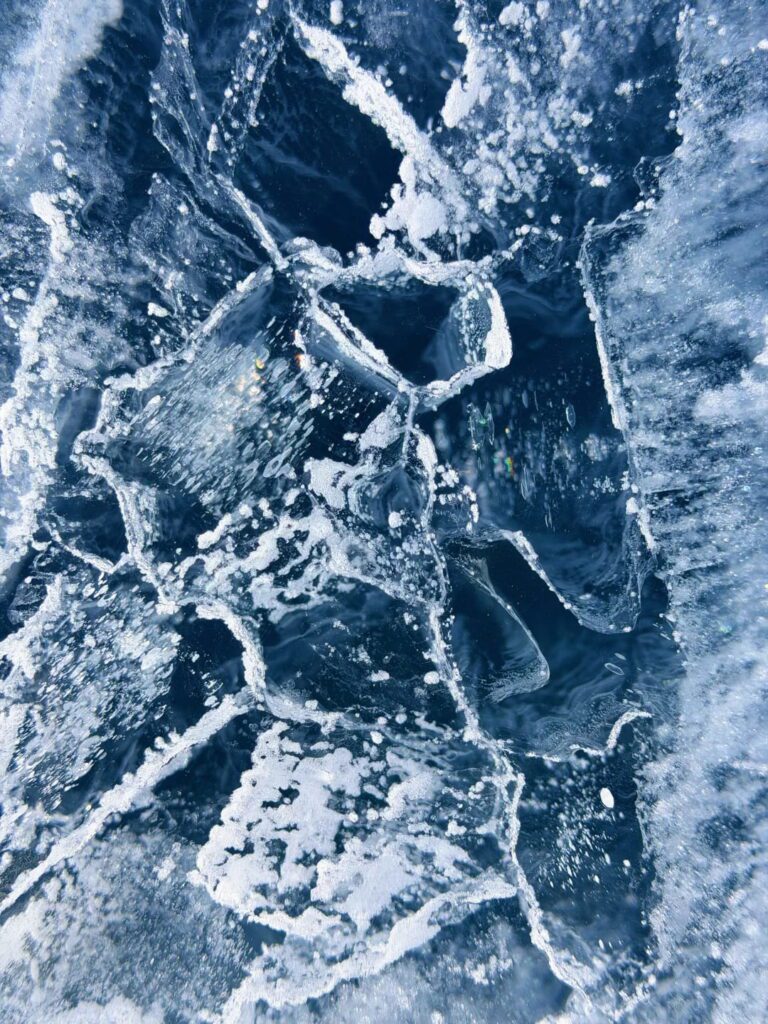
This type of lake ice is the same physical phenomenon as the transparent blue ice found on Lake Baikal in winter—both result from lake water freezing slowly at extremely low temperatures; it is only because the water is pure enough and contains few air bubbles that such a translucent layer of ice can form. This is entirely different from the blue ice formed by glaciers through years of accumulation and compression. Since the thickness and patterns of the ice on the lake’s surface vary with temperature, Qia Yangcuo appears slightly different every year—and even every week. This “one-of-a-kind” unpredictability is, in fact, what most attracts travelers seeking in-depth and slow travel experiences in Tibet.
III. Best Time to Visit and On-Site Atmosphere
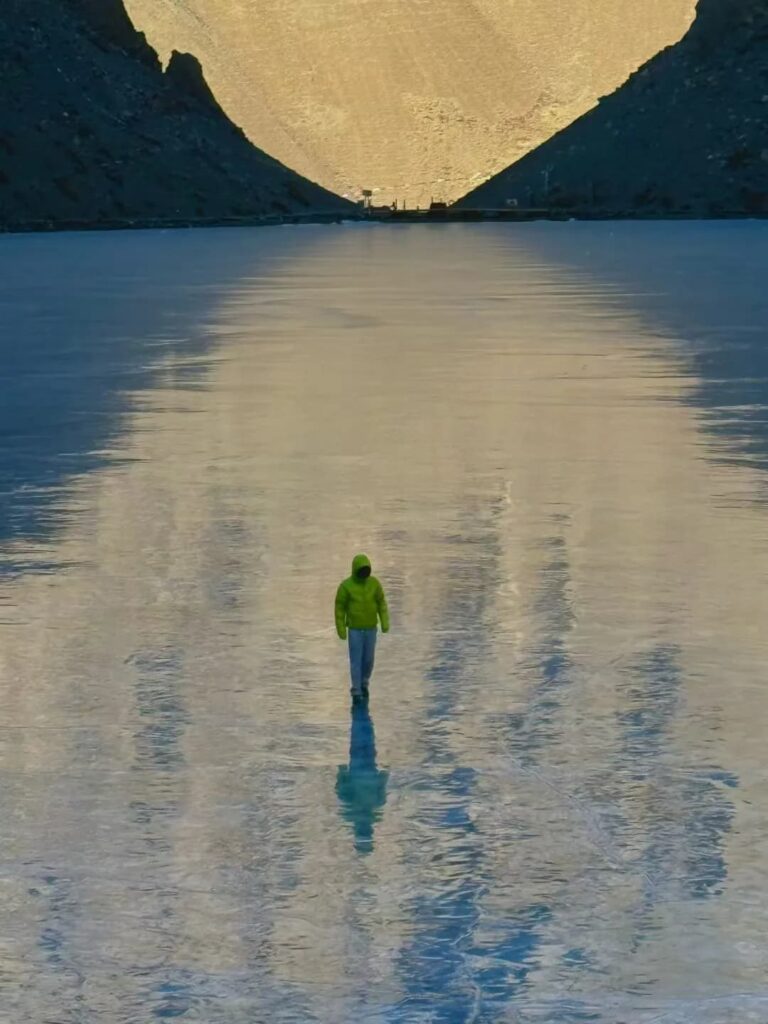
The frozen lake landscape is a typical seasonal sight that generally appears in winter (roughly December through February) when temperatures are low enough for the lake to freeze over, This window is very similar to Lake Baikal’s freezing season (mid-January to early March); in both cases, one must wait until the ice is thick and sturdy enough to stand on safely.It’s important to note that as soon as snow covers the lake’s surface, the previously distinct ice cracks are obscured, and the visual effect of this “giant shield” disappears. You’ll have to wait until the next snowfall melts and the lake’s surface is exposed again to see it once more.. Therefore, if you want to get out on the ice or capture the best shots, we recommend taking advantage of this opportunity and planning your trip as early as possible—don’t wait until the end of the snow season.
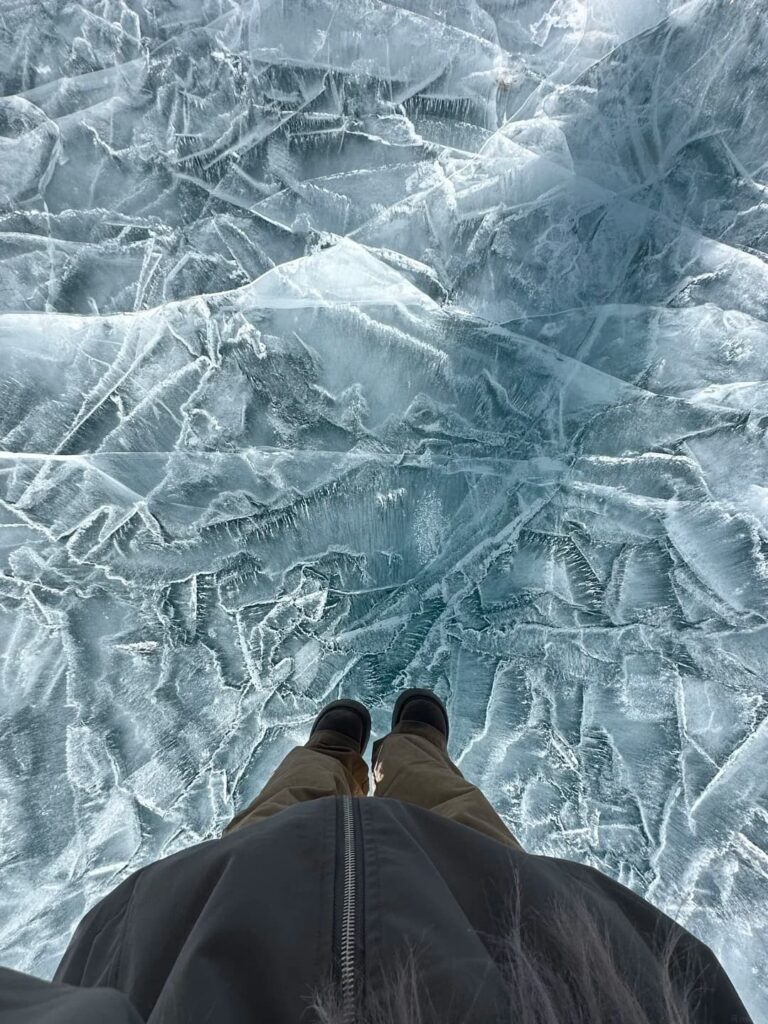
Based on my actual experience there, it takes about 15 minutes to walk from the parking lot to the lake. The distance isn’t very long, but because of the high elevation and strong winds, I recommend taking it slow and dressing warmly.When shooting ice from ground level, it often appears mottled and chaotic. If you want to capture the neat, orderly patterns of cracks seen online, an aerial perspective is key—and this can only be achieved with a drone (though the teams in Tibet, Taiwan, and the locations where foreign guests are staying are currently unable to use drones).
IV. Visitor Guidelines and Precautions
- Admission is approximately 40 RMB; actual ticket prices and opening hours are subject to the attraction's announcements on the day of your visit.
- When taking aerial photos, please comply with the scenic area’s and local drone flight regulations to avoid disturbing other visitors.
- The frozen lake is a natural phenomenon; whether it forms and whether visitors can walk on the ice depends entirely on the weather conditions on that day and the park’s announcements. If the lake is covered by snow, it will be temporarily inaccessible to visitors.
- The area around Langka County in Shannan has high elevations and strong winds, so be sure to bring warm, heavy-weight clothing and keep an oxygen tank on hand in case of altitude sickness.
- When walking on the ice in winter, be sure to wear ice cleats, walk only within the designated safe areas of the scenic spot, and never approach the thin ice in the center of the lake.
- Lakes hold sacred significance in Tibetan beliefs; please refrain from making loud noises or engaging in inappropriate behavior on the ice.
V. Why did Qia Yangcuo decide to join the tour group?
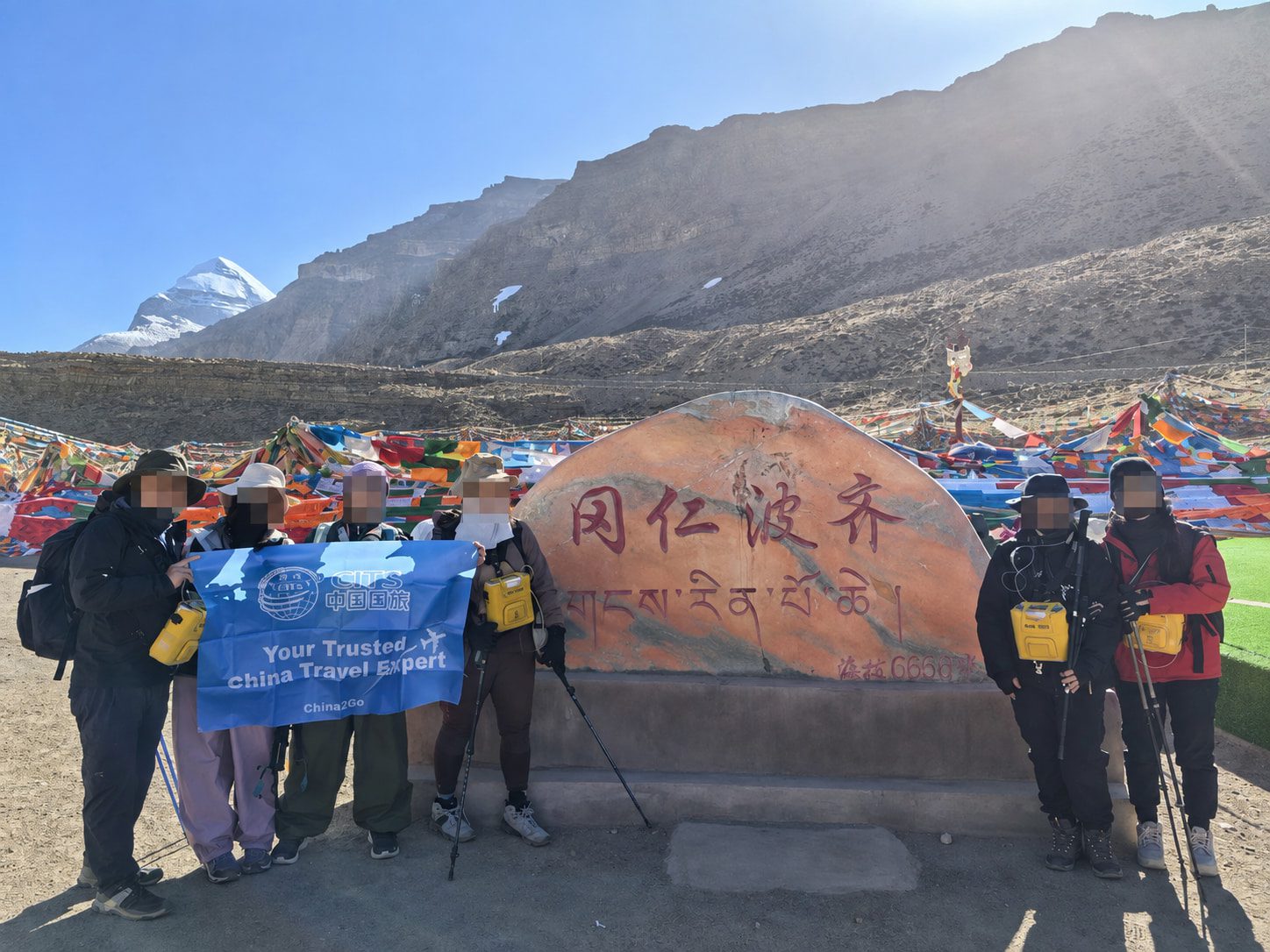
Qia Yangcuo is located in a remote highland area of Langka County, Shannan. The road conditions, changes in elevation, and parking spots along the way require a driver familiar with the local route to navigate;In addition, under current policy, non-mainland Chinese travelers—such as those from Taiwan and Malaysia—must travel to Tibet as part of a guided tour at all times and are not permitted to drive themselves or travel independently....For these kinds of off-the-beaten-path attractions—which are emerging and not yet widely known—the need for a professional local tour group is even greater—in case of inclement weather that requires last-minute changes to the itinerary,Only a company like CITS Global Travel—China2Go canStay up to date on attraction announcements and alternative options.

That is precisely why,China2Go's "8-Day Winter Tour of the Nyingchi Glaciers"In the itinerary, Chayam Tso is included in the Lhasa–Shannan leg of the trip and scheduled to be visited on the same day as Yamdrok Lake and the Karola Glacier, allowing travelers to take in some of Tibet’s most iconic winter landscapes—featuring blue ice and sacred lakes—all at once without having to arrange separate transportation.
VI. Summary of Attractions' Highlights
- A hidden glacial lake in Langka County, Shannan—whose name in Tibetan means “Lake of Wealth and Prosperity”—lies at an elevation of approximately 5,100 meters above sea level.
- This glacial lake is fed by meltwater from the Jiang Sang Lam Glacier. It is shaped like an earring and covers an area of more than 70,000 square meters.
- The natural cracks on the lake's surface take on distinct shades of blue in the sunlight; the view from above is the most spectacular.
- Part of the "Sacred Lakes" route along with Yamdrok Lake and Pumo Lake, it attracts far fewer visitors than the popular tourist spots.
- A sacred lake in Tibet renowned through word of mouth; legend has it that if you make a wish here, you will see the one you long for.
- In 2025, it went viral online thanks to aerial photos and remains a relatively niche, off-the-beaten-path destination, but neither Taiwanese nor international tour groups are allowed to use drones there.