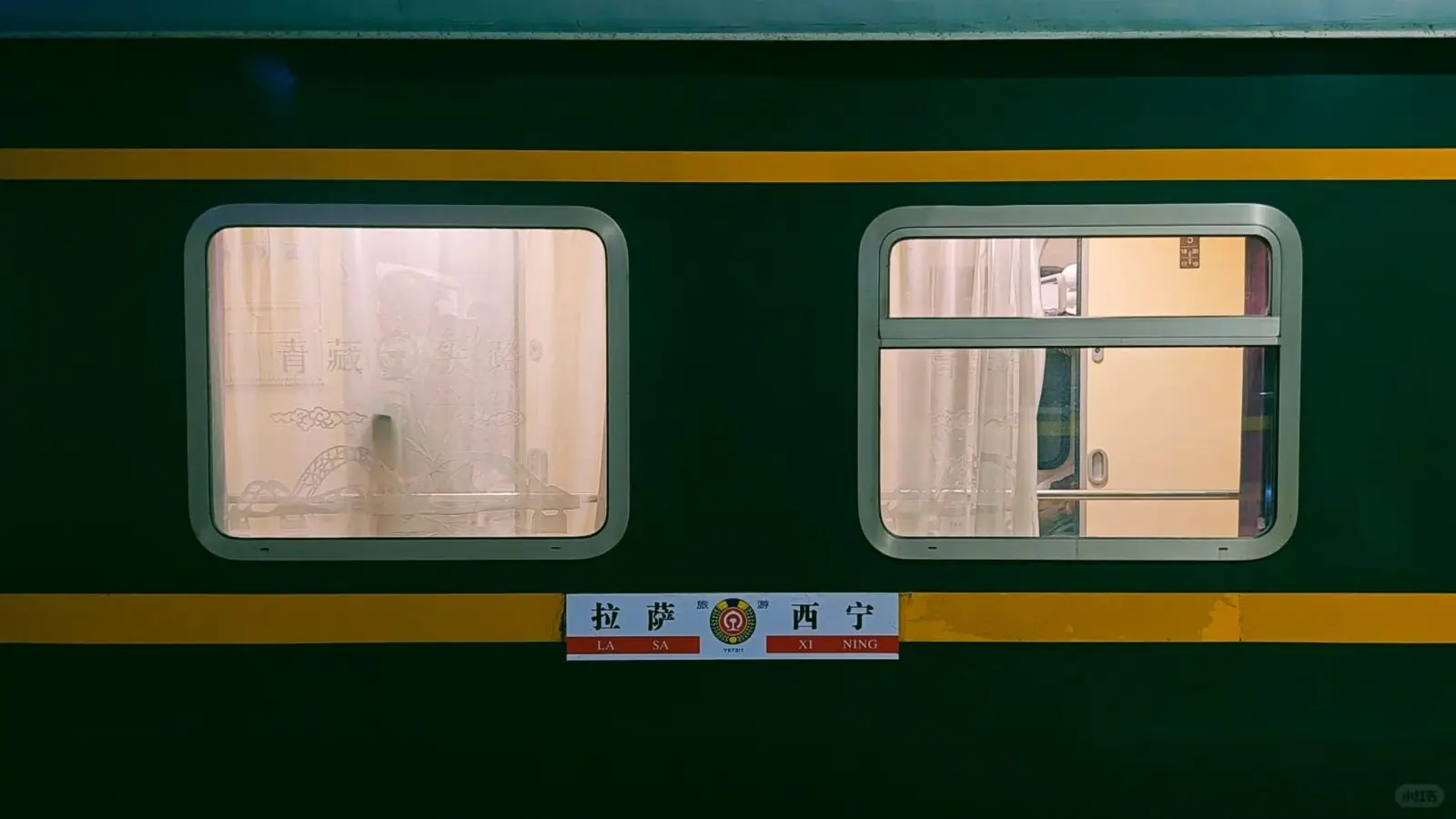
Do you want to experience the world's highest railroad - the Qinghai-Tibet Railway - but are worried about altitude sickness?
For most Taiwanese travelers who sign up for Tibet tours, we usually recommend the "fly into Tibet, train out" arrangement.
Fly to Lhasa first to give your body 1-2 days to get used to the altitude, and then take the Qinghai-Tibet train out of Tibet, which not only reduces the discomfort caused by the rapid rise in altitude, but also allows you to enjoy the spectacular plateau scenery along the Coco-Colíli and Tanggula Mountains in a more stable physical state.
However, the 2026 Tibet Travel Policy still has clear regulations for Taiwan travelers. Failure to apply for the Tibet Travel Permit in advance or to familiarize yourself with the ticketing and name system requirements of the Qinghai-Tibet Railway may affect the arrangements for entering Tibet, or even prevent you from boarding the train smoothly.
This post will organize the following key points in full:
- 2026 Updated Regulations on Entry of Taiwanese into Tibet
- Tibet Railway Ticket Purchase Process and Notes
- Comparison of the differences between soft and hard sleepers
- Changes in altitude along the way and how to cope with plateau reaction
- Suggestions for the best rides into and out of Tibet
It helps you to understand the Qinghai-Tibet Railway once and plan the most suitable itinerary for you in Tibet.
Can I really adapt to the plateau reaction in advance by taking the Qinghai-Tibet Train?
Many people think that as the Qinghai-Tibet train climbs slowly from Xining to Lhasa, the body can "slowly adapt" to the altitude, and is therefore less prone to altitude sickness.
In practice, however, the Qinghai-Tibet Railway does not guarantee early adaptation to altitude sickness.
Although the "diffused oxygen supply system" will be activated when the train enters the plateau section to increase the oxygen concentration in the train compartment, there is also an independent oxygen port next to each sleeper, which can be connected to a nasal inhalation tube for use if necessary; in case of obvious discomfort, the train crew can also provide medical oxygen equipment for assistance.
However, after departing from Xining, the altitude will still rise rapidly from about 2,275 meters to 5,072 meters at the Tanggula Pass in a short period of time. This rate of elevation gain may still cause headaches, insomnia, rapid heartbeat or chest tightness for some travelers.
In particular, most Taiwanese travelers seldom take long-distance sleeper trains that last more than 20 hours. If the quality of sleep decreases due to changes in train environment and work routine, the body's ability to adapt to high altitude will be reduced.
Therefore, the oxygen supply system of the Qinghai-Tibet Railway can "alleviate discomfort" but cannot completely avoid altitude sickness.
In addition, most Taiwanese travelers are less likely to take long-distance sleeper trains that last more than 20 hours. For those unfamiliar with long-distance train travel, the nighttime environment, the sound of the train compartment, and the change in routine may all affect the quality of sleep. When you don't get enough sleep, your body's ability to adapt to the high-altitude environment decreases, making you more susceptible to headaches, rapid heartbeat and fatigue.
In other words, some travelers may face both "poor sleep quality" and "rapid altitude increase" if they take the train from Xining to Tibet without having yet adapted to the plateau.
Therefore, Qinghai-Tibet Train cannot avoid altitude sickness completely, but can only alleviate some of the symptoms with the assistance of oxygen supply.
That's why we usually recommend: 👉 Fly into Tibet, take the train out of Tibet.
Fly to Lhasa first to give your body 1-2 days to get used to the altitude of 3,650 meters; at the end of the trip, take the "Lhasa → Xining" outbound section, which is not only less prone to altitude sickness, but also allows you to enjoy the highland scenery of Coco-Cecil and Tanggula Mountain when your health condition is stable.
2.Qinghai-Tibet Railway from Xining to Lhasa: Route description of elevation change.
Strictly speaking, the core plateau section of the Qinghai-Tibet Railway begins in Xining. Whether the train originally departs from Beijing, Shanghai or any other city, it enters Xining before it officially enters the Tibetan Plateau.
Departure from Xining: Reminder of Altitude Change and Plateau Reaction
After departing from Xining, the train will travel through the Qaidam Basin, the Kunlun Pass, Coco-Cilili, and the Tanggula Mountains, with the altitude climbing from 2,275 meters to over 5,000 meters, which is the first time for many people to face the challenge of the plateau. In fact, the altitude changes along the way are very fast, we will suggest you to choose Lhasa -> Xining.
On the one hand, you are used to the high altitude in Lhasa, you can enjoy the beauty of the train ~, on the other hand, the altitude from Xining to Lhasa is actually very fast!
Qinghai-Tibet Train (Lhasa → Xining) Altitude Change Schematic - China2Go
Note: The folding line starts at 3650 m in Lhasa and goes up to 5072 m in Tanggula Pass, the information is a schematic approximation, and the actual data is based on the day's operation.
Common Conditions and Countermeasures:
- Headache, insomnia, fast heartbeat → Slow down your breathing, sit still and rest, and administer oxygen if necessary.
- Nausea, chest tightness → Notify the train crew, who can assist with oxygen or medical care.
- Poor sleep quality → Soft lying is quieter, helps the body relax and reduces the effects of altitude sickness.
If you are worried about high altitude sickness → We recommend taking a train out of Tibet.
For those who are worried about altitude sickness and fear that they will not sleep well when they first enter Tibet, I suggest:
- Take a plane to Tibet.Arrive in Lhasa directly, rest for 1-2 days to get used to the altitude, and start your trip from Lhasa downtown to a slower pace.
- Taking a train out of TibetWhen your body has adapted to the plateau, take the train out of Tibet, so that you can be in the best condition to enjoy the magnificent scenery of Coco-Colíli and the Tanggula Mountains, and will not be affected by the high altitude sickness on the train to sleep.
How to buy Tibet train tickets? Taiwan travelers to buy tickets and attention
1.Required documents: Letter of AdmissionTibet Travel Permit
Taiwan travelers must have a "Letter of Entry to Tibet"(The Tibet Travel Permit is the most important document to enter Tibet.
Tibet Travel Permit (TTB Permit) Can only be done through qualified local travel agencies in Tibet.(Our company, CITS CITS Global, is qualified to assist in the application of Tibet entry letter and related certificates. (Our company, CITS Global, has the qualification of Tibet reception, and can assist in applying for the letter of entry into Tibet and the relevant documents).
Required: Scanned copy of Taiwan Compatriot Permit (clear), travel itinerary, dates of entry and exit from Tibet.
- Processing time: about 30-45 days (additional arrangements for expediting fees are required for expedited shipments)
- How to use the plane: The travel agency will arrange the tour guide to give the letter of entry to Tibet at the meeting place (usually Chengdu), and the group needs to enter Tibet together and take the designated flight.
- How to use the train: Scanned documents will be provided to passengers, and you will be required to present your letter of entry when traveling on the train.
2.Taiwan travelers to Tibet must travel with a tour group and are not allowed to travel independently.
Taiwan travelers, like other foreign travelersYou cannot travel freely into Tibet.
Tours must be organized through a travel agency.Arrange full itinerary, tour guide, accommodation and transportation.
If you want to travel to Shigatse, Everest, Ali, etc. during the trip, you will need to be represented by a travel agent."Travel Permit" and "Military Zone Pass".
3.Tibet Train Ticket Purchase Regulations
12306 is not very easy to buy (Taiwan compatriot card requires real-name authentication) and there is a limit to when tickets can be released!
If necessary, you can ask us to do the shopping on your behalf. If you are not familiar with the ticketing process, you can ask a travel agent to do it for you.
If it is difficult to grab tickets during the hot period (June-October), soft sleepers are often sold in seconds! Be sure to pay attention to the ticketing hours!
Payment Restrictions: Must have a mainland bank card or support Alipay / WeChat payment, some Taiwan travelers do not have the appropriate payment tools, remember to consult your adviser!
IV. Qinghai-Tibet Railway Fare Overview and How to Check Fares
When traveling to and from Tibet on the Qinghai-Tibet Railway, ticket prices vary depending on the “departure city,” “class of service” (hard seat, hard sleeper, or soft sleeper), and “berth location” (upper, middle, or lower berth). The following is a summary of reference fares from major departure cities to Lhasa to help you plan your travel budget:
| City of Departure | Total Distance | hard seat (on trains or boats) | Hard Sleeper (Lower Berth, for reference) | Soft Sleeper (Lower Berth, for reference) | Travel Time |
|---|---|---|---|---|---|
| Xining | Approximately 1,972 kilometers | Approx. RMB 224 | Approx. RMB 495 | Approx. RMB 781 | About 21.5 hours |
| Chengdu | Approximately 3,360 kilometers | Approx. RMB 331 | Approx. RMB 712 | Approximately RMB 1,104 | About 40 hours |
| Chongqing | Approximately 3,654 kilometers | Approx. RMB 355 | Approx. RMB 754 | Approx. RMB 1,168 | About 40 hours |
| Shanghai | Approximately 4,300 kilometers | Approximately RMB 402.5 | Approx. RMB 793.5 | Approximately RMB 1,262.5 | Approximately 47.5 hours |
| Beijing West | Approximately 4,064 kilometers | Approx. RMB 389 | Approx. RMB 813 | Approximately RMB 1,262 | Approximately 47.5 hours |
| Guangzhou | Approximately 4,980 kilometers | Approximately RMB 447 | Approximately RMB 865 | Approximately RMB 1,468 | About 53 hours |
Prices vary slightly depending on the bunk (top, middle, or bottom), with bottom bunks typically costing about 20–40 RMB more than top bunks; During peak season (June–October), soft-sleeper tickets are in short supply, and fares for popular trains (such as the Z21 departing from Xining) may be around 1,200 RMB; however, actual prices are subject to the announcement on the day tickets go on sale.
How do I check real-time fares and seat availability?
- China Railway12306Official Website/App: You can check real-time seat availability and fares. Travelers from Taiwan must complete real-name verification using their Taiwan Compatriot Certificate to purchase tickets.Other international visitors will also need to verify their accounts on 12306!
- Third-party ticketing platforms such as Ctrip: They have user-friendly interfaces and allow you to check train schedules and fares, but you must also link your real-name information to actually purchase tickets.
- Booking Through a Travel Agency: Since Taiwanese travelers must present an Entry Permit to Tibet to verify their identity when purchasing tickets, and tickets are difficult to secure during peak seasons (June–October), we recommend entrusting a travel agency licensed to host visitors in Tibet (such as China International Travel Service Global CITS) to handle both the Entry Permit and train tickets simultaneously, to avoid any delays in your itinerary caused by complications in the ticket-purchasing process. You may also try to book tickets online yourself; however, soft-sleeper berths are extremely hard to come by during peak season, and hiring a specialist to secure them on your behalf will incur an additional service fee.
Note: The fares listed above are for reference only. Fares on the Qinghai-Tibet Railway are subject to change based on train number, class of service, season, and adjustments by the railway authorities. For official fares, please refer to the current information published by 12306 or authorized booking agencies.
V. Choosing a Carriage on the Qinghai-Tibet Railway and the Travel Experience: Soft Sleeper vs. Hard Sleeper
There are three types of seats on the Qinghai-Tibet Railway:Soft sleeper, hard sleeper, hard seatThe first two types of bedrooms are the most popular. Below is a detailed description of the configuration, ambience, advantages and disadvantages of each type of cabin to help you choose the most suitable one.
Soft Sleeper
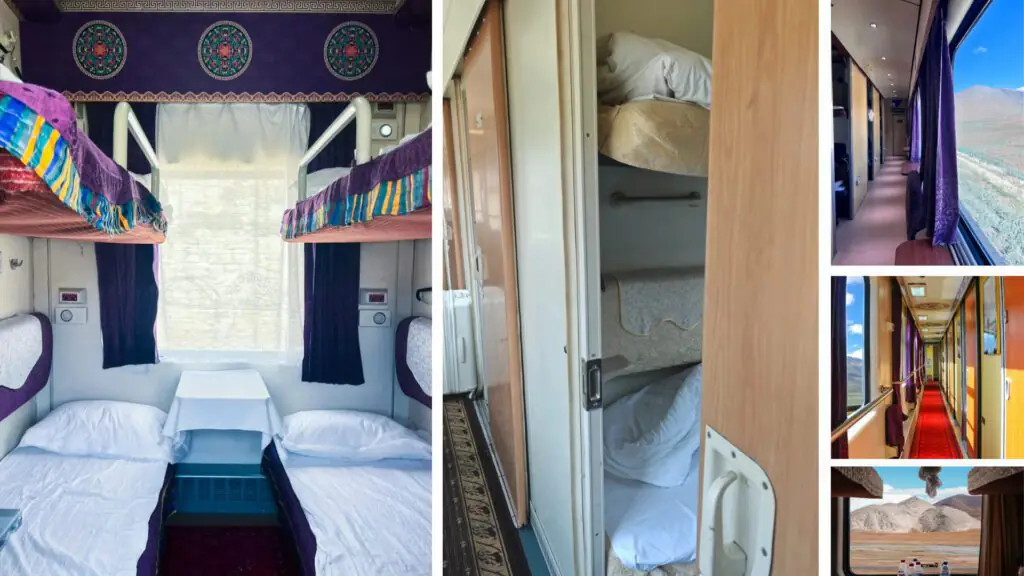
The "Soft Sleeper" is the first train on the Qinghai-Tibet Train.The most comfortable and private cabin in the worldEach compartment has more than ten small cabins, each with four beds, designed as bunk beds and with doors that can be closed to form a small independent space.
The first thing that strikes you when you walk into a cushion car is the quiet. Each compartment has soft lighting, clean sheets and thick mattresses, with a small ladder to climb on the upper bunk and a lower bunk where you can sit comfortably and chat or watch the scenery. There are reading lamps and clothes hooks next to each bed, and generally the cabins are equipped with individual sockets.
Soft sleeper advantage:
- More spacious and thicker mattresses.
- Doors can be closed for privacy.
- Includes reading light and socket, mobile power supply can be recharged at any time
- Suitable for travelers with seniors, children, Taiwan, Malaysia, etc. (who don't have the habit of traveling by train for a long period of time).
Soft lying defects:
- Highest prices, tight availability in peak seasons
- If the number of people is less than 4, you may need to share the cabin with strangers.
Hard Sleeper
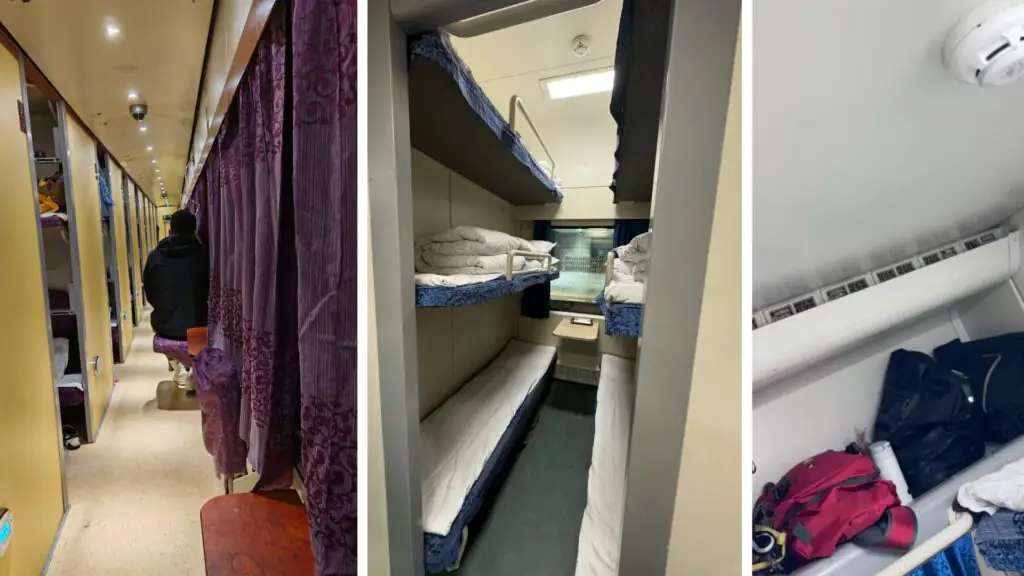
The "Hard Sleeper" is the most cost-effective option, with several "cubbies" in each of the open compartments.6 beds per compartment, upper, middle and lower floors, no doorThe corridor is completely open to the beds, and there is only a simple partition.
The atmosphere in hard bedrooms is more lively, travelers will chat in the aisle or lower bunks, and occasionally some people take out snacks and playing cards to interact with each other. The beds are narrower than the soft beds, especially the upper bunks, where you will bump your head if you sit up, the middle bunks have a limited view, and the lower bunks are the most popular because you can sit and look at the view.
At night, when the lights go out, you can still hear the regular sound of the train and the footsteps on the aisles, giving you the feeling of "traveling in a group". It's a fun social experience for those who don't mind a good time.
Hard Bedroom Benefits:
- Reasonable price, affordable
- At least you can lie down and rest. It's more comfortable than a hard seat.
- Opportunity to interact and chat with travelers from all over the world, adding to the fun!
Hard lying defects:
- No door, low privacy
- Narrow beds, not very convenient to climb up and down to get things
- Charging sockets are only available in public places along the aisles, and you often have to queue up for them.
- You may be awakened at night by footsteps and talking.
Hard Seat
Hard seat is the cheapest option, similar to long-distance passenger chairs, the seats are tightly packed, there are many passengers, and it is very hard to sit still for as long as 20 hours.Not recommended for Taiwan travelersIf you are only traveling a short distance, such as Lhasa - Rikaze 3-4 hours, hard seat is an acceptable budget option. If you are only experiencing a short journey, such as a 3-4 hour train ride from Lhasa to Shigatse, a hard seat is an acceptable financial option.
VI. Onboard Amenities and Experience
Washroom Space
At both ends of each compartment, there is an open washbasin with hot and cold water taps, which is convenient for washing your face and brushing your teeth. During peak seasons, it is recommended to miss the rush in the morning and evening.
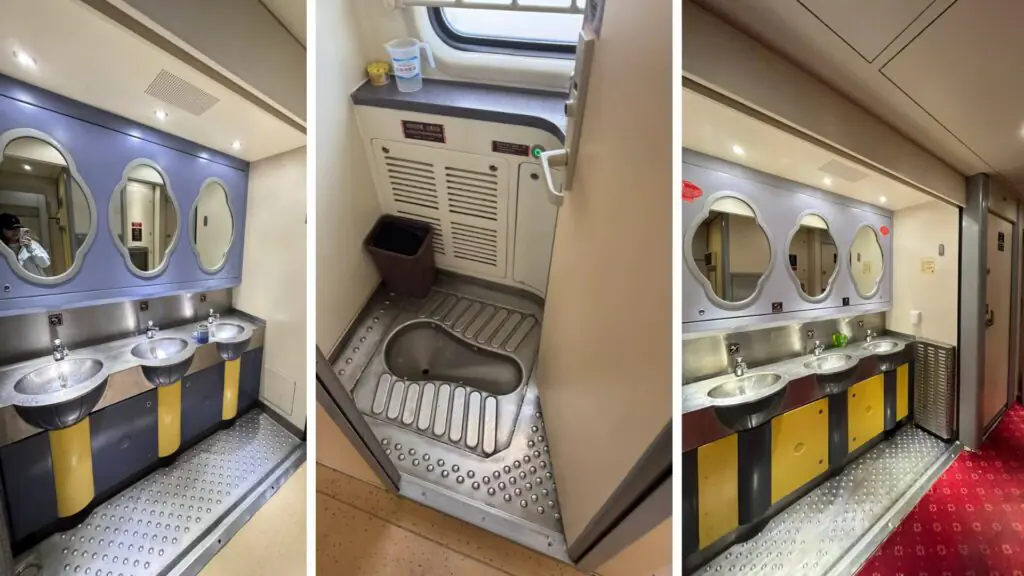
Toilet Configuration
There is one toilet at each end of the train, some squatting and some sitting. Please note that the toilets shake when the train is in motion.
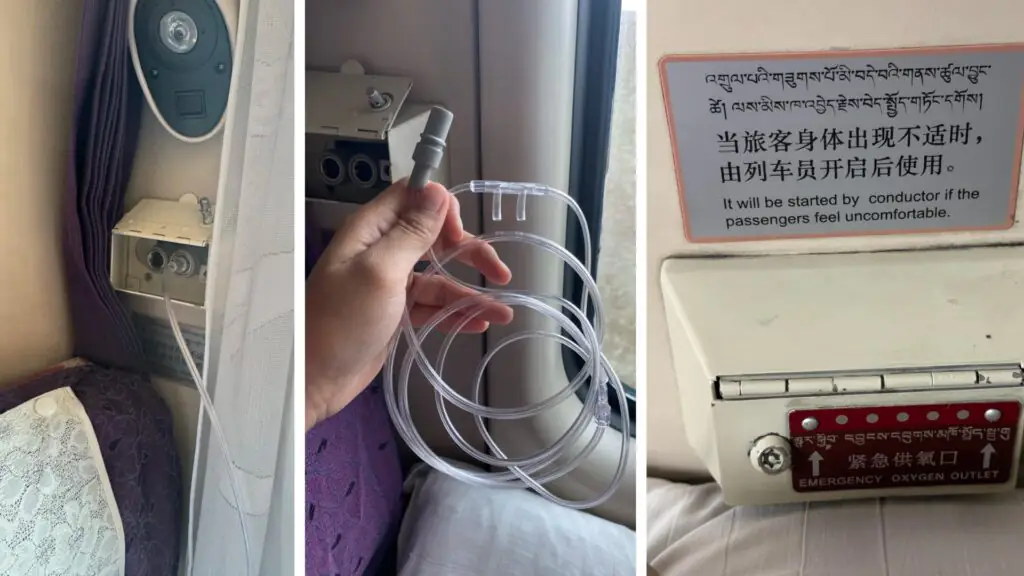
Oxygen Preparation
The entire Qinghai-Tibet Railway is equipped with a "diffused oxygen supply system", which gradually increases the amount of oxygen supplied after departure from Golmud, so that passengers can adapt to the rising altitude.
Soft/Hard: There is an individual oxygen port next to each bed, which can be connected to an oxygen hose (purchased or brought on the bus) if needed.
hard seat (on trains or boats): Oxygen vents are available in the aisles and can be shared by more than one person.
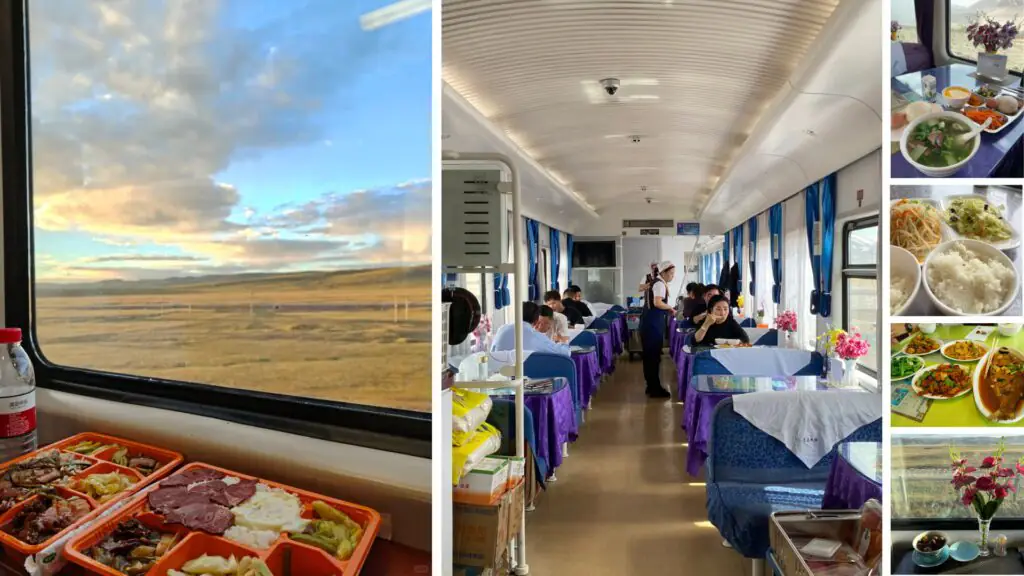
Food trucks and catering
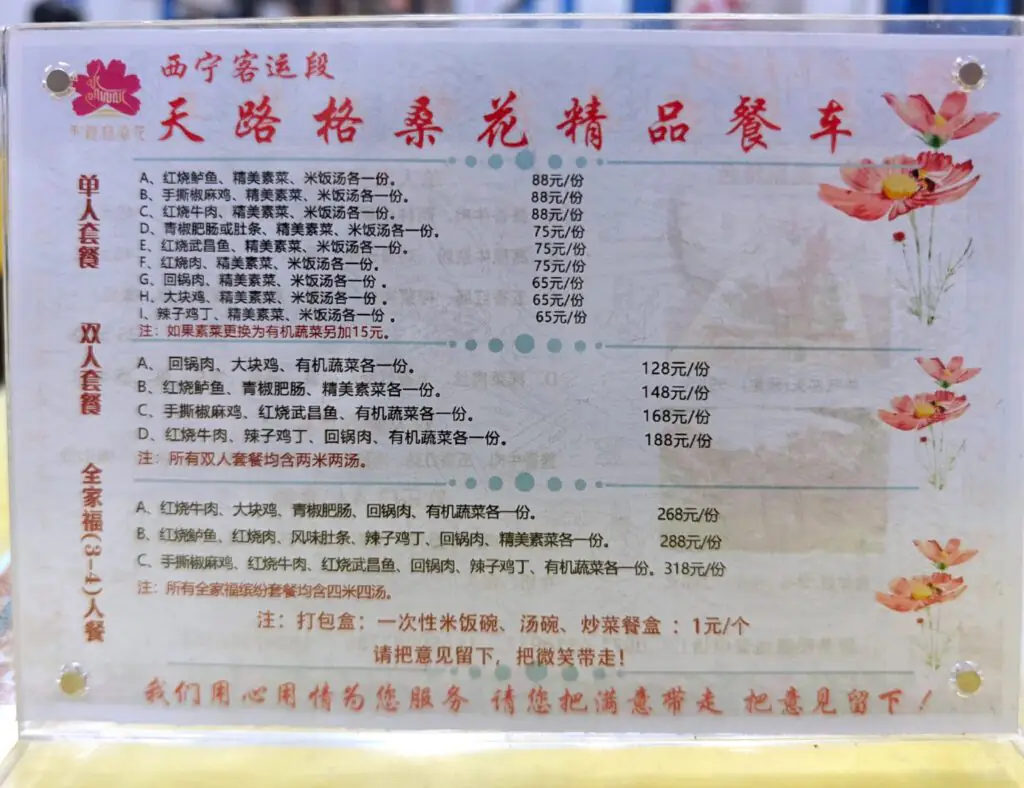
There is a dining car in the middle of the train, which serves a set meal (about RMB 60-90), including rice, stir-fry, and soup, during the main meal period. There are also trolleys selling simple meals in each compartment.
It is recommended that you bring your own snacks, instant noodles, and favorite beverages; boiled water is available on the bus at all times.
The high altitude and dry air of the Qinghai-Tibet Route means that hydration can help reduce altitude sickness.
VII. How Taiwanese Travelers Can Choose the Best Qinghai-Tibet Train Experience
The Qinghai-Tibet train journey time is relatively long, taking about 20-22 hours from Xining and 40+ hours from Beijing or Shanghai. It is recommended to check whether you have enough vacation time before deciding whether to take the whole journey.
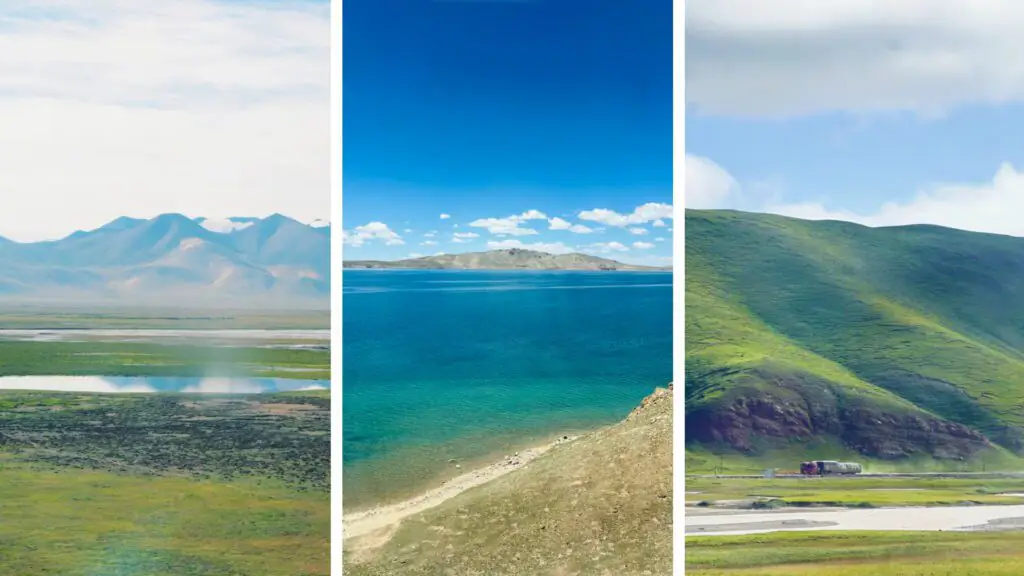
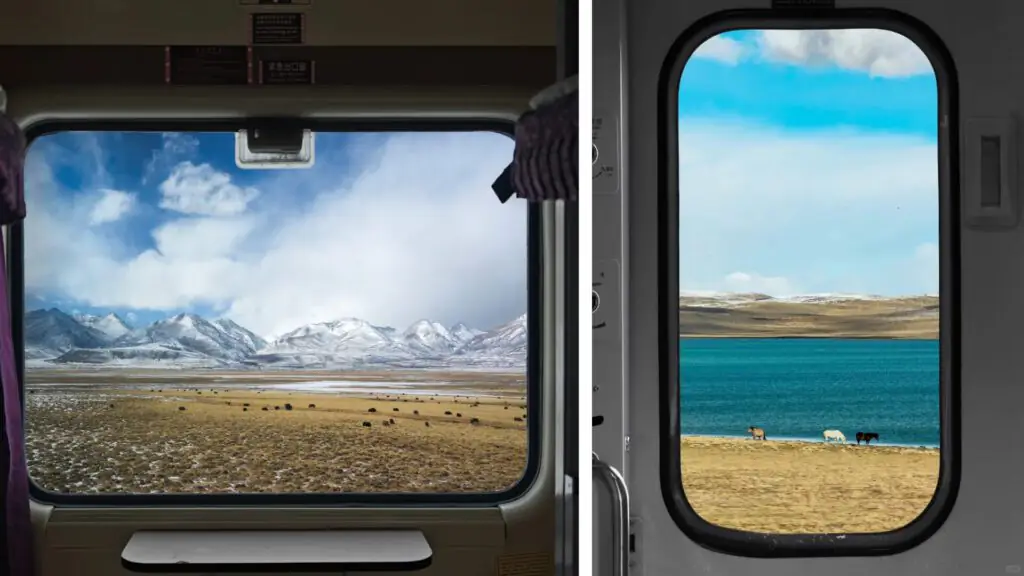
More than just transportation, it is part of the journey itself. Along the way, the Qinghai Lake, Coco Sicily and Tanggula Pass are all must-see views of a lifetime. Choosing the right car and route can make your journey into or out of Tibet more comfortable and memorable.
If it's your first time taking a long-distance train
→ Recommended Soft SleeperThis will allow your body to rest sufficiently and minimize the discomfort of altitude sickness.
→ take a train from TibetIf you are worried about altitude sickness if you don't rest well, it is recommended that you take the train when you go out of Tibet.
If you have a limited budget but want to lie flat
→ hard sleeperIt's the best choice, much more comfortable than a hard seat, and saves you more than half the fare.
We definitely do not recommend the hard seat, in our experience it is very unsuitable for us Taiwanese travelers.
The scenery along this train line from Tibet to Xining is really beautiful, whether it is out of Tibet or into Tibet is very suitable, as long as there is time to assess the physical condition and needs, you can come to a trip dedicated to your Tibet!
CITS-China2Go Recommended Tibet Travel and Qinghai-Tibet Train Related Itinerary
I just want to experience the Qinghai-Tibet Train
Fly to Xining (or travel to Xining from Tibet only) + ride Z8991 Soft sleeper for evening busesAfter arriving in Lhasa, we will rest for half a day before starting the tour.
Experienced or looking for a challenge
Starting from [Beijing/Shanghai], we will experience 40+ hours of Sky Trail traversing and feel the altitude change from plains to plateaus.
Limited time but want to experience the railroad
Fly directly to Lhasa, and arrange one [Lhari Railway] (Lhasa - Shigatse round-trip train) in the itinerary.
This section of the route takes only 3-4 hours to see the Yarlung Tsangpo Valley and the Himalayas, making it a great little railroad experience.
Worried about altitude sickness
It is recommended to take the airplane into Tibet and the train out of Tibet.
In this way, you can first rest in Lhasa, adapt to the altitude, and then take the train out to Tibet to enjoy Coco-Colí and Tanggula Mountains after your physical condition has stabilized, avoiding the high altitude and difficulty in sleeping right after you get on the train.
Not enough time to experience the Tibetan Plateau Railway.
It is possible to take a trip on theLhasa–Shigatse RailwayThis is a feature of some of CITS Global's trips!
Short rideThe single journey takes about 3-4 hours, so you can easily experience the Highland Railway without having to stay up all night and sleep on the train.
Beautiful scenery along the way: Traveling along the Yarlung Tsangpo River valley, you can see river valleys, grasslands, and the Himalayan snow-capped mountains in the distance, making it an excellent experience for taking photos and sightseeing.
China Travel Arrangement.Highway to get there, train to get back.The train is a great way to see the sights of Gyantse and Sakya along the way, and to experience the railroad on the way back, which reduces traveling time and effort.
👉 Extended reading:Temperature in Tibet throughout the year
Refer to Baidu Encyclopedia for some information:Qinghai-Tibet Railway (Baidu Encyclopedia)
We usually arrange for Taiwanese travelers:
✔ Flying into Tibet
✔ Take the Qinghai-Tibet train out of Tibet
✔ Flexible Ticket Snatchers
✔ Tibet Entry Letter and Train Ticket are issued together
If you want to include the Qinghai-Tibet Railway in your itinerary, but do not want to study the ticketing and policy issues by yourself, you can contact CITS-China2Go consultants directly, and we will arrange the most suitable way to enter and exit Tibet according to your vacation and physical condition. You can choose to join our 5-day! Qinghai-Tibet Railway + Lhasa Exploration Tour Whoo!