
15-Day Northern Kailash Pilgrimage | Highlights of Mount Kailash, Mount Everest, the Three Sacred Lakes, Guge, and Northern Tibet—Small Group (6 People)

Kailash Circuit + Northern Route, 15 Days | Enter from the South, Exit from the North: Hike from Mount Everest All the Way to Northern Tibet
Explore the Sacred Mountain, the Sacred Lake, and the Guge Kingdom All in One Trip—Even a Small Group of 6 Can Enjoy a Refined Experience

Duration
15 days and 14 nights

Itinerary
Lhasa–Yamdrok Lake–Shigatse–Everest Base Camp–Saga–Mapam Yumco–Tachin–2-Day Kailash Pilgrimage: The Essentials- Zada Guge - Shiquan River - Wuma Co - Gaize - Dangra Yumco - Nima - Selin Co - Bango - Namtso - Lhasa

Group Size
Small group of 6 persons
Starting from 4 persons 6 persons will fill up the tour.
Single person can join a group

Our Promise
100% Play Group
No Purchase, No Racket
Compensation up to CNY 5,000 if violated

Premium Accommodation
In addition to the Zhanshan Zhire Temple, hotels offering oxygen throughout the entire trip or on-site oxygen generation
Curated itinerary featuring four-diamond properties or higher, including one night at the five-star Hilton in Shigatse
※Due to local conditions, accommodations at Zhire Temple, Everest Rongbuk Lodge, and Gaize are relatively basic; we have selected the most suitable accommodations available in each location.

CITS國旅環球-China2Go Exclusive Perks
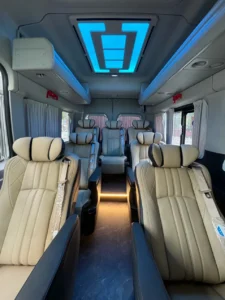
A 2025-model 9-seat luxury minivan for nannies
High-altitude travel insurance
Potala Palace view afternoon tea
Personal Cinematic “Lift-Off” Video
Traditional Lungta Blessing Ceremony
Hanging Prayer Flags for Blessings
China2Go Alibaba Gift Pack
Includes admission to the scenic area, sightseeing buses, and shuttle buses for the Kham Kora pilgrimage
Starting at 25,900 CNY
Itinerary Map

15-Day Itinerary: Kora + Northern Ali Route + Circuit of the Three Sacred Lakes
Day1
Chengdu/Chongqing (or other locations) to Lhasa—Guide meets you at the airport
Upon arrival in [Lhasa] by plane or train, a dedicated representative will be waiting 24 hours a day with a sign to meet you at the airport or train station. There’s no need to share a ride or wait for others—you’ll be taken directly to your hotel to rest as soon as you arrive. In Tibetan, Lhasa means “the abode of the gods” and has been the spiritual home of the Tibetan people for thousands of years. On the first day, there’s no need to rush—let your body gradually adjust to the high-altitude rhythm.
On your first day here, please get plenty of rest, limit your physical activity, drink plenty of warm water, and avoid alcohol and hot baths to help your body adjust to the high altitude.

Meals: Own arrangements

The Hilton Hilton Oxygen Hotel, Lhasa
or similar oxygen-equipped hotel
Day2
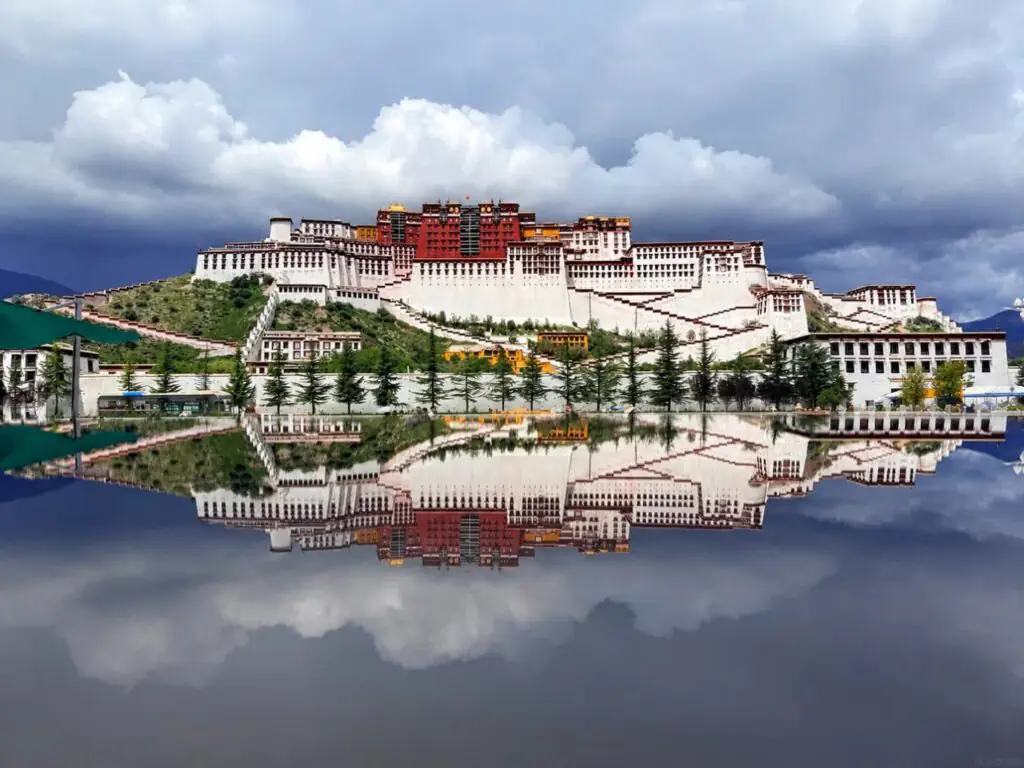
One-Day Tour of Lhasa City: Potala Palace, Barkhor Street, Jokhang Temple, and Afternoon Tea at the Potala Palace
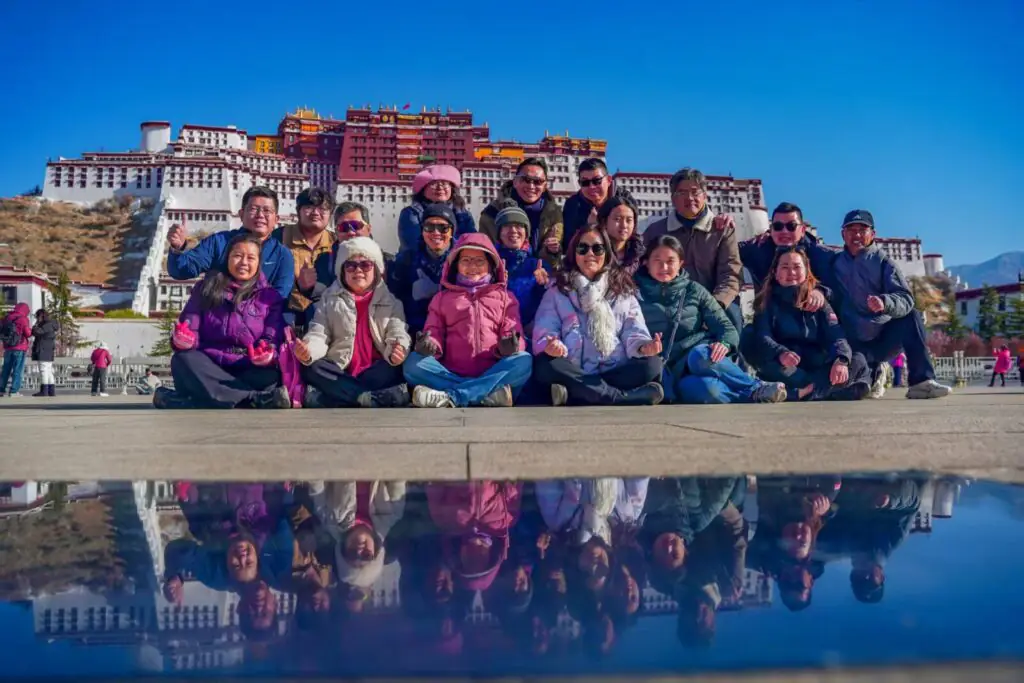
The three most iconic spots in Lhasa were all on the same day. First, I climbed the Potala Palace to take in the view of the entire holy city; then, I walked a full circuit of Barkhor Street, following the stream of pilgrims; and finally, I entered the Jokhang Temple to watch the Tibetans perform prostrations again and again. In the afternoon, I found a café directly across from the Potala Palace, sat down, sipped sweet tea, and gazed at the palace—a moment of leisure I set aside for myself before heading to Ali.
➤ Potala Palace
Combining a palace, a monastery, and a stupa hall into a single complex, it houses a vast collection of Buddhist statues, thangkas, and sutras, and stands as a masterpiece of Tibetan history, religion, and art. It was inscribed on the World Heritage List in 1994.
➤ Barkhor Street
One of Lhasa’s oldest streets, it is also a must-visit pilgrimage route for pilgrims. Small shops lining both sides sell thangkas, handicrafts, and spices, so you can combine shopping with walking the pilgrimage route.
➤ Jokhang Temple
The Jokhang Temple was built first, followed by the city of Lhasa. The temple houses a life-size statue of Shakyamuni, which Princess Wencheng brought to Tibet, and it is common to see Tibetans prostrating themselves in worship there; the atmosphere is solemn and moving.
★ Potala Palace Scenic Afternoon Tea
As an exclusive perk, enjoy sweet tea and pastries at the scenic café in Shangbu Palace.
★ Travel Tips:
The Potala Palace and Jokhang Temple require reservations made under a real name. Reservations must be made using a passport, Home Return Permit, or Taiwan Compatriot Permit, and visitors must present the original document upon entry. Visiting times are randomly assigned by the system and cannot be specified.
Breakfast: Hotel breakfast
Afternoon Tea: Afternoon Tea at Potala Palace
The Hilton Hilton Oxygen Hotel, Lhasa
or similar oxygen-equipped hotel
Day3
Lhasa – Yalong River Valley Viewpoint – Yamdrok Lake – Karola Glacier – Baiju Temple – Shigatse
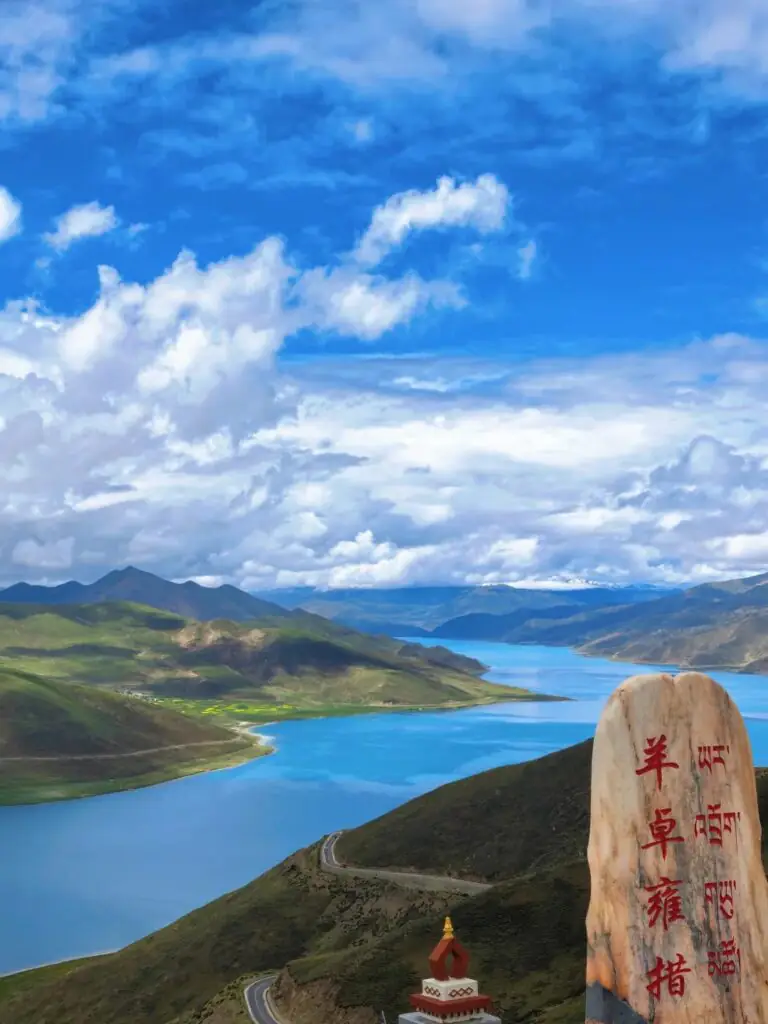
Today, we visited our first sacred lake. After crossing the Gamba La Pass, the entire azure expanse of Yamdrok Lake unfolded beneath us; driving further on, the Karola Glacier seemed to lie right beside the road. In the afternoon, we went to Gyantse to see the 100,000-Buddha Stupa at the White Temple, and arrived in Shigatse in the evening. We checked into the five-star Hilton—our only night at a five-star hotel during the trip—to rest up and recharge for the climb up Mount Everest the next day.
▶ Yamdrok Lake (Sacred Lake)
In Tibetan, the name means “Jade Lake.” It is one of Tibet’s three sacred lakes and, according to legend, is the incarnation of the Bodhisattva Avalokiteshvara. A panoramic view of the lake can be seen from the Gamba La Pass.
▶ Karola Glacier
At an elevation of about 5,600 meters, snow-white ice walls, prayer flags, and the blue sky intertwine. The glacier is retreating at a pace visible to the naked eye, and the time we have to witness this firsthand is growing ever shorter.
➤ Hakujuji Temple
A monastery where the Sakya, Kadam, and Gelug schools coexist. The 100,000-Buddha Stupa stands 42 meters tall and features nine stories with 77 chapels; it is hailed as the “King of Tibetan Stupas.”
➤ Rikaze
Tibet's second-largest city and the last major city before heading to Mount Everest.
★ Travel Tips:
In addition to the Letter of Introduction for Tibet, travelers heading to Mount Everest must obtain a travel permit in Shigatse. In the event of system malfunctions or long lines during peak season, processing times may be extended; the tour guide will adjust the day’s itinerary flexibly based on the progress.
Breakfast: Hotel breakfast
Shigatse Hilton Five-Star Hotel with Oxygen Supply
or similar oxygen-equipped hotel
Day4
Shigatse - Gawla Pass Lookout - Jomolang Monastery - Everest Base Camp
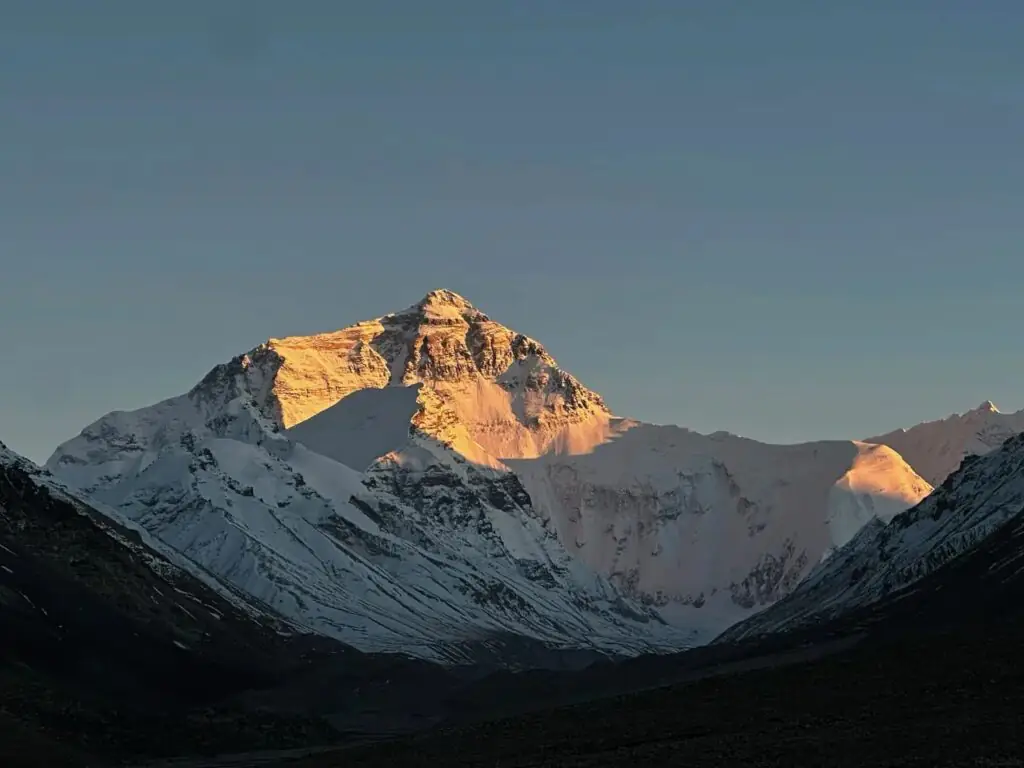
The car wound its way up the mountain road, loop after loop, until it reached the Gauri Pass at an elevation of approximately 5,198 meters. The Himalayas stretched out in a long line; on a clear day, you can see five 8,000-meter-class snow-capped peaks at once, including Mount Everest and Shishapangma. We continued on to Rongbuk Monastery and then entered Everest Base Camp. Tonight, we upgraded to the Rongbuk Lodge; as soon as I opened the door, there was Mount Everest right before my eyes. After dark, a sky full of stars seemed to weigh down on the mountain peak—this night will stay with me for a long time.
➤ Gaura Pass Viewpoint
Located at an elevation of approximately 5,198 meters, it is a must-pass point on the way to Everest Base Camp and one of the best vantage points for viewing the peaks of the Himalayas.
➤ Rongbu Temple
One of the highest-altitude monasteries in the world, it was founded in 1899 by Awang Tenzin, a high-ranking monk of the Nyingma School, and is known as “the monastery closest to the sky.”
➤ Everest Base Camp
Located at an elevation of approximately 5,200 meters, this is the closest and best spot to view Mount Everest. On clear days, the pyramid-shaped summit is clearly visible, and in the evening, you may have the chance to see the "Golden Summit" phenomenon.
★ Travel Tips:
Whether Rongbuk Monastery is open to visitors depends on on-site policies. If accommodations at the Rongbuk Lodge cannot be booked due to special circumstances, guests will be accommodated in tents at Everest Base Camp and receive a refund of 200 CNY per person; if the tents have been dismantled, guests will be accommodated at a four-star hotel at the foot of Mount Everest. Accommodations at Mount Everest are relatively basic, and there is a significant temperature difference between day and night, so please be sure to bring a down jacket.
Breakfast: Hotel breakfast
Everest Velvet Lodge
(Private bathroom, oxygen supply system)
※If you are unable to check in, you will be accommodated in a tent at Everest Base Camp and receive a refund of 200 CNY per person.
Day5
Everest Base Camp – Shishapangma Nature Reserve – Pegu Tso (viewed from a distance) – Saga
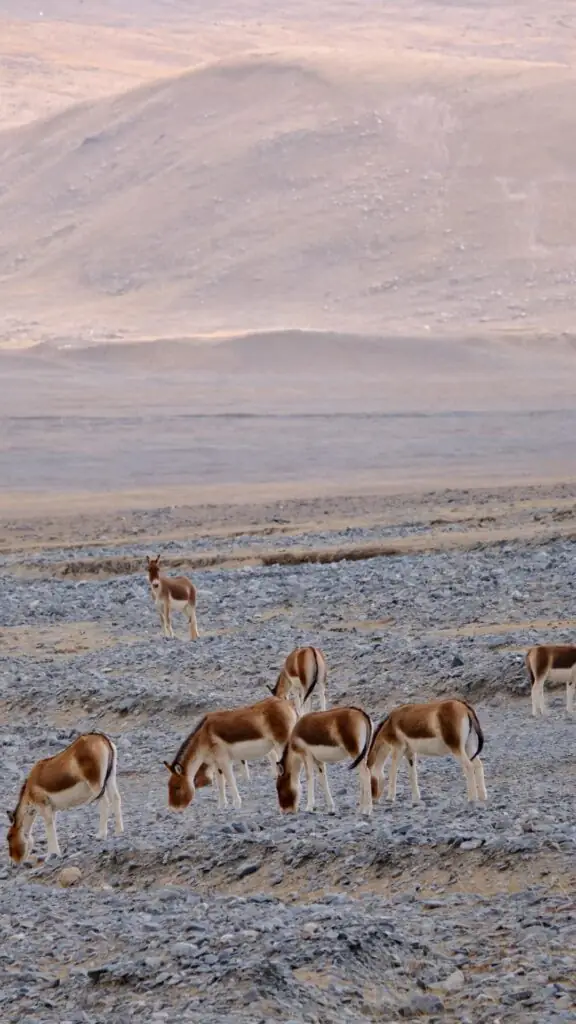
Leaving Mount Everest behind and heading west, we entered the Shishapangma Nature Reserve. This stretch of road ran almost the entire day at an altitude of around 4,500 meters; outside the car windows were snow-capped mountains, glaciers, and vast grasslands. If we were lucky, we’d spot Tibetan antelopes and wild yaks grazing by the roadside. As we passed by Lake Pegu, the 8,000-meter snow-capped peaks were reflected on the lake’s surface, creating a scene so serene it looked like a painting. That night, we checked into a newly opened oxygen-supply hotel in Saga, took a hot shower, and got a good night’s sleep to save our energy for the kora the day after tomorrow.
➤ Hichia Pangma Reserve
Mount Xixabangma is the only 8,000-meter-class peak located entirely within China; the nature reserve is home to high-altitude animals such as Tibetan antelopes and wild yaks.
➤ Pegucuo
A high-altitude lake at the foot of Mount Shishapangma; on clear days, the snow-capped peaks are reflected on its surface. As the car drove along the lakeshore, I gazed at the view from the car window.
➤ Saga
A small town on the upper reaches of the Yarlung Tsangpo River, the final stop on the way to the sacred mountain and holy lake.
Today’s drive is the highest-altitude leg of the journey before the kora. Once you’re on the bus, take it easy, drink plenty of warm water, and let the tour guide know immediately if you feel unwell.
Breakfast: Simple Breakfast
Sagamu Linsen Oxygen Hotel
or similar oxygen-equipped hotel
Day6
Saga—Five-Colored Desert—Mapam Yumco—La'ang Co—Tachin
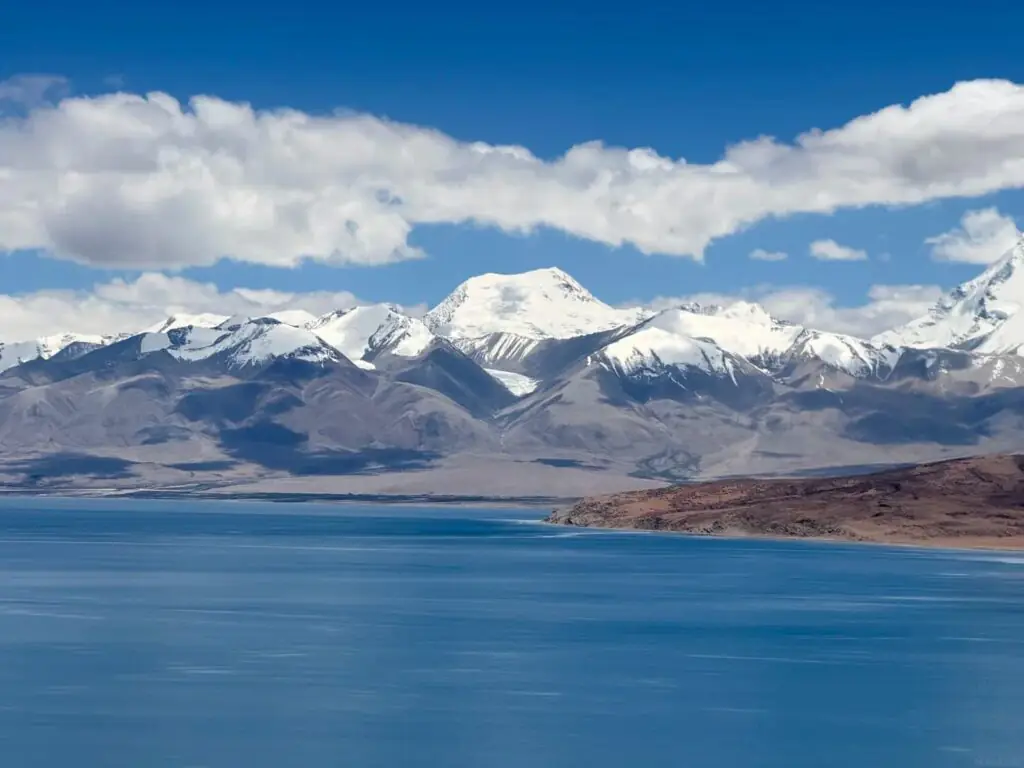
Traveling westward through the vibrantly colored Five-Colored Desert, we arrived at Mapam Yumco, the “King of Sacred Lakes”—the second sacred lake of the day. The Namnani Snow Peak on the southern shore is reflected on the lake’s surface, and on a clear day, Mount Kailash can be seen in the distance to the north. Just a hill away lies Lake La’angcuo, with fresh water on one side and saltwater on the other—one sacred, one profane, each with a completely different character. We arrived at Taqin at the foot of the sacred mountain in the evening and stayed at the Marriott International that night, where we received continuous oxygen supplementation throughout the night as part of our final preparations for tomorrow’s circumambulation of the mountain.
➤ Colorful Desert
In the hidden paradise of the upper reaches of the Yarlung Tsangpo River, the sand dunes shimmer in a variety of colors—golden, red, and white—which stand out vividly under the high-altitude sunlight.
➤ Marbunyongtso
One of the three sacred lakes of Tibet, it is revered as a holy site by Tibetan Buddhism, Hinduism, and Bon, and it is believed that the lake’s waters can wash away sins.
➤ Laon Tso
The “Ghost Lake,” separated from Mapam Yumco by a single mountain, has virtually no vegetation along its shores. Standing at the lakeshore and looking south, both the Namna Ni snow-capped peak and the deep-blue lake waters can be seen in the same frame.
➤ Tachin
The small town where the Mount Kailash pilgrimage begins.
Breakfast: Hotel breakfast
Tachin Kailas Marriott International Oxygen Hotel
or similar oxygen-equipped hotel
Day7
Kang Rinpoche Essential Kora, Day 1: Prayer Flag Square – Chugku Monastery – Zhire Monastery (approx. 13 km)
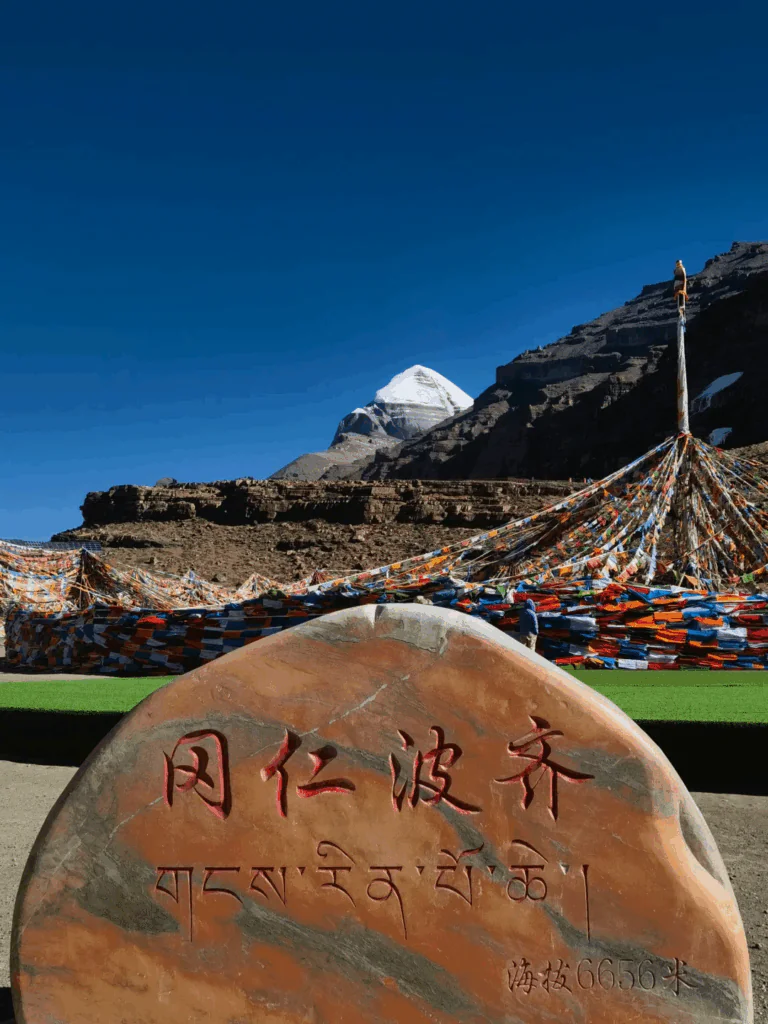
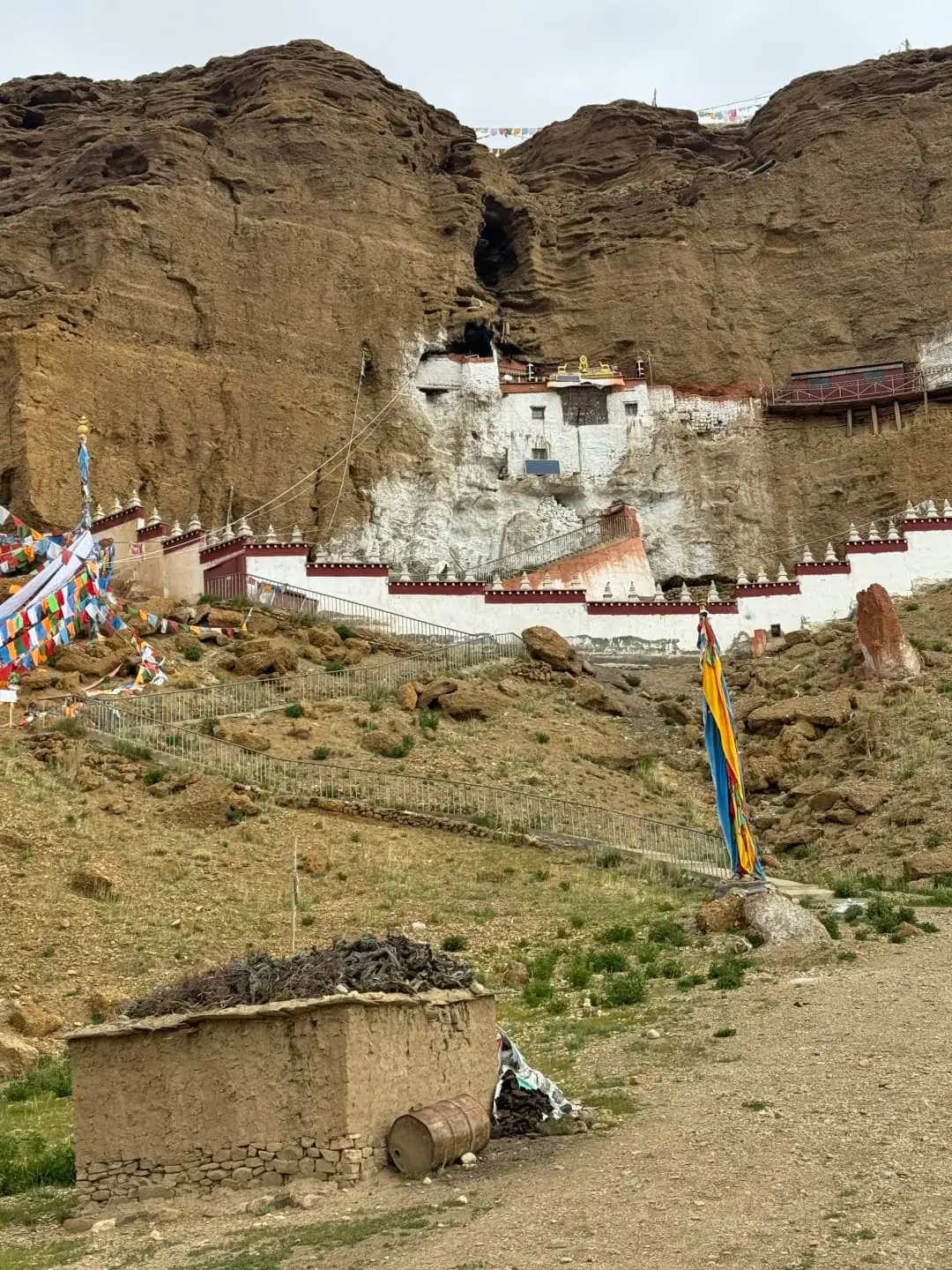
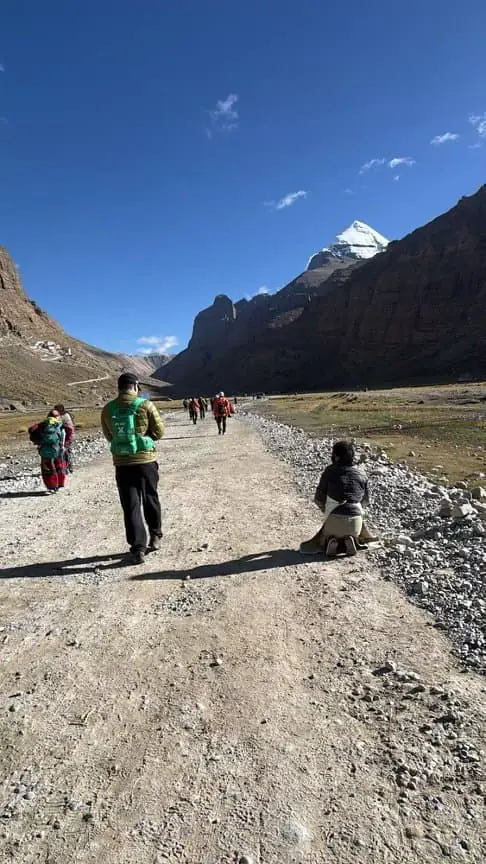
The kora officially begins. Starting from the Prayer Flag Square, we pass through the Two-Legged Stupa and head deeper into the Laqu River Valley. The gentle slope makes this a crucial day for acclimatizing our bodies to high-altitude hiking. Along the way, we passed by Qugu Monastery, where a glance upward revealed the sacred silhouette of the mountain. We arrived at Zhire Monastery in the evening; situated directly opposite the north face of Mount Kailash, it offers the most complete view of the entire sacred mountain.
✨ China2Go's Exclusive Benefits
A shuttle bus runs directly from the starting point, saving you the initial flat stretch so you can save your energy for the real mountain climb.
➤ Highlights Along the Way
- Sutra Square: The five-colored prayer flags flutter in the breeze, and legend has it that passing through the center of the two-legged stupa in front of the square can wash away one’s sins.
- Chukwu Temple: The first monastery along the pilgrimage route, which houses a rare "flying conch shell." When the lamas chant sutras, they blow the conch to bestow blessings upon the pilgrims.
- Zhihe Temple: Our first night's lodging, directly facing the north face of Mount Kailash.
★ Travel Tips:
Zhi Re Temple is a shared dormitory with simple facilities; it is the only overnight stop along the Kora route that does not provide oxygen equipment. Prices for horseback riding, porters, or luggage transport are negotiated on-site; it is recommended to confirm these details with your guide in advance.
Breakfast: Hotel breakfast
Choraiji multi-room or equivalent
Day8
Kang Rinpoche Essence Kora, Day 2: Zhire Temple – Sky Burial Site – Zhuoma La Pass – Fuding Diding (approx. 11 km) – Shuttle bus back to Taqin
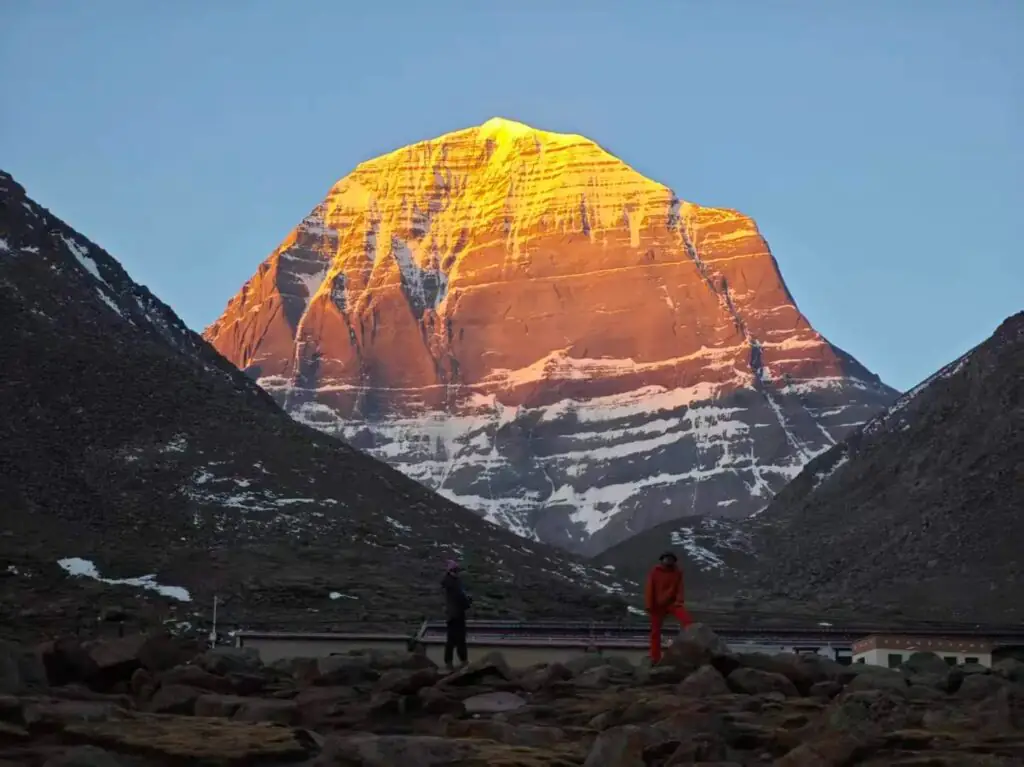
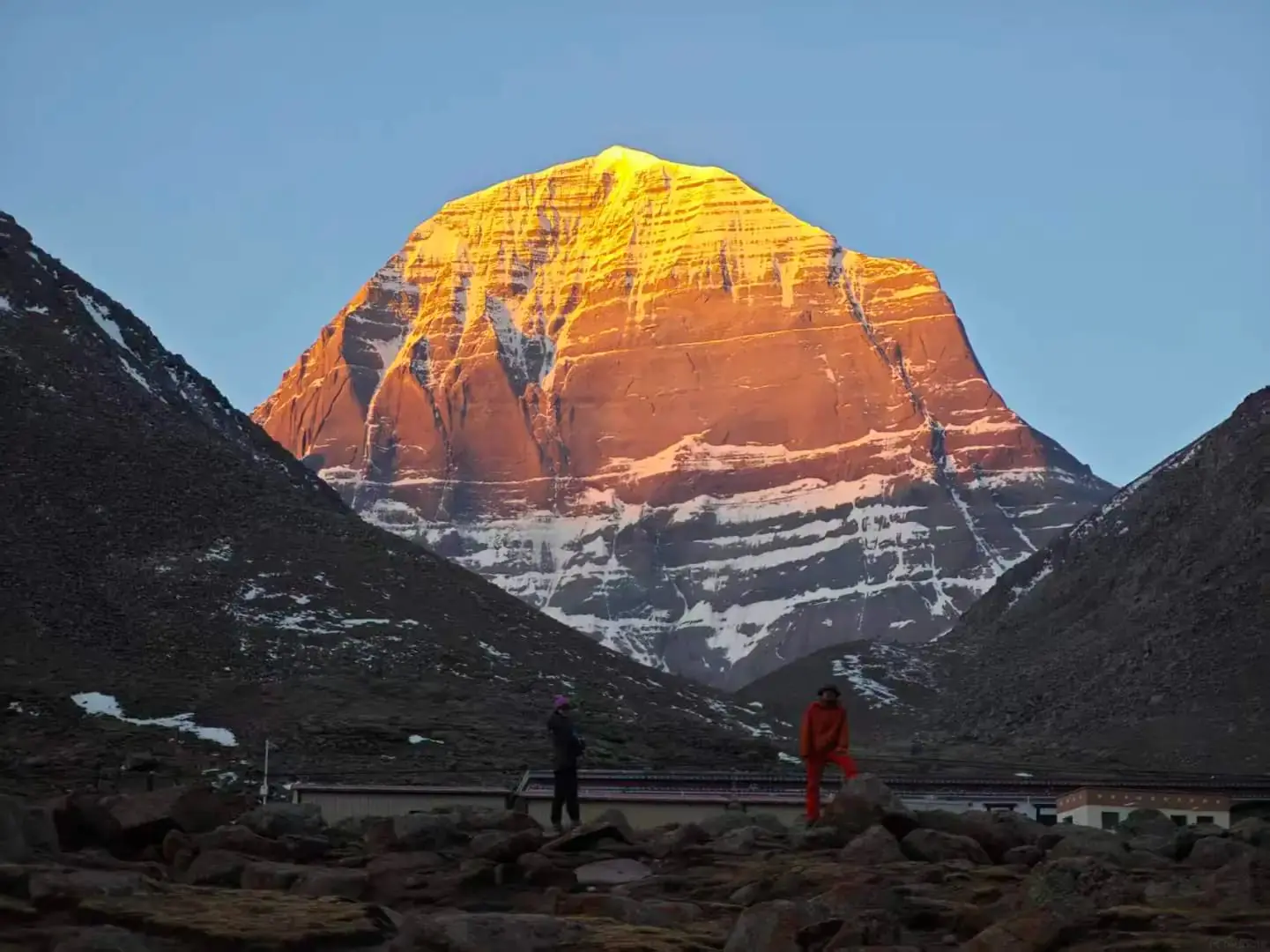
I stepped out of my room before dawn, watching the first rays of sunlight turn the north face of Mount Kailash golden—a scene many pilgrims hope to capture during their circumambulation. I then began the ascent, passing the sky burial site and crossing the Drolma La Pass at an elevation of approximately 5,630 meters—the highest point of the entire pilgrimage route—where pilgrims hang prayer flags and scatter longda. Below lay the emerald-green Lake of Compassion. We then descended all the way to Fudong Diding, where a shuttle bus took us back to Taqin. That evening, we returned to the Marriott to rest and recover.
➤ Highlights Along the Way
- Sunrise on the North Face of the Sacred Mountain: Zhire Temple faces the northern cliff directly, with the Golden Summit bathed in sunlight right before your eyes.
- Dromola Pass: Elevation approximately 5,630 meters; the highest point of the pilgrimage circuit, with prayer flags covering the mountain pass.
- Lake Compassion: The area below the mountain pass is as green as jade and is also known as “the bathing place of the Dakinis.”
✨ Why Choose the Essence to Mount Shān?
The traditional pilgrimage around the mountain takes three days and covers more than 50 kilometers. China2Go preserves the entire highlight section of the route—the northern face of the sacred mountain, the sky burial site, and the Zhuoma La Pass—and provides a shuttle bus back to Taqin after crossing the pass, allowing you to conserve your energy for the most rewarding parts of the journey and still enjoy a good night’s sleep at an oxygen-supplied hotel upon your return.
Today’s hike features high elevation and a long downhill stretch, so please bring a thermos, snacks, and sunscreen. Take it slow and keep your breathing steady. With one guide for every group of six, the guide will have plenty of time to attend to each participant’s needs.
Breakfast x
Lunch x
Dinner x
Tachin Kailas Marriott International Oxygen Hotel
or similar oxygen-equipped hotel
Day9
Tachin—Zada Earth Forest—Ruins of the Guge Kingdom—Zada
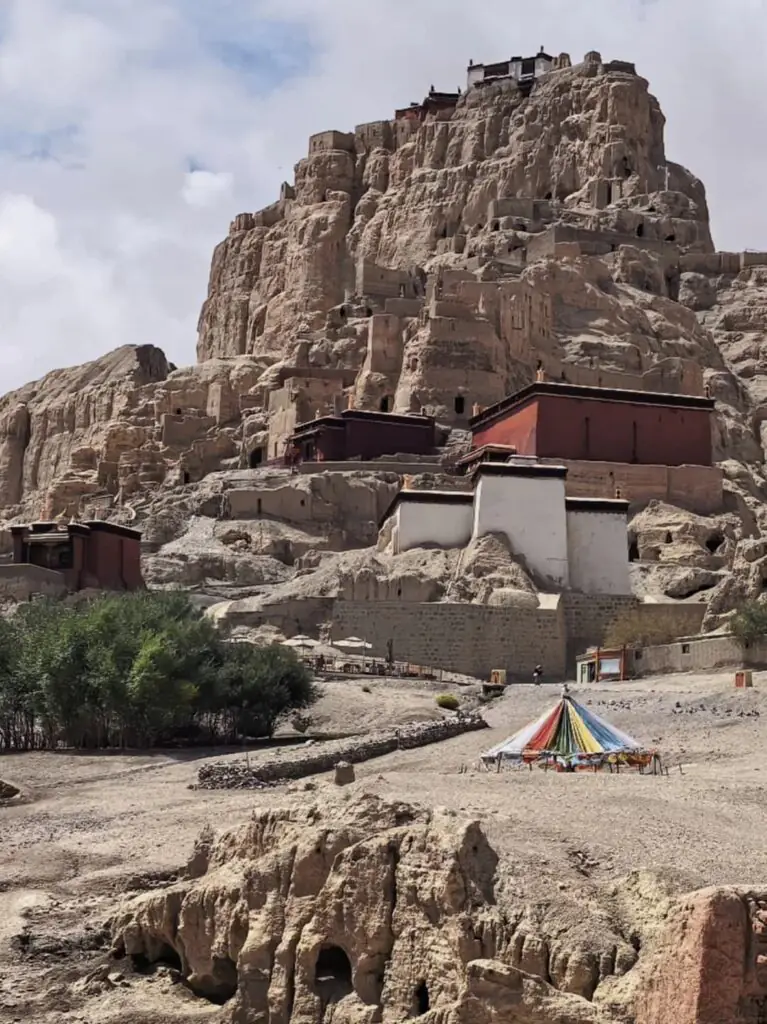
After completing the pilgrimage around the mountain, the journey delves into the depths of Ali’s history. Sedimentary layers from an ancient lake bed have been carved by flowing water and wind into the vast Zada Earth Forest, with formations resembling castles and stupas. The Kingdom of Guge once flourished here for centuries, but later vanished mysteriously, leaving behind only the ruins of the royal city built against the mountainside and murals that remain vividly colorful to this day. As the evening sun casts its rays upon the earthen forest, it is the most photogenic moment in Ali.
➤ Zada Earth Forest
Formed over countless years by the weathering of an ancient lake bed, it stretches endlessly; its layers are most clearly defined when the evening light falls at an angle.
➤ Ruins of the Guge Kingdom
The royal city rises in tiers from the residential areas and monasteries at the foot of the mountain all the way to the royal palace at the summit; the cave murals are an important treasure trove of Tibetan art history.
★ Travel Tips:
To reach the Guge Ruins, you’ll need to climb steep earthen steps to an elevation of approximately 3,800 meters; please wear shoes with good traction. Photography is prohibited in most of the cave murals; please follow the on-site rules.
Breakfast: Hotel breakfast
Zada Gangga Detsi Oxygen Hotel
or similar oxygen-equipped hotel
Day10
Zada-Piyang, Dongga Ruins, Xiayi Gorge, Shiquan River
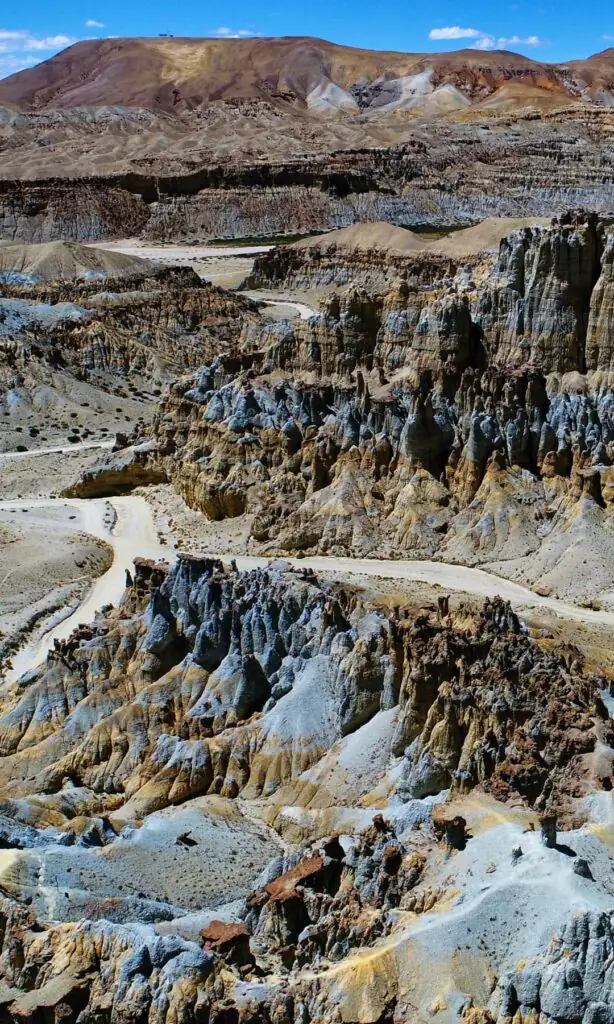
Today we’re traveling along one of the least-known stretches in Ali. The entire cliff face of Piyang Dongga is dotted with thousands of caves, some of which still preserve murals that blend Indian, Central Asian, and Tibetan styles; Xiayi Gorge is a canyon where ochre and earthy yellow hues intertwine. With few visitors, it’s a peaceful place to quietly observe the pristine wilderness of Ali. In the evening, we arrived at Shiquanhe, the administrative center of Ali, which serves as the best supply stop before the upcoming long stretch through Northern Tibet.
➤ Piyang·Dongga Ruins
One of Tibet’s largest cave temple complexes—stepping inside is like opening an illustrated book from a thousand years ago.
➤ Xiayi Gully
The vivid red canyon stands out strikingly in the sunlight.
➤ Shiquan River
The administrative center of Ali Prefecture and one of the headwaters of the Indus River, it has shops and restaurants where you can stock up on supplies.
★ Travel Tips:
We'll be entering Tibet over the next few daysFor the long-distance leg of the journey north, we recommend stocking up on snacks and water tonight, and making sure your cell phone and power bank are fully charged. The hotel will not be providing oxygen tonight, so an oxygen concentrator has been provided in your room.
Breakfast: Hotel breakfast
Shiquanhe Vienna International Hotel or similar
(Equipped with an oxygen concentrator in the room)
Day11
Shiquan River—Niercuo (viewed from a distance)—Bie Ruozecuo (viewed from a distance)—Wuma Cuo—Darao Cuo (viewed from a distance)—Gai Ze
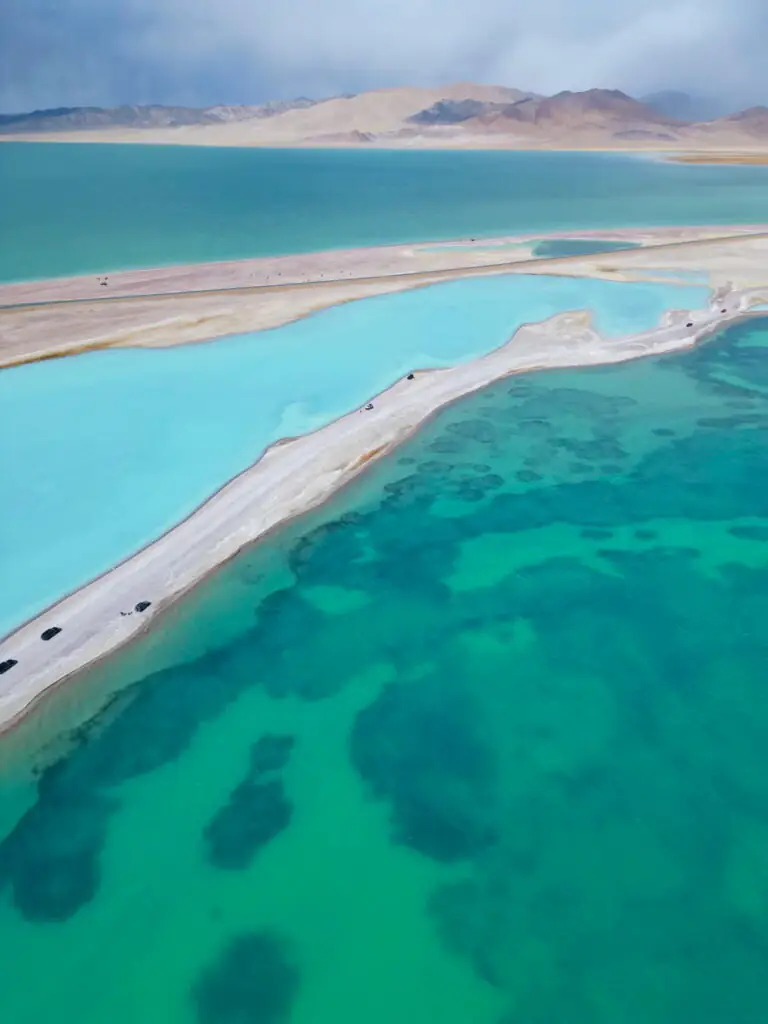
We officially set out on the “Lake Route” along the Ali Great Northern Route. On the Northern Tibetan Plateau, lakes stretch one after another, and the locals jokingly refer to it as “one lake after another.” Nie’er Co features emerald-green waters set against white salt flats, while Wuma Co is divided into several sections by a strip of land; the highway cuts right through the middle of the lake, with emerald green up close, milky blue in the middle, and deep blue in the distance—as if the earth had spilled its paint palette. We passed by Dara Co at dusk, bringing our day-long journey through the lakes to a close.
➤ Nie'ercuo
China's largest carbonate salt lake; from the car window, we could see the green-and-white-striped surface of the lake in the distance.
➤ Wuma Co
One of the best spots for taking photos along the North Route, where you can see several shades of blue-green at once.
➤ Dara Co
The last lake before reaching Gaize—the evening light is the most beautiful there.
★ Travel Tips:
Due to road conditions and nature reserve regulations, some of the lakes along the way can only be viewed from the car or from the roadside. Gai Ze is located deep in northern Tibet, where accommodations cannot compare to those in the city; the hotel we’re staying at tonight is one of the best oxygen-supplied options in the area, with clean rooms and hot water.
Breakfast: Hotel breakfast
Alternatively, the Quanji Three-Diamond Oxygen Hotel or a comparable property
(Due to local limitations)
Day12
Gai Ze – Qiangtang Wilderness – Tree of the Earth – Dangra Yumco – Nima
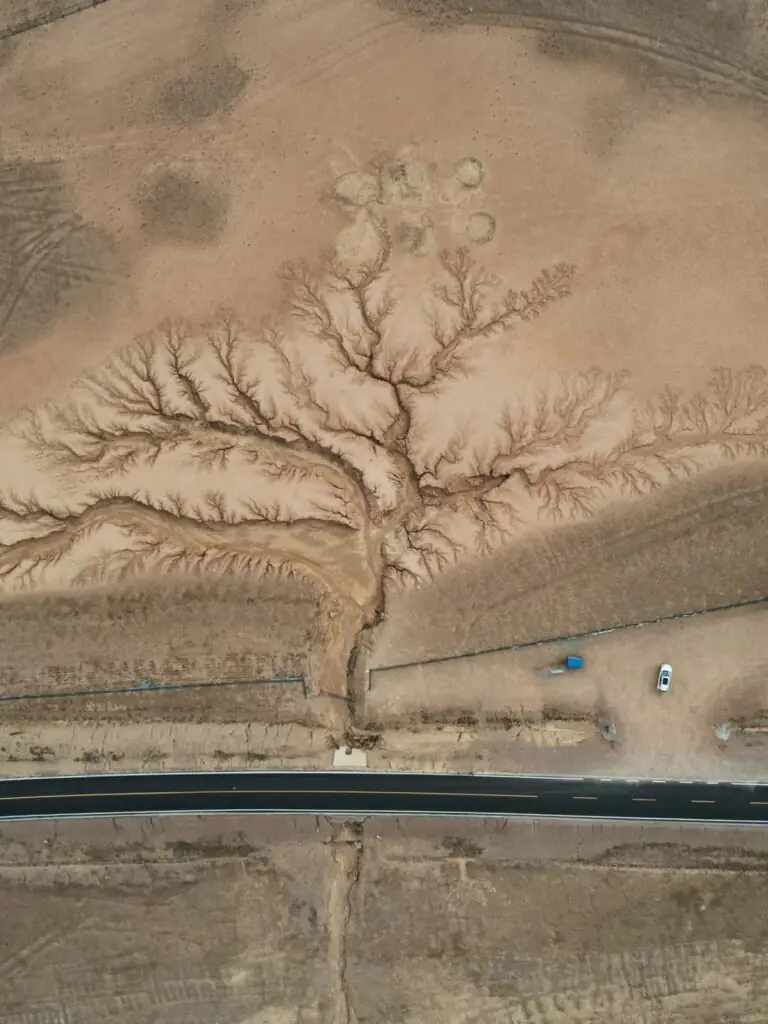
Today we crossed the Qiangtang Wilderness—a place many people have visited Tibet several times without ever having the chance to set foot in. Tibetan antelopes, Tibetan wild asses, and wild yaks roam freely here. Rivers have carved patterns into the earth that resemble the grain of a giant tree; you can only see the full picture by looking down from a high vantage point. In the afternoon, we approached Lake Dangra Yumco, the holiest site in Bon Buddhism. The lake’s waters are a deep blue, with the Dago Snow Mountain rising behind it. The way of life in the village of Wenbu on the lakeshore has remained virtually unchanged to this day.
➤ The Qiangtang Wilderness
In the nearly deserted wilderness of the plateau, when you see a figure running outside the window, don’t rush to grab your phone—take a good look with your own eyes first.
➤ The Tree of the Earth
The giant tree-like patterns carved by river alluvium on the Northern Tibetan Plateau are the most breathtaking natural wonders along the Northern Route.
➤ Dangye Yongcuo
The most sacred lake in Tibetan Bon; believers circumambulate the lake counterclockwise, in the opposite direction from that practiced in Tibetan Buddhism.
★ Travel Tips:
The Tree of the Earth can only be fully appreciated from a high vantage point or via aerial photography; on-site arrangements will depend on weather and viewing conditions. Today’s drive is relatively long, and the area along the route is vast and sparsely populated, so please let your tour guide know in advance if you need to use the restroom.
Breakfast: Hotel breakfast
Nima Yuntian Intercontinental Oxygen Hotel
or similar oxygen-equipped hotel
Day13
Nima-Dazecuo (viewed from a distance)-Qaguicuo-Selincuo (viewed from a distance)-Bango
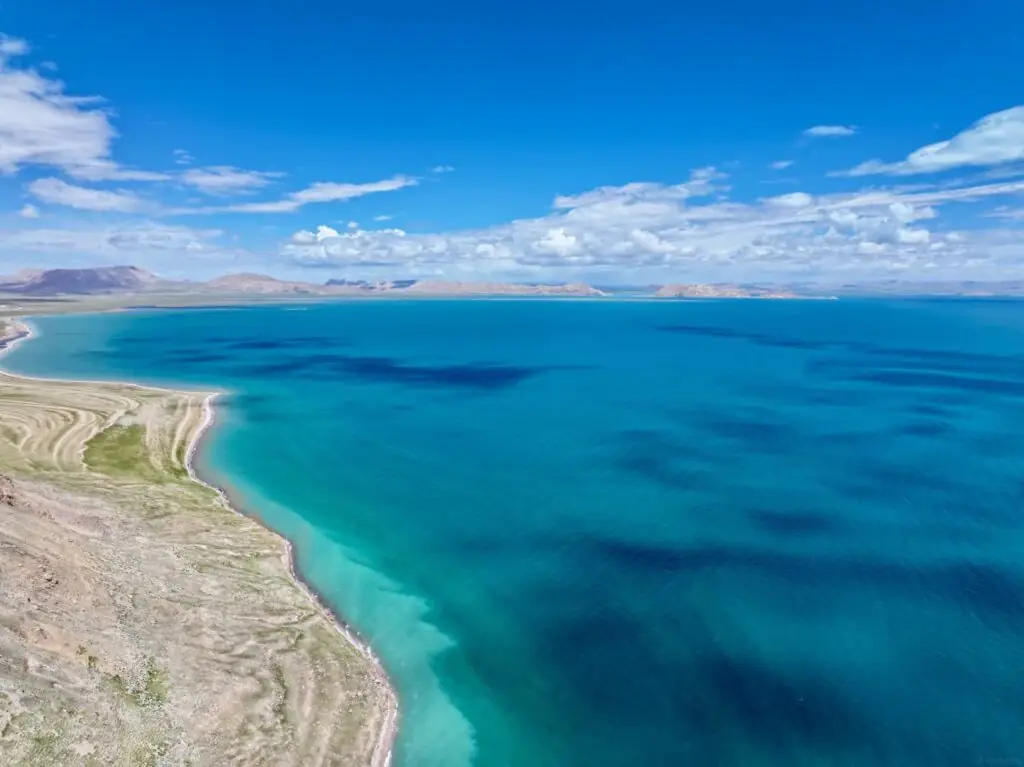
On the slopes along the shore of Lake Dazecuo, the tiered, stair-like marks are the remnants of ancient lake shores left behind by the lake’s waters long ago; the highest tier rises fifty meters above the current lake surface. Next, we arrived at Lake Selinco, Tibet’s largest lake, whose surface stretches as far as the eye can see. Tonight we’re staying in Bangor—our final night on the Northern Tibetan Plateau during this entire journey. On clear nights, stepping outside reveals a sky full of stars, and if you’re lucky, you might even catch a glimpse of the Milky Way.
➤ Dazecuo
If you're lucky, you might spot some Tibetan antelopes on the grasslands by the lake.
➤ Selin Co
The largest lake in Tibet and the second-largest saltwater lake in China, its Tibetan name means “Devil’s Lake.” According to legend, the devil Serling, who devours living creatures, is sealed at the bottom of the lake.
➤ The Night Sky Over Northern Tibet
With its high elevation, clean air, and lack of light pollution, this was the best night of the entire trip for stargazing.
When you go stargazing at night, remember to wear a down jacket, don’t stray too far from the hotel—you can watch the stars from the hotel’s observation deck—and be sure to let your tour guide know if you go out.
Breakfast: Hotel breakfast
Bangor Interstellar Skyline Oxygen Hotel or a similar oxygen hotel
Day14
Bango–Namco–Tashi Peninsula–Lhasa
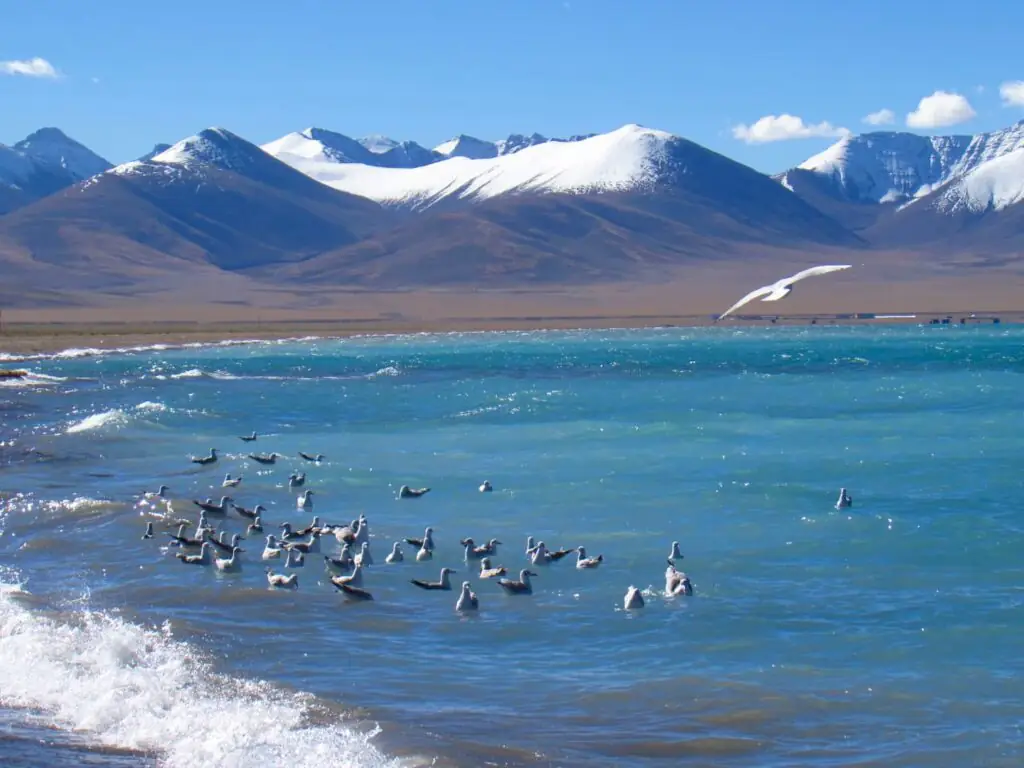
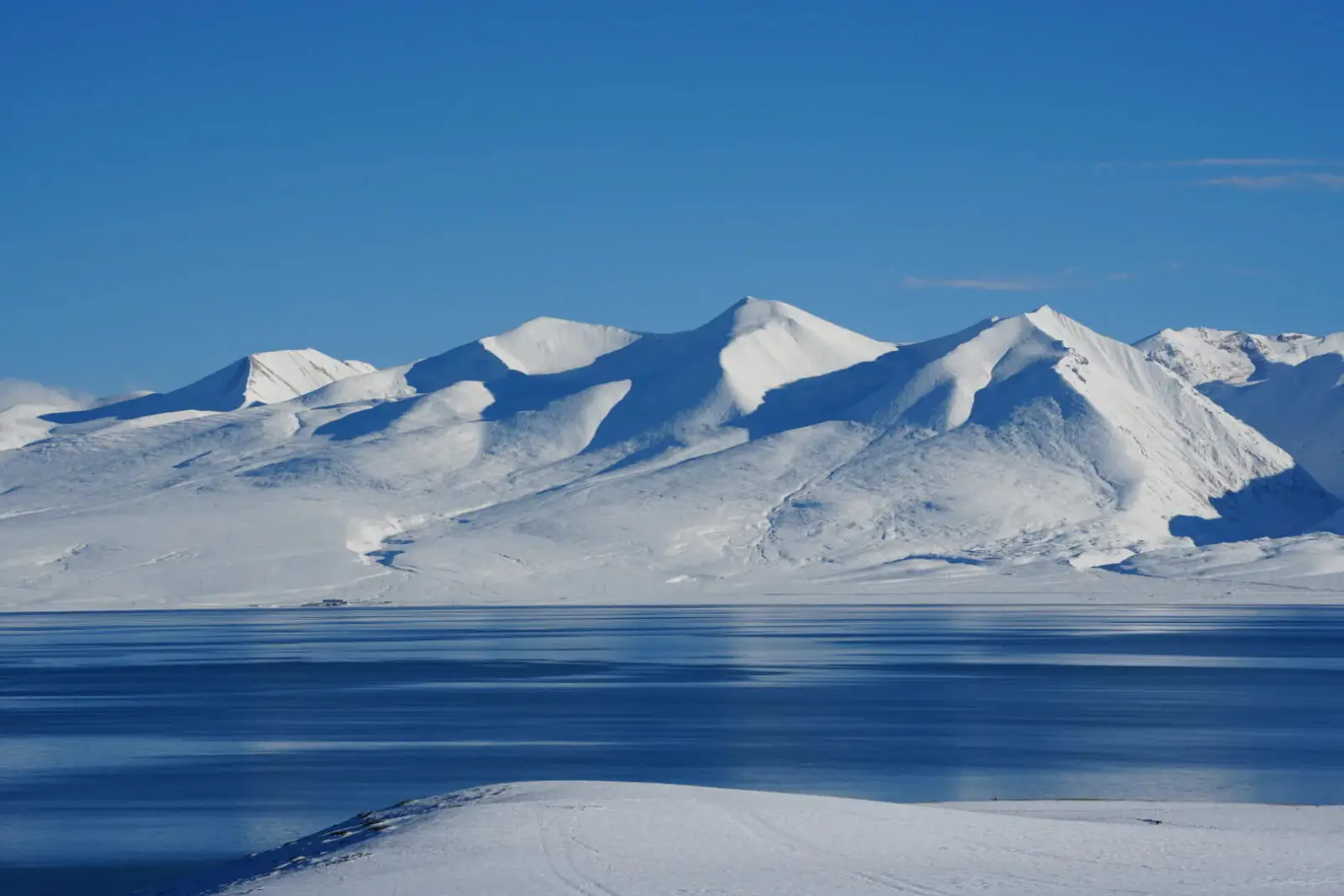
The last of the sacred lakes. Namtso, which means “Heavenly Lake” in Tibetan, lies at an elevation of approximately 4,718 meters. Its southern shore is flanked by the perpetually snow-capped Nyenchen Tanglha Mountains, where the lake’s waters blend seamlessly with the sky. From Yamdrok Lake on the third day, to Mapam Yumco on the sixth, to Namtso today—at this moment, we have completed our journey to all three sacred lakes.
There is an old Tibetan saying: “Circumambulate the mountain in the Year of the Horse; circumambulate the lake in the Year of the Goat.” The Tibetan Year of the Goat is a major pilgrimage year for Lake Namtso. Legend has it that in this year, all the Buddhas and Bodhisattvas gather at the lake’s shore, so the merit gained from circumambulating the lake is doubled, and one will see far more pilgrims circumambulating the lake than usual.
After that, it was all downhill on the way back to Lhasa; the elevation dropped by more than 1,000 meters, and breathing became noticeably easier. Having passed Mount Everest, the Sacred Mountain, the Sacred Lake, and the wilderness of Northern Tibet, seeing the Potala Palace again felt very different from the first day.
➤ Lake Namtso · Tashi Peninsula
The final stop on the tour of the Three Sacred Lakes, the Tashi Peninsula is the most iconic spot for viewing Lake Namtso.
➤ Back to Lhasa
After a half-month journey through the highlands, we returned to where we started.
★ Travel Tips:
This itinerary includes a stop at the Tashi Peninsula on Lake Namtso; a full hike around the lake is not included. It can be windy by the lake, so be sure to bring a jacket, sunglasses, and sunscreen. Please do not step into the lake or disturb the mani stones.
Breakfast: Hotel breakfast
The Hilton Hilton Oxygen Hotel, Lhasa
or similar oxygen-equipped hotel
Day15
Airport / Train Station Drop-off: 24/7 dedicated private transfer service.
➤ Airport & Train Station Transfers (24/7 Private Service)
We offer 24-hour dedicated transportation services. Whether you have an early morning flight or a late-night train, a private vehicle and a dedicated driver will be waiting for you at your hotel. There’s no sharing a ride and no waiting—we’ll take you to the airport or train station right on time.
➤ Qinghai-Tibet Railway
If you choose to leave by taking the Qinghai-Tibet Railway, our team can book sleeper tickets on your behalf (advance request required; subject to ticket availability). The train passes through snow-capped mountains, grasslands, glaciers, and Tibetan villages, allowing you to enjoy the scenery as you slowly make your way down from the plateau to the lowlands.
If you wish to extend your trip, CITS Global Travel—China2Go has offices in Chengdu, Chongqing, Beijing, Zhangjiajie, Yunnan, Guizhou, Xinjiang, and other locations. Our staff can assist you in arranging accommodations and planning the rest of your itinerary.
Breakfast: Hotel breakfast
Pricing Details
Tour Price Includes
- Small groups are honored:This itinerary is limited to 6-person boutique group, with each group equipped with 1 Professional Tour Guide. On the Kora pilgrimage and the long-distance stretches in northern Tibet, the tour guide can keep track of each group member’s condition in real time, help adjust the pace, and ensure everyone’s safety and comfort.
- Transportation:full arrangement VIP Deluxe Qualified Nanny Car(9 all-new 2025 models), with ventilated and heated seats, USB and Type-C charging ports, one seat per passenger, and ample legroom.
- Accommodation:Accommodations are in double rooms throughout the trip; a surcharge applies for single occupancy. Except for the Kham Zhi Re Temple, which offers shared rooms; the Everest base camp, where guests stay at the Rongbuk Lodge; and Gaitse, where guests stay at a three-diamond hotel—all other accommodations are four-diamond or higher oxygen-supplied hotels, including one night at the five-star Hilton in Shigatse.
- Insurance::Includes travel agency liability insurance and vehicle passenger insurance, with additional coverage Highland Travel Insurance (RMB500,000 coverage).
- Permit Assistance:We provide full assistance in obtaining the necessary documents, such as the Entry Permit to Tibet, travel permits, and military zone clearance.
- Tickets Included:Includes admission to the attractions listed in the itinerary and sightseeing transportation, as well as Includes a return shuttle bus from Zhanshan to Dongbuding. We will make reservations in advance for the Potala Palace and other attractions that require advance booking.
- Professional Driver:A full-time driver with experience driving in high-altitude regions will provide service throughout the trip.
- Professional Guide:A Chinese-speaking tour guide will accompany the group throughout the tour, with one guide for every six people. If you require an English-speaking or other language guide, please let our representative know in advance.
- Safety Equipment:The vehicle comes with one 4-liter medical oxygen cylinder.
- Thoughtful Service:Each guest will receive an exquisite khata, and unlimited Nongfu Spring mineral water is available daily.
- China2Go Alibaba Gift Pack:Portable oxygen cylinders, glucose, personal nasal cannulas, wet wipes, barley cookies, and local snacks.
- Private Transfers:Includes private transfer from Lhasa Airport or Train Station; no shared rides. We’ll meet you as soon as you exit the station and assist with your luggage.
"Travel Accident Insurance, Coach Seat Insurance, Travel Agent Liability Insurance, Highland Guarantee Insurance".
What's Not Included
- Meals:Except for breakfast at the hotels listed in the itinerary, guests are responsible for their own meals. If you need assistance, your tour guide can make recommendations or make arrangements on your behalf.
- Optional Activities:Activities not listed on the itinerary and personal expenses are not included in the tour price.
- Transportation to/from Lhasa:Airfare or train tickets from your departure point to Lhasa and back are not included, but we can recommend flights or assist with booking them.
- Tips:Recommended Tips for Drivers and Tour Guides 60 CNY per person per day(30 CNY each for the driver and tour guide).
- Porters and Horses for the Kora:If you need porters, horses, or luggage transport, the fees are to be paid by you and will be negotiated on-site.
Other Frequently Asked Questions
Important Information for Participants in the Ali Kora North Route Group Tour
- Eligible Travelers:This tour is open to travelers from Taiwan, Hong Kong, Macau, Malaysia, Singapore, and other visa-free or visa-convenient countries. Travelers of other nationalities should confirm eligibility with our consultants in advance.
- Cancellation Policy:(Based on Tourism Bureau standards)
- Cancellation ... 41+ daysbefore departure: 5% of tour fee
- Cancellation ... 31–40 daysbefore departure: 10% of tour fee
- Cancellation ... 21–30 daysbefore departure: 20% of tour fee
- Cancellation ... 2–20 daysbefore departure: 30% of tour fee
- Cancellation ... 1 daybefore departure: 50% of tour fee
- Cancellation ... on or afterdeparture date: 100% of tour fee
- Force Majeure:The travel agency shall not be liable for any additional expenses resulting from force majeure events such as natural disasters, flight delays, or policy changes; however, it will do its utmost to assist in resolving such matters.
- Early Withdrawal:If a guest withdraws mid-tour or fails to complete an activity due to personal reasons, this is considered a voluntary forfeit and no refund will be issued.
- Ticket Policy:The peak tourist season in Tibet is from June through September. Tickets for the Potala Palace must be reserved in advance, and visit times are assigned by the system.
- Traffic Conditions on the Ali North Route:The latter part of the trip follows the Ali North Route, which consists mostly of long drives. Road construction, landslides, snow accumulation, or flash floods are common, and roads may be temporarily closed or rerouted. The tour guide will adjust the itinerary or substitute attractions based on actual road conditions, with safety as the top priority.
- Description of the Lake from a Distance:Due to route constraints, terrain, or regulations in protected areas, some lakes along the way can only be viewed from the vehicle or from the roadside; there will be no stops to get out of the vehicle.
- Health Advisory:Travelers with high blood pressure, heart conditions, asthma, or respiratory illness are advised to consult a physician before registering to confirm suitability for a highland itinerary.
- Notes on mountain climbing:This itinerary features a highlights tour of Mount Kailash, with a total walking distance of approximately 24 kilometers over two days. The highest point is the Zhuoma La Pass at an elevation of approximately 5,630 meters, making this a moderate-intensity high-altitude hike. Participants are advised to have a reasonable level of physical fitness and to proceed at their own pace under the guide’s direction. If you are unable to complete the trek due to physical conditions, the travel agency will assist in arranging transportation and accommodations back to Tagin, Shigatse, or Lhasa; however, you will be responsible for the associated costs.
- Local Conditions:Accommodations in Ali and parts of Northern Tibet are limited; lodging at Zhire Temple, Rongbuk Lodge, and Gaize is relatively basic. Please keep your expectations reasonable and respect local culture and customs.
- Accommodation:Solo participants will be matched with a same-gender roommate where possible. Should this not be feasible, a single room supplement will be required.
- Cash Reserves:Electronic payments may be inconvenient in remote areas, so we recommend bringing approximately 2,000–5,000 yuan in cash. WeChat Pay and Alipay can be used in Lhasa, Shigatse, and Shiquanhe, but you must link your account in advance.
- No-Shopping Guarantee:This tour guarantees zero shopping stopsIf forced shopping is found to occur, a refund of 5,000 CNY will be issued.
- Optional Activities:Based on the group's actual schedule, the guide will explain available optional activities. Participation is entirely voluntary — no pressure to spend.
- Language Services:The itinerary includes a Chinese-speaking guide by default. If an English-speaking guide is required, please inform us in advance for arrangement.
Tibet tours are arranged with Chinese- or English-speaking guides by default. If guides in other languages are required, please inform us in advance and we will assist with the arrangements.
Optional Services
- China2Go Alibaba Gift Pack:One kit per guest, containing a portable oxygen cylinder, glucose, a personal nasal cannula, wet wipes, barley cookies, and specialty snacks—for refreshment at any time during long drives and the Kora pilgrimage.
- Daily Mineral Water:Unlimited Nongfu Spring mineral water is available for everyone every day—remember to stay hydrated, especially in the dry high-altitude climate.
- Onboard Medical Oxygen:The vehicle is equipped with a 4-liter medical oxygen cylinder to handle emergencies.
- Prayer & Kora Experience:Each guest can participate in hanging prayer flags and scattering longda for blessings, creating special memories of their journey.
- Health Restrictions:Travelers with serious conditions such as high blood pressure, heart disease, or asthma are advised not to join, to ensure safety.
- Special Requirement for Taiwan Travelers:Guests aged 65 and above must provide a medical certificate issued by a hospital, including blood pressure, blood sugar, and heart rate, stating “fit for high-altitude travel,” with official stamps. (No such requirement for travelers from other regions.)
- Not Recommended for Participation:Pregnant women, insulin-dependent diabetes patients, those with a history of brain or eye surgery, lung disease, or major surgeries are advised not to join high-altitude trips.
High-Altitude Travel Notes
- Avoid strenuous activities upon arrival at high altitude. It is recommended not to shower or wash your hair during the first two days to prevent catching a cold and affecting acclimatization.
- Most sections of the route through Ali and Northern Tibet are at altitudes exceeding 4,500 meters, which is higher than typical Tibet itineraries, so it’s especially important to stay in good physical condition and get plenty of sleep before the trip.
- Please be sure to bring sunglasses, lip balm, and sunscreen—the UV rays at high altitudes are much stronger than at sea level.
- Altitude sickness is a normal occurrence, and most people will gradually adjust within 1–3 days; if you feel unwell, please inform your tour guide immediately.
- Since there are many long drives, we recommend bringing your own snacks and dry food to keep your energy up.
- For those who regularly exercise, it is recommended to stop high-intensity training two weeks before departure and switch to aerobic exercise.
- Before departure, you may prepare Danmus, Rhodiola, or glucose powder, as directed by your doctor, in case of an emergency.
- Avoid staying up late; maintaining a regular sleep schedule can help your body adjust more quickly.
- You should eat light meals, consume plenty of fruits and vegetables, and avoid overeating and drinking alcohol.
- Temperatures on the plateau vary greatly between day and night, so wear layers and adjust your clothing as needed to avoid catching a cold.
- If you feel unwell while traveling, slow down your breathing and use the portable oxygen cylinder you have with you; you can also turn on the hotel’s oxygen supply system at night.
- You may experience prolonged periods without cell service along the Kora route and in remote areas of Northern Tibet. Please make sure to contact your family before departing and arrange for a roaming plan or an eSIM that works in mainland China.
- Stay relaxed; being overly anxious can actually make altitude sickness worse.
- Drinking butter tea in moderation can help restore energy and alleviate altitude sickness.
How to Book Flights to Tibet
CITS國旅環球-China2Go is committed to delivering a travel experience unlike any you’ve had before—crafted especially for our valued guests.
The meeting point for this tour is Lhasa, and guests from Taiwan, Hong Kong, Macau, Malaysia, Singapore, etc. can choose to travel to the meeting point by plane or train.
As the Tibet Travel Permit application is based on flight or train information, guests must confirm their flight or train schedule with our travel consultant before purchasing tickets, in order to ensure a smooth permit application process.
For airline tickets, guests may choose to have CITS Global Travel—China2Go—assist with booking; alternatively, they may purchase tickets on their own to earn credit card miles or points, which allows for greater flexibility in arranging their itinerary.
Why Are Meals Not Included?
CITS國旅環球-China2Go wants to give every traveler maximum flexibility and freedom of choice throughout the journey!
We provide hotel breakfast daily (except during the Kora), and guests are free to choose their own meals for the rest of the day. In cities such as Lhasa, Shigatse, and Shiquanhe, there is a wide selection of Tibetan cuisine, Sichuan cuisine, hot pot, and street food, so you can choose according to your personal taste. In the remote areas of Northern Tibet, restaurants are scarce; your tour guide will remind you in advance to stock up on provisions and will assist with arranging or pre-ordering meals if needed. Whether to participate is entirely up to you.
Without group meals, you can actually eat what you really want and aren't tied down by a set menu.
Special Notes for Transitioning
A kora is a journey that challenges both your physical and mental endurance. Please pay special attention to the following:
- Luggage carry-on:During the Kora, you’ll spend only one night on the mountain (at Zhire Temple). Leave your large luggage at the Tachin Hotel; simply bring a 10–20L hiking backpack containing warm clothing, rain gear, a power bank, a thermos, snacks, personal medications, and a small amount of cash.
- Prepare for assembly:You’ll need a windproof and waterproof jacket, hiking boots, and a headlamp. We recommend bringing hiking poles to reduce the strain on your knees during descents.
- Physical fitness and health:The day after crossing the Zhuoma La Pass, there will be a long downhill stretch. Please maintain a steady pace and hike at a pace that suits your abilities. If you feel seriously unwell, please inform your guide immediately.
- Dietary supplements:Carry energy bars, chocolate, or glucose with you to replenish your energy at any time.
- Cultural Etiquette:Walk around the mountain in a clockwise direction, respect local religious beliefs, and avoid taking photos of monks and pilgrims without permission.
- Safety Reminder:The weather in mountainous areas can be unpredictable, so please do not stray from the group on your own and be sure to follow the tour guide’s instructions.
A pilgrimage around a sacred mountain is not just a journey; it is also an opportunity for self-reflection. If you prepare thoroughly and approach it with reverence, the experience will leave you with lasting memories.
Tibet Travel Permit (TTP): What You Need to Know
- TTP Application:Foreign passport holders and travelers from Taiwan who wish to visit Tibet must obtain a “Letter of Permission to Enter Tibet.” Our agency will handle the entire process on your behalf; you simply need to provide the necessary information.
- Residents of Hong Kong and Macao do not need to obtain a letter of permission to enter Tibet; border pass and other documents will be handled by the travel agency on their behalf.
- Ali Document Processing:For the Ali and Northern Tibet routes, additional documents such as travel permits and military district approvals are required; our agency will handle all of these on your behalf.
- Required Documents:
- Scanned copy of the first page of a valid passport
- Copy of Chinese visa or Mainland Travel Permit for Taiwan Residents (depending on identity)
- Processing Time:Applications for the Entry Permit to Tibet must be submitted 30–45 days in advance; please register and submit your documents as early as possible.
- Important Notes:Please confirm your flight with our agency before purchasing your ticket to avoid buying a ticket that cannot be used for your Tibet Entry Permit application.
- Policy Changes:Policies regarding Tibet may vary depending on the time of year and region. In the event of any last-minute changes, our agency will notify you immediately and assist you in resolving the matter.
- Age:In accordance with regulations, travelers aged 65 or older who hold a Taiwan Compatriot Certificate must provide a health certificate issued by a public hospital.
Travel Consultant
15-Day Northern Ali, Tibet Tour | Departs with 4 participants; full group at 6 participants
6.10
CNY 25,800
ture
Your inquiry will be processed as soon as it is received during business hours. We’ll get back to you within 48 hours. Please complete all fields accurately to ensure fast and precise service.
If you haven’t heard from us within 48 hours, you can contact us directly via:
◆ Facebook:China2Go – CITS Global (China International Travel Service) or
◆ Whatsapp:886911607167
◆Line@:@china2go
15-Day Northern Ali, Tibet Tour | Departs with 4 participants; full group at 6 participants
July 1–August 31 (Please contact a consultant)
CNY 28,800
ture
Your inquiry will be processed as soon as it is received during business hours. We’ll get back to you within 48 hours. Please complete all fields accurately to ensure fast and precise service.
If you haven’t heard from us within 48 hours, you can contact us directly via:
◆ Facebook:China2Go – CITS Global (China International Travel Service) or
◆ Whatsapp:886911607167
◆Line@:@china2go
15-Day Northern Ali, Tibet Tour | Departs with 4 participants; full group at 6 participants
9.10
CNY 27,800
ture
Your inquiry will be processed as soon as it is received during business hours. We’ll get back to you within 48 hours. Please complete all fields accurately to ensure fast and precise service.
If you haven’t heard from us within 48 hours, you can contact us directly via:
◆ Facebook:China2Go – CITS Global (China International Travel Service) or
◆ Whatsapp:886911607167
◆Line@:@china2go
A Quick Overview of the Highlights of the Ali Zhanshan North Route
Built on trust and integrity — your most reliable travel partner

Founded over 70 years ago, CITS (China International Travel Service)Our service network covers all provinces in Mainland China and we have registered travel companies in more than 60 countries around the world. Over the years, we have received more than 10 million foreign guests and international delegates to visit China.
Guided by the principle of “Integrity First, Service Above All,” we are committed to providing every traveler with professional itinerary design and attentive on-the-ground service. Unlike typical tour operators, we do not include unnecessary high-cost medical visits or injections, and we guarantee a 100% sightseeing-focused experienceThe company also promises "100% Pure Play, No Shopping", and will pay RMB5,000 for any breach of contract.We insist that every traveler leave behind a wonderful and genuine travel memory of Mainland China.
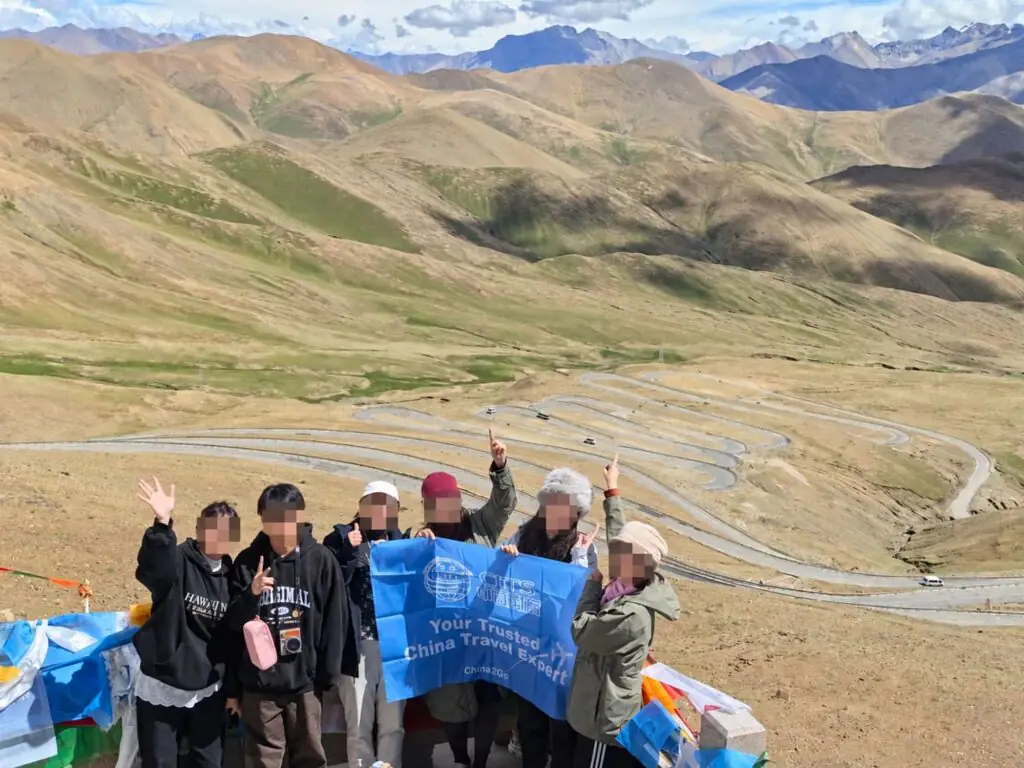
A quick look at the highlights of the Ali Trans Mountain itinerary
Purely for fun and commitment:100% is purely for fun and no shopping, $5,000 will be paid for breach of contract.
Trip Design:Enter from the south, exit from the north—no backtracking. Everest Base Camp + the highlights of the Mount Kailash pilgrimage + the Ali Northern Route: Complete Tibet’s longest loop in 15 days.
The Three Sacred Lakes:Yamdrok Lake, Mapam Yumco, and Namtso—all in one trip.
Cultural depth:Potala Palace + Jokhang Temple + Barkhor Street + White Temple + Guge Kingdom + Piyang Dongga Grottoes.
The Hidden Wonders of Northern Tibet:Wuma Co + Tree of the Earth + Dangra Yumco + Selin Co + the Qiangtang Wilderness—a route that many people have never taken, even after visiting Tibet several times.
Transitional Arrangements:A two-day trek through the Jinghua-Zhushan area: the first day is spent acclimatizing on gentle slopes, and on the second day, we cross the Zhuoma La Pass before taking a shuttle back to Taqin, where we spend the night at the oxygen-supply hotel.
Accommodation upgrade:Hilton Five-Star in Shigatse, Marriott International in Tagin, and Hilton Garden Inn in Lhasa; upgraded Rongbuk Lodge at Mount Everest; oxygen supply or oxygen generation provided throughout the entire trip, except at Zhi Re Temple.
Featured Giveaway:Potala Palace Scenic Afternoon Tea + High-Altitude Travel Insurance + Onboard Oxygen Cylinder +Alibaba Gift Pack+ Salonda + Personal video of pulling scallions from dry land + Hanging prayer flags.
Professional Protection:Qualified full-time drivers in Tibet + Chinese-speaking tour guides (English or other languages available upon request), with full coverage under the four social insurance programs.
The small group is considerate:One tour guide for every 4–6 people; solo travelers can join a group.
How Important Is It to Choose a Small Group for the Ali Pilgrimage?
★ Small group of 6 people ★
Our Kora trek is limited to small groups of six; even if you sign up alone, we’ll help you join a group—you won’t be merged into a large group.
One guide accompanies every six guests throughout the entire journey. While trekking around the mountain, crossing the Zhuoma La Pass, and descending long slopes, the guide can keep a close eye on each person’s condition at all times, reminding them to adjust their pace, stay hydrated, and stay warm, and providing immediate assistance if anyone becomes exhausted.
Once you reach the northern route in Ali, where it’s not uncommon to drive several hundred kilometers in a day without any shops or cell service, the flexibility of a small group becomes even more important: if you want to pull over to take more photos of Wuma Lake or catch a glimpse of Tibetan antelopes by the roadside, all it takes is a quick discussion among the six of us to make a decision.
★ Attractions Overview ★

The Guge Kingdom
The Vanished Kingdom of Guge
The kingdom flourished in Ali for several hundred years, but mysteriously vanished in a short period of time; to this day, there is no definitive explanation.
▸ The Royal City Built Against the Mountain
Residences, temples, and royal palaces are stacked from the foot of the mountain all the way to the summit; the entire earthen hill is a city in itself.
▸ Millennia-Old Murals
The murals in the cave remain vividly colored to this day and constitute an important treasure trove of Tibetan art history.
▸ Zada Earth Forest
A cluster of castles carved by the wind from the bottom of an ancient lake; as the setting sun shines upon them, the entire landscape is bathed in gold.
Dangra Yumco
The Most Sacred Lake of Bon
▸ Walk counterclockwise around the lake
Bon followers circumambulate the lake in the opposite direction from Tibetan Buddhists, so it is common to see pilgrims walking counterclockwise along the lakeshore.
▸ Dago Snow Mountain
Behind the deep-blue lake lies the Sacred Mountain, and the village of Wenbu on the lakeshore still preserves its ancient way of life.
▸ The Tree of the Earth
Rivers have carved patterns resembling giant tree rings into the northern Tibetan Plateau; you can only see the full picture when viewed from above.
The Three Sacred Lakes
Tibet's Three Sacred Lakes: See Them All in One Trip
One is in southern Tibet, one is at the foot of a sacred mountain, and one is in northern Tibet—many people have made several trips to Tibet and still haven’t managed to visit all three.
▸ Yamdrok Lake
On the third day, we crossed the Gamba La Pass and looked down upon the jade-like lake.
▸ Mapam Yumco
On the sixth day, the King of the Sacred Lakes gazed from afar at Mount Kailash.
▸ Namtso
On the fourteenth day, Tianhu Lake and the Nyanqing Tangula Mountains merged into one, marking the end of the Three Sacred Lakes.
Wuma Co
The Palette of the Earth
▸ Road in the Lake
As the lake water receded, a strip of land was revealed; a highway ran through the middle of the lake, dividing it into several sections.
▸ Seeing Several Shades of Blue at Once
Emerald green up close, milky blue in the middle, and deep blue in the distance—each piece has a different color.
▸ Visible only from the North Line
Surrounded by the wilderness of northern Tibet and reddish-brown hills, travelers on the southern route through Ali won’t get to see this scenery.
Essence Mountain Trek
The Essence of Mount Kailash Pilgrimage: Focus Your Energy Where It Matters Most
The traditional pilgrimage takes three days and covers more than 50 kilometers; many people are held back by their physical stamina and end up having to gaze at the mountain from afar at its base. The “Highlights” pilgrimage preserves the most rewarding section of the route, allowing you to cross the Zhuoma La Pass in just two days.
▸ Day 1: Acclimatization on a Gentle Slope
The shuttle bus goes directly to the starting point at Prayer Flag Square, passes by Qugu Temple, and from there it’s about a 13-kilometer walk to Zhire Temple. The slope is gentle, making this a day to let your body gradually acclimate to the high altitude.
▸ Day 2: Crossing the Zhuoma La Pass
Early in the morning at Zhire Temple, we watched the sun illuminate the northern face of Mount Kailash, known as “Golden Mountain.” We then passed by the sky burial site, crossed the Zhuoma La Pass at an elevation of approximately 5,630 meters, and descended to Fudong Dijing, covering a distance of about 11 kilometers on foot.
▸ Take the shuttle bus back to Tachin and stay at the oxygen-supply hotel again
After crossing the pass, a shuttle bus took us straight back to Tachin, where we spent the night at the Marriott International. We received continuous oxygen therapy throughout the night, so we didn’t have to endure another night at high altitude.
▸ Small group of 6 people, so the tour guide can give everyone personal attention
On the pilgrimage route, one guide accompanies every six guests, so the guides can see who is walking slowly and who needs water.
CITS國旅環球-China2Go's Luxury Car and Accommodation

Small-group Ali Kora tour—that way, the guide can really take care of everyone
Small groups of 6 people, traveling in a 9-passenger, luxury VIP-class vehicle that meets all safety standards, with one seat per person
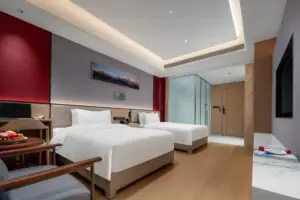
Accommodations along the Ali Loop are limited, so each night’s stay has been carefully selected.
In addition to the Zhan Shan Zhi Re Temple, the entire itinerary includes hotels with oxygen supply or on-site oxygen generation, including the five-star Hilton in Shigatse and the Tachin Marriott International.