Western Sichuan Seda 317+318|Small group of 4-10 persons・Seda・Daocheng Aden in-depth 11 Days Chengdu to and from

Seda/Inacheng Aden 11 Days Departure from Chengdu/East Tibet Secret Land/Seda Lalorong/Yading Shenshan/4~10 People Small Groups
317 and 318 highway, the most beautiful journey in western Sichuan, plus Seda and Tao Cheng Aden, the beauty of western Sichuan and Ganzi.

11 days and 10 nights
Chengdu → Xinduqiao → Dacheng Yading → Batang → Dege → Seda → Luhuo → Xiaojin → Chengdu

Small group of 10 persons
Departure from 4 guests, maximum 10
Solo travelers are welcome to join and share

100% sightseeing-focused with no shopping stops. Compensation of CNY 5,000 applies in case of violation.

Full range of selected hotels, including Chengdu VOCO, Tao Cheng Hawthorne, Sedarwasu, etc.

Chengdu Departure・Secret Land of Eastern Tibet・Sedar Lalong・Yading Divine Mountain
Everyone goes to Tibet, but few have traveled there. Starting from Chengdu, crossing the Kham Plateau, arriving at the world's largest Tibetan Buddhist Institute, and then going deeper into the foot of the Three Father Mountain - this is not just a trip, but an in-depth pilgrimage to quiet the soul.
From 14800CNY
Itinerary Map
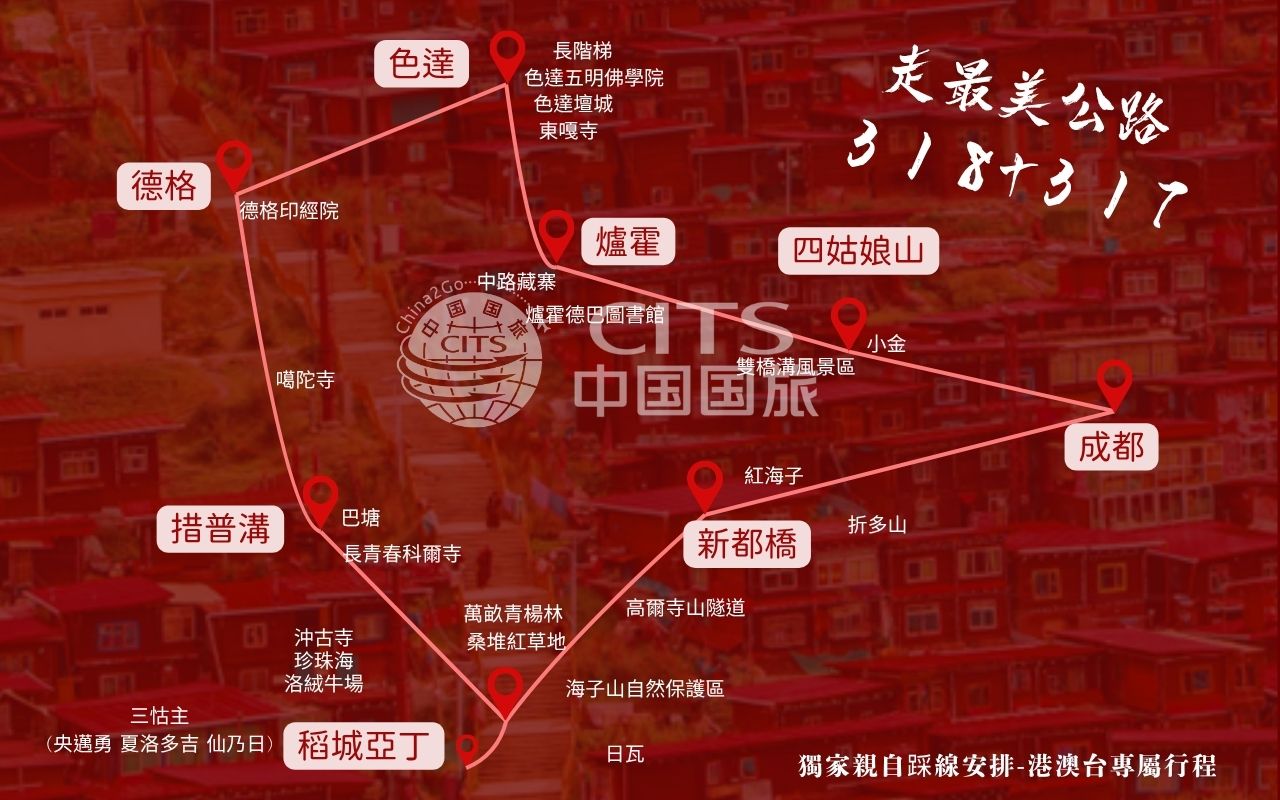
Chengdu Departure・Secret Land of Eastern Tibet・Sedar Lalong・Yading Sacred Mountain・Siguniangshan Mountain・Western Sichuan 317+318 Journey
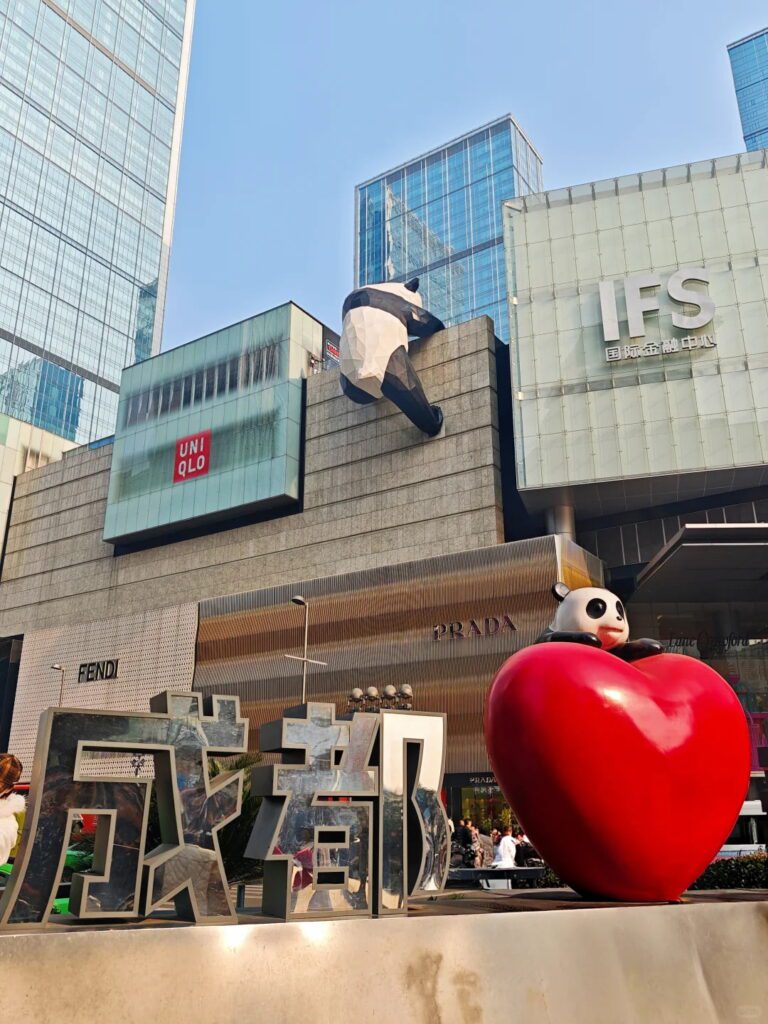
Fly to Chengdu Shuangliu or Tianfu International Airport, pick up at the airport and check in at the hotel. There will be no program today, so that you can fully rest your body and store up energy for the next trip to the plateau. Chengdu is the gateway to the Sichuan Basin, with a mild climate and an altitude of only about 500 meters above sea level, and is also an important starting point for travel to Tibetan areas.
★Thoughtful reminder: After arriving in Chengdu, we recommend you to rest early and avoid staying up late. Please prepare warm clothing for the next day's journey.

Meals: Own arrangements

Chengdu High-TechFive DiamondsVOCO Hotel or similar
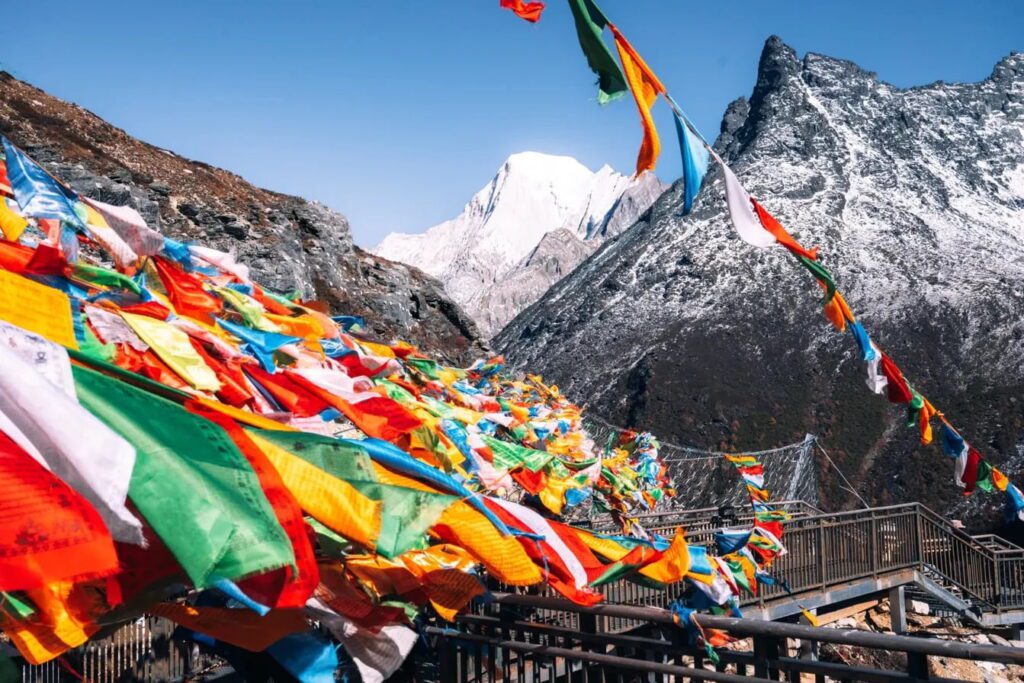
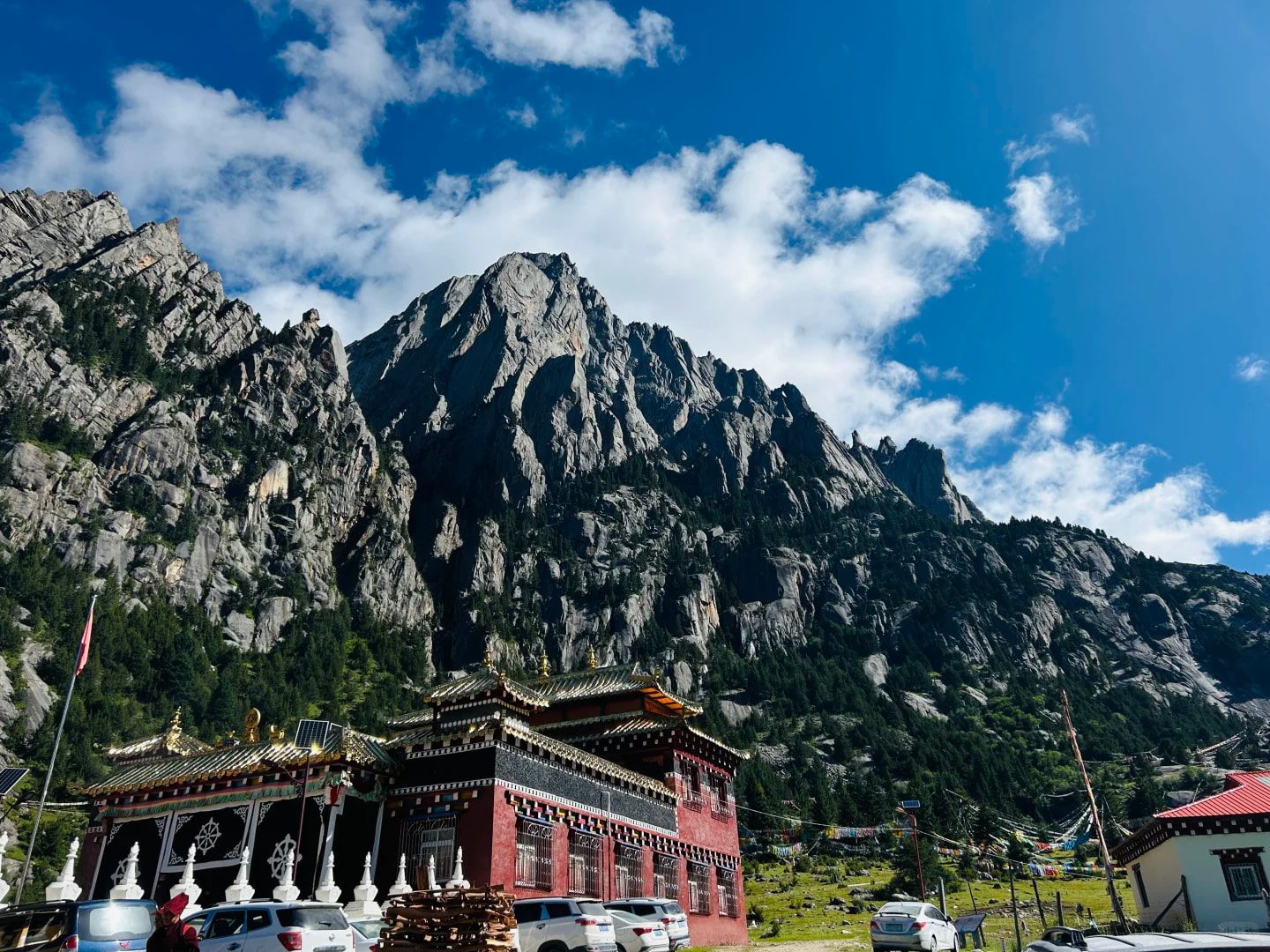
Departing early in the morning, we will head west along the Yakang Expressway and cross Mount Chedo to officially enter the Tibetan area of Kham. From the basin to the plateau, the scenery progresses step by step. The reflections of the Red Sea Lake and the mountains are reflected in the red sea, and the Xinduqiao cooks are swirling with smoke, and the Tibetan dwellings are strewn about, making this the first night on the plateau that is hard to forget for every traveler.
➤ Mt. Shoto|The First Pass of Khamber Mt. Xueduo is an important geographical boundary between the Sichuan Basin and the Kham Tibetan area. The Tibetan word "Xueduo" means "winding", which describes the topography of the winding mountain roads in this area. Historically, this was an important route on the Tea and Horse Road, where horse caravans crossed the mountains to transport tea and salt to the Tibetan areas in exchange for horses and medicinal herbs. The mountain pass is 4,298 meters above sea level, and is also a natural watershed between the humid climate of the Sichuan Basin and the dry climate of the Tibetan Plateau. After crossing the pass, the vegetation from subtropical evergreen forests rapidly changed to plateau meadows, with snowy peaks in the distance, making it the most iconic geographic transition node into the Tibetan region.
➤ Honghaizi|Highland Lakes under Mt. Red Sea is a typical plateau ice-eroded lake, formed by ancient glaciers eroding the surface and accumulating water, with an elevation of about 4,000 meters above sea level. The color of the lake changes with the weather and seasons. In summer, the meadows are green, the lake is dark blue, and in autumn, the grass turns yellow, and on sunny days, the distant mountains are completely reflected in the water, and the scenery changes continuously with light and shadow.
➤ Xinduqiao|The first stop of Sichuan-Tibet South Route Xinduqiao is located on the west side of Kangding City, and is the first important junction of the South Sichuan-Tibet Route (National Highway 318) after entering the Tibetan area, with an altitude of about 3460 meters. Residences are mainly stone and wood structures, farmland and pastureland are interspersed, and poplar trees are planted on both sides of the highway outside of the town, with golden leaves in autumn, forming a richly layered rural landscape with white pagodas, Tibetan residences, and distant mountains. Historically, Xinduqiao was an important courier station on the Tea Horse Road, where merchants and travelers rested and recuperated.
★Thoughtful reminder: today's drive is about 340 kilometers, over Mount Chedo when the altitude rises, please pay attention to warmth and symptoms of high altitude sickness, arrive in Xinduqiao as soon as possible to rest.
Breakfast: Hotel breakfast
Afternoon Tea: Potala Palace View Afternoon Tea
Xanfan Hotel Kangding Xinduqiao (Oxygenated) or similar Oxygenated hotels
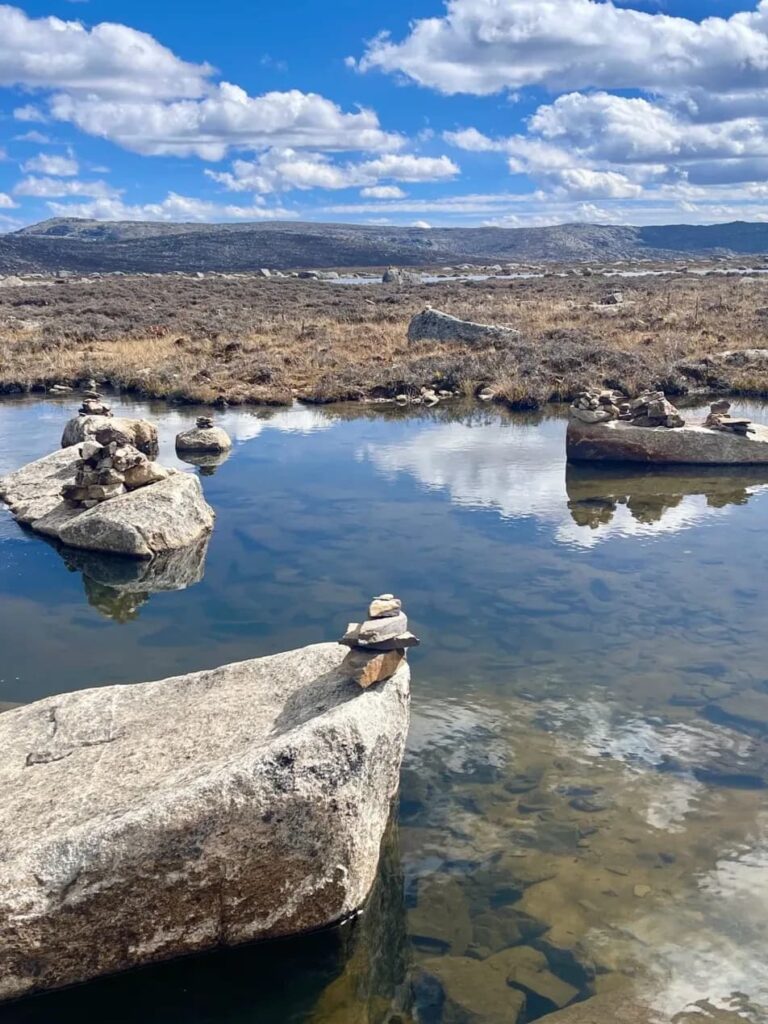
Starting from Xinduqiao, you will pass through the tunnel of Gaogansi Mountain, overlooking the mountains and rivers along the 18 bends of the Heavenly Road, traveling through the Yajiang River to penetrate into the infinite valley, and then crossing the high mountains to enter the city of Inaccessible. On the way, you can see 10,000 acres of green poplar forests and red meadows of Sangdui, with unforgettable saturated colors, which is the most richly varied landscape of the whole day.
➤ Gokyoji Mountain Tunnel / Sky Road 18 Turns Observation Deck One of the most spectacular sections along the Yakang Highway, the highway winds between canyons and mountain ridges, and the Sky Road 18 Bend Observation Deck overlooks the Yajiang River Valley and the continuous mountain ridges, with an open view, making it a representative site of the Tibetan highway landscape in Sichuan.
➤ Immeasurable Valley Yajiang to Inacheng section of the deep valley, steep mountains on both sides, the river running in the valley bottom, along the way with the elevation change of vegetation is obvious, from the coniferous forest belt gradually transition to the plateau meadows, is one of the most rich landscape level of the natural road section on the way.
➤ Ten Thousand Acres of Green Poplar Forest and Mulberry Mounds of Red Grassland A typical seasonal landscape in the territory of Inacheng. The Sangdui Red Grassland is made up of highland wetland vegetation, and the leaves turn bright red in autumn, contrasting strongly with the Tibetan dwellings and snow-covered mountain vistas. Surrounded by a large forest of Sichuan poplar trees, the golden foliage and the blue sky together form the most recognizable natural picture of Inacheng.
★Thoughtful reminder: today's journey distance is up to 420 kilometers, en route there are a number of high-altitude sections, please hydrate in the car, avoid empty stomach, at any time to pay attention to the physical condition.
Breakfast: Hotel breakfast
Hao Sheng Hotel in Inacheng Aden or equivalent
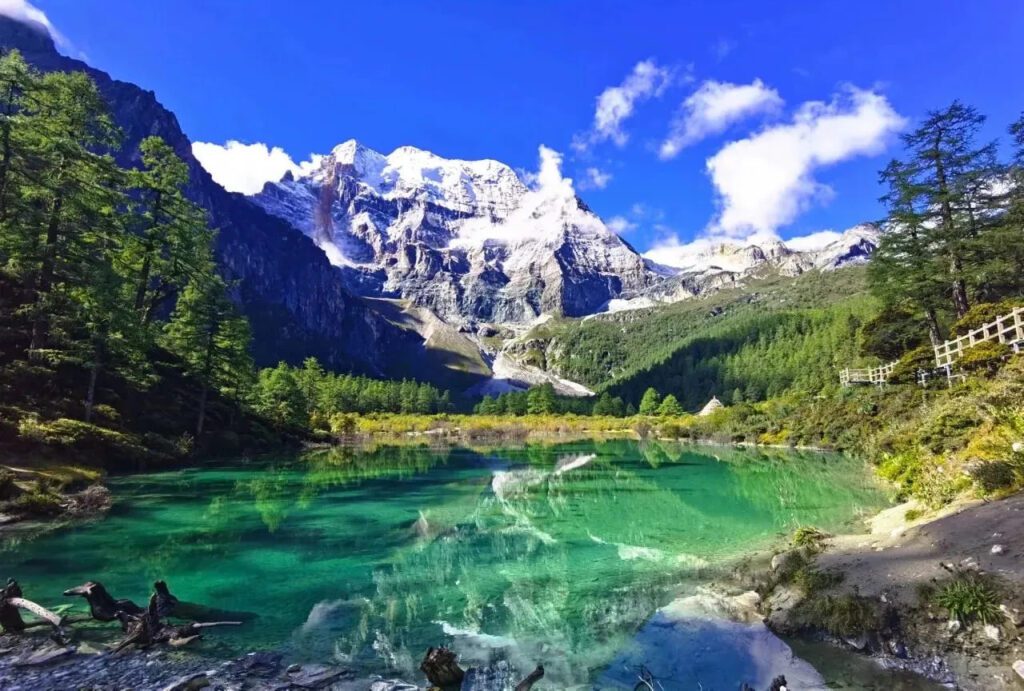
A full day in the heart of the Aden Scenic Area. Take a scenic bus or battery car to the Luolong Cattle Ranch, look up to the Three Fatherless Mountains, and feel the energy of the sacred mountains and lakes of Tibetan beliefs at the Sea of Pearls.
➤ Inacheng Yading Scenic Area (Scenic Area Bus + Battery Car) Located in Shangri-La Township, Inacheng County, Ganzi Prefecture, Sichuan Province, in the middle of the Hengduan Mountain Range in the eastern part of the Tibetan Plateau, and one of the most complete preservation areas of ancient glacial landforms in China, In 1928, the American explorer Joseph Rock went deep into this area and published his photographs in the American National Geographic Magazine, which attracted wide international attention. Private cars are not allowed to enter the scenic area, so you have to take the scenic area car and the battery car to go deeper into the area.
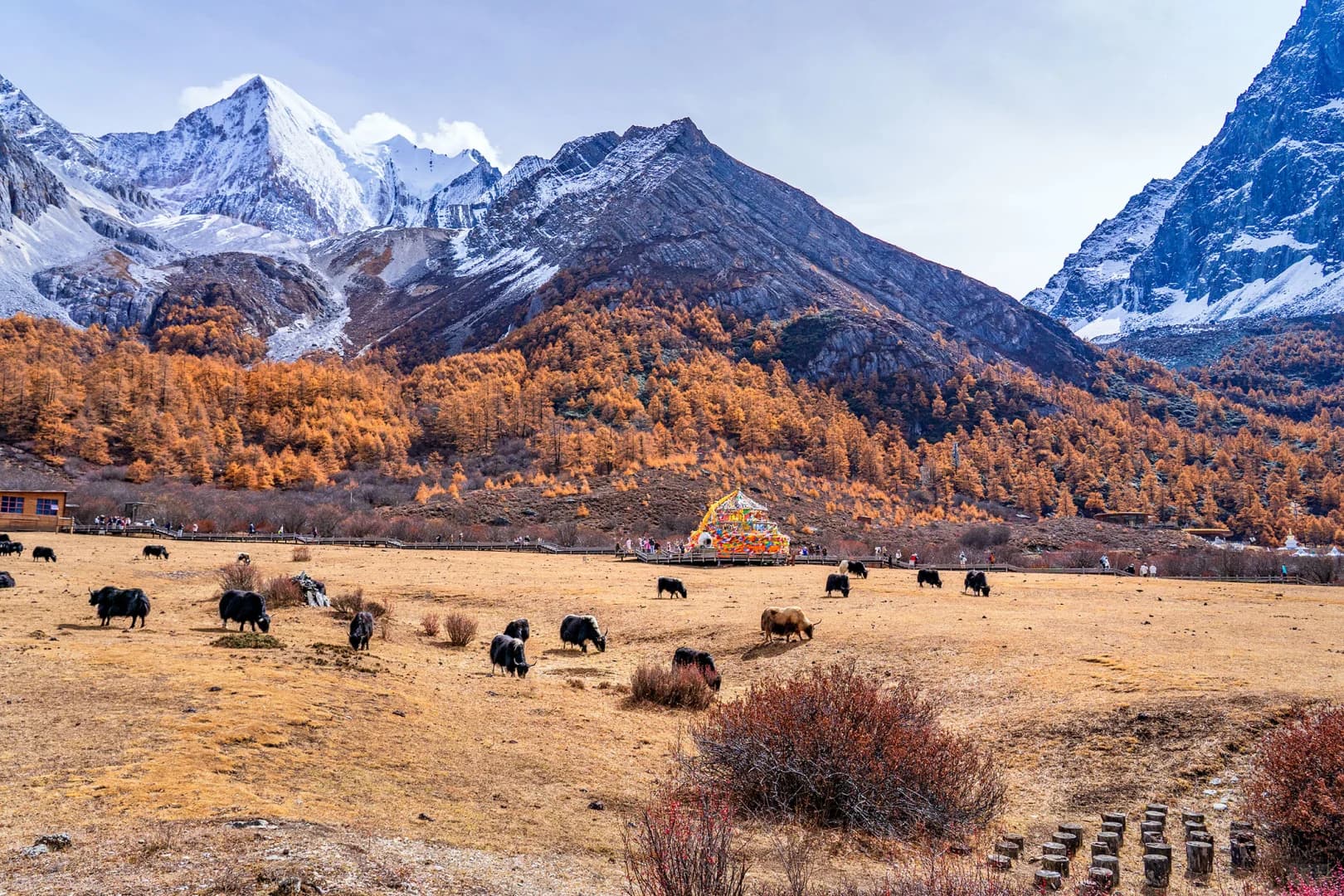
➤ Najung Beef Farm|Sanshinzan Scenic Center Luolong Cattle Ranch is situated in the middle of the three sacred mountains, at an altitude of about 4,180 meters above sea level, which is the best viewpoint to enjoy the panoramic view of the three sacred mountains. Meadows, lakes and cattle coexist on the vast pastureland, and the year-round snow above the mountainside constitutes the purest natural landscape of the plateau.
➤ Sea of Pearls (Chomolatse)/Sennaeje Mountain The pearl sea Tibetan name "ZhuoMaLaTso", meaning "mother god lake", is XianNaiRi snow peak melting snow convergence into alpine lake, the lake surface clear. Xian Nai Ri for the three sacred mountains of the northern peak, elevation 6032 meters, Tibetan meaning Avalokiteshvara, is the highest elevation of the three father of God in the mountain, Tibetan Buddhist texts recorded, the three father of God in the world of Buddhism twenty-four sacred sites in the eleventh place.
➤ Yomiyong Charodogit (1947-), Myanmar army officer and politician, president of Myanmar (Burma) from 2008 Yangmai Yong is the south peak, 5958 meters above sea level, meaning Manjushri in Tibetan; Charo Dorje is the east peak, 5958 meters above sea level, meaning Vajrapani in Tibetan. The three peaks were arranged in a zigzag pattern, Tibetan Buddhism collectively known as "Nianqing Gongga Risong Gongbu", meaning "sacred snow mountain father and mother of the three", respectively, symbolizing compassion, wisdom and courage. According to Tibetan legend, if you worship the three sacred mountains three times, you can realize your wish in this life.
★Thoughtful reminder: the high altitude of the Aden Scenic Area,, Pearl Sea to Xian Nai Ri section has a longer walking section, please wear comfortable sports shoes, walk according to your ability.
Breakfast: Hotel breakfast
Hao Sheng Hotel in Inacheng Aden or equivalent
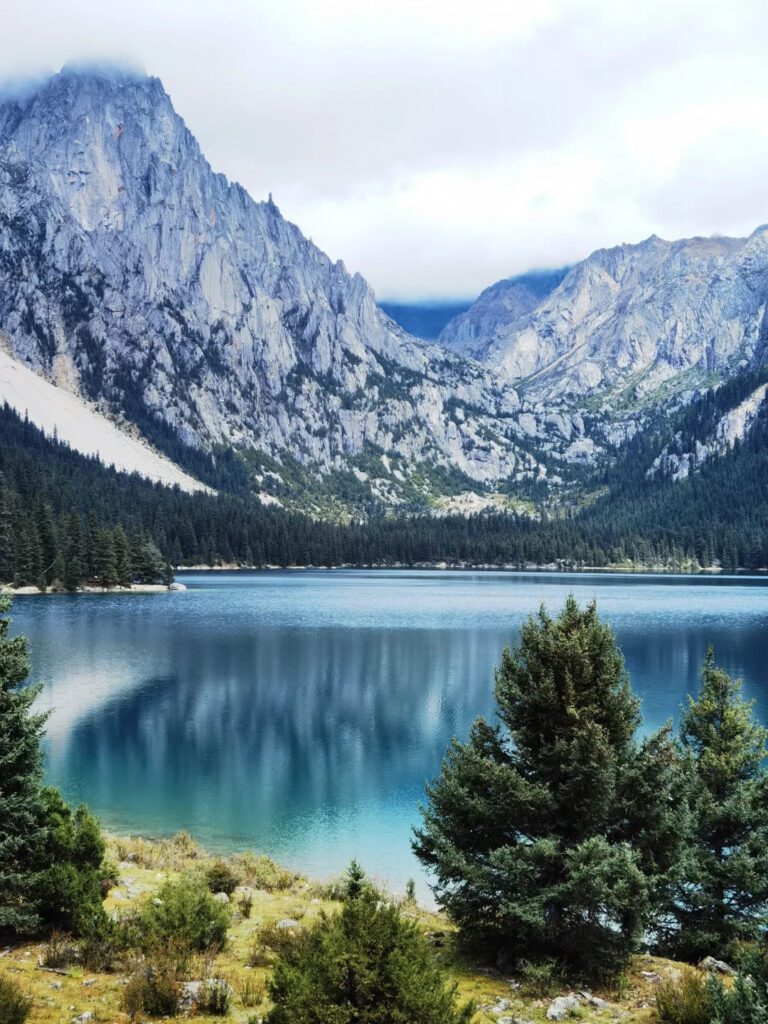
Leave Inacheng and travel north to Batang. On the way, visit the Evergreen Kor Monastery, an important religious center of the Gelugpa school in Eastern Tibet; in the afternoon, enter the Tsopou Gorge Scenic Area, where alpine lakes are intertwined with primeval forests, making it a serene and magnificent place.
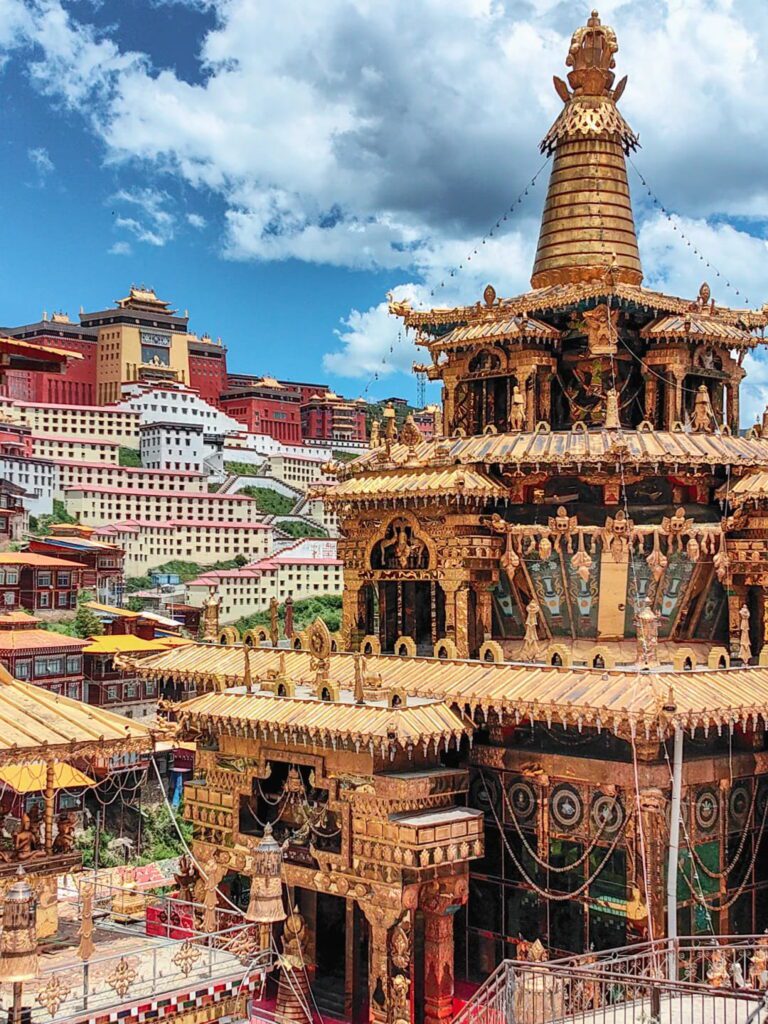
➤ Nagoya Kor Temple (Includes Battery Train) Nagarjuna Kor Monastery is the largest Gelugpa Monastery in the Batang region, dating back to the Tubo period, and has been rebuilt and expanded many times in history. Built on a mountainous terrain with a magnificent golden dome, the main hall enshrines a large number of precious Buddha statues and thangkas, and is an important stronghold of religious beliefs in the Kham region of Eastern Tibet, with a large number of monks still practicing here. The core area of the monastery can be easily reached by battery car.
➤ Tsopougou Scenic Area Tsopo" means "Divine Lake Ditch" in Tibetan, and it is the most well-preserved primitive alpine ecological scenic area in Batang County. Inside the ditch, there is a large altitude span and obvious vertical distribution of vegetation, from the river valley mixed forest to alpine meadows and ice-eroded lakes. The core of the scenic area Tsopo Lake, the lake surface is calm and clear, surrounded by peaks and mountains, is one of the most primitive and quiet natural places on the entire route.
★Thoughtful reminder: today's drive is about 344 kilometers, over a number of mountain passes, arriving at the scenic area in the late afternoon, it is recommended to pay attention to warmth during the trip, the scenic area walking section is relatively gentle.
Breakfast: Hotel breakfast
Holiday Inn Batang or similar
Traveling north along the Jinsha River valley from Batang to Derge, we will visit the Humtok Monastery on the way. This rarely visited monastery, with its simple architecture and well-preserved murals, is a quiet relic of Eastern Tibetan religious culture. Upon arrival in Derge, you will experience this ancient Tibetan cultural city famous for its scripture institute.
➤ Masjid Raja (Buddhist temple) Buzzard Monastery is located in the valley along the route from Batang to Derge, belonging to the Nyingmapa (Red Sect) of Tibetan Buddhism. The building is built on the mountain, far away from the main tourist routes, and retains a relatively primitive appearance of monastic life. The mural paintings inside the temple are brightly colored and the themes cover all kinds of Tibetan Buddhist honors and protectors, making it a rare humanistic site to be seen during a deep trip to the Tibetan area.
➤ Derge County Situated on the west bank of the upper Jinsha River, Dege is one of the most important gateways from Sichuan to Tibet, and is also the most important preservation site of Tibetan culture in the Kham region. It is also the most important preservation area of Tibetan culture in the Kham area. The county is not a big city, but it is famous for the Derge Institute of Sutra Printing and is known as the hometown of the "Great Encyclopedia of Tibetan Culture" in the field of Tibetan studies. Upon arrival today, you can first feel the atmosphere of this ancient cultural city in the county town, and tomorrow you will formally visit the scripture institute.
★Thoughtful reminder: today's drive is 325 kilometers, including a number of winding mountain roads, please take timely rest and hydration. After arriving at Dege, we suggest you go to bed early. Tomorrow you will visit the Yijing Temple, so you need to keep your spirits high.
Breakfast: Hotel breakfast
Degekal Hotel or similar
Only three diamonds can be drilled due to geographic location
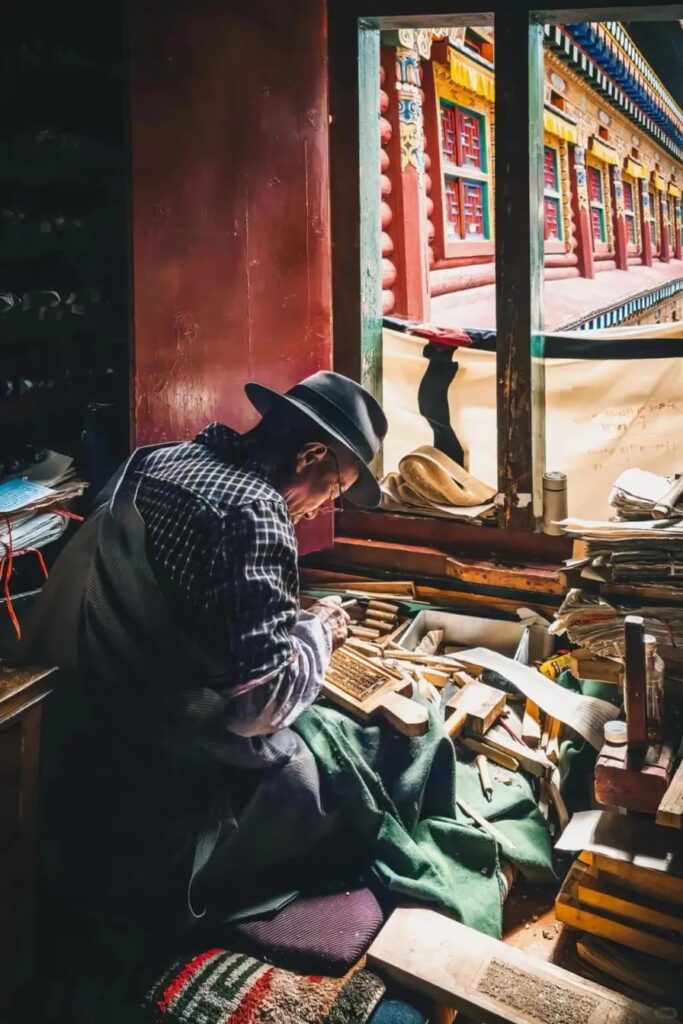
In the morning, you will walk into the Dege Institute, and in the afternoon, you will head to Serta, where you will arrive at the Lama Rong Wu Ming Buddhist Institute. Both are the core preservation sites of Tibetan culture and beliefs, one with its canonical legacy of a thousand years of wisdom, and the other with its monastic community that showcases the magnificence of contemporary Tibetan Buddhism.
➤ Derge Institute|Tibetan Cultural Encyclopedia The Derge Sutra Printing Institute was founded in the seventh year of the Yongzheng reign in the Qing Dynasty (1729) by the twelfth generation of Derge Tusi, Denpa Zeren, and it took ten years for the institute to reach its full scale, and was originally known as the "Derge Kungchen Monastery Sutra Printing Institute". The institute is not confined to a single sect, but also collects texts from various schools of traditional Buddhism, including important writings of the Gelug, Sakya, Nyingma, and Kagyu schools, as well as Buddhism, medicine, astronomy and calendar, language and literature, etc. The institute has been honored as the "World Encyclopedia of Tibetan Culture". It has preserved more than 320,000 woodblock engraved plates, and has a collection of more than 830 books with more than 500 million words, including the long-lost "The Origin of Indian Buddhism" and the oldest version of the "Eight Thousand Ode to Prajna," etc. In 2006, it was included in the first batch of China's national list of intangible cultural heritages.
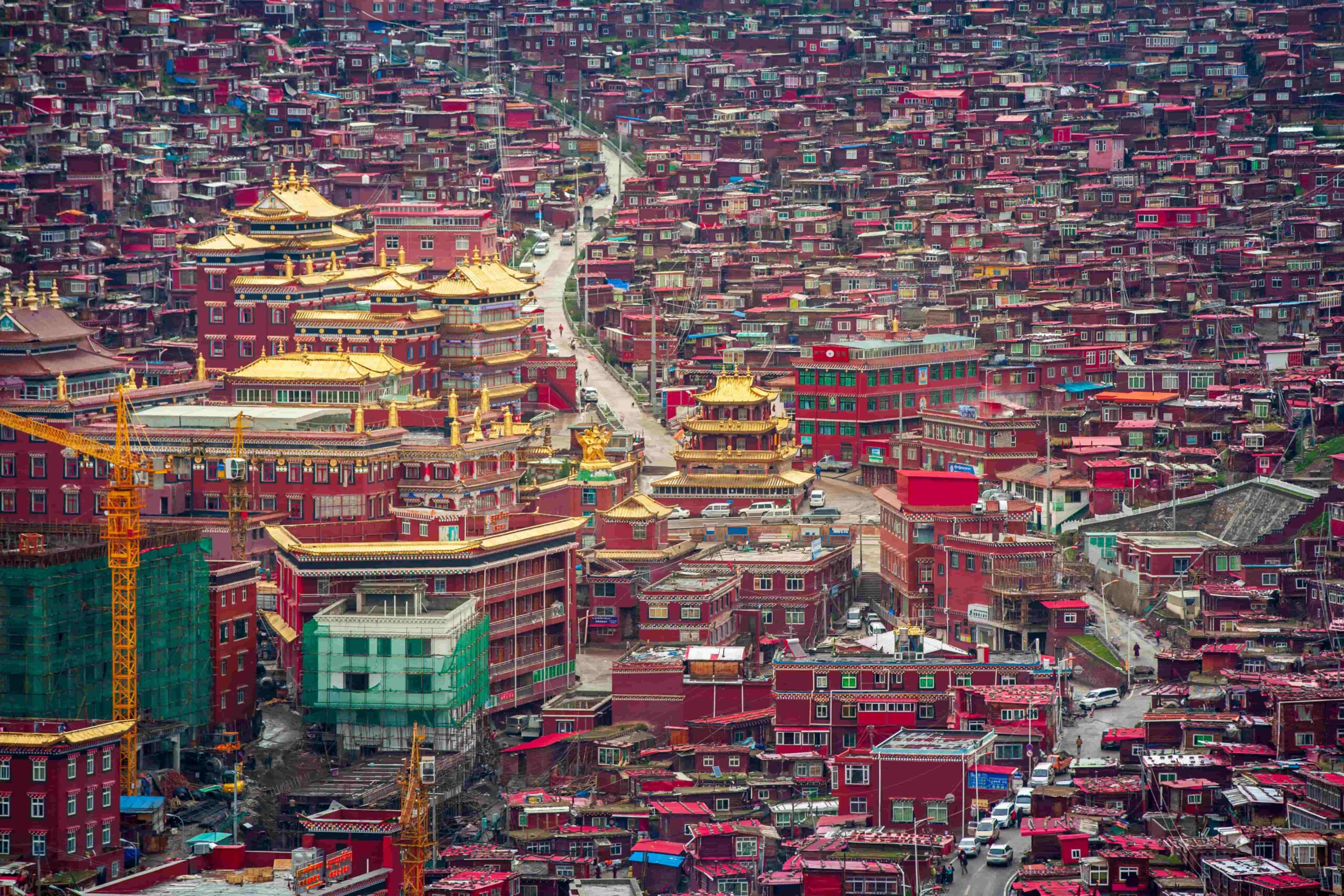
➤ Sedar Lama Rong Wu Ming Buddhist Institute (by appointment) Lharung Wuming Buddhist College is located in Lharung Gorge, Luoruo Township, Seda County, at an altitude of about 3,900 m. It belongs to the Nyingmapa sect of Tibetan Buddhism, and was founded by His Holiness Jigme Phuntshogs in 1980, with only 32 students at the initial stage; formally established in 1985; and formally set up as the Lharung Monastery Wuming Buddhist College in 1997. At its peak, there were more than 30,000 monks, and in 1993, the U.S. newspaper Le Monde called it "the largest Buddhist college in the world". The tens of thousands of red-colored wooden houses are stacked up against the mountain, reflecting with the golden dome of the temple, forming a striking scene of the "Red Buddha Kingdom".
★Thoughtful reminder: Serta altitude of about 4000 meters, after arriving, please move slowly, avoid strenuous activities. Please observe the rules and regulations for visiting the Sutra Institute; the admission to the Buddhist College is by appointment only, so please act according to the tour guide's arrangement.
Breakfast: Hotel breakfast
Sedar Vasuki Hotel (Oxygenated) or similar Oxygenated Hotel
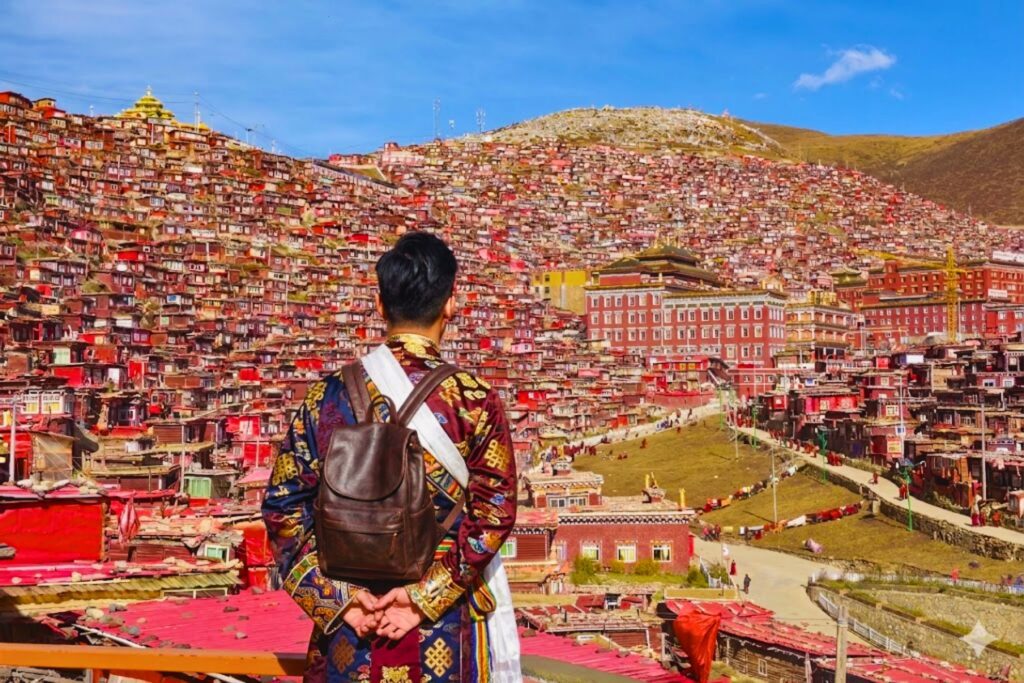
Today, delve into the cultural essence of Serta. Early in the morning, climb up to the Observation Deck for a panoramic view of the Buddhist College, then visit the Altar, the Lotus Library, walk the famous Long Staircase, and finally visit the Donga Monastery, leaving behind a complete and profound memory of your faith before you leave Seda.
➤ Serta Observation Deck Overlooking the panoramic view of the Lajung Wuming Buddhist College, surrounded by mountains, the entire Lajung Valley resembles a six-petaled lotus flower, surrounded by five main peaks, so it is also known as the "Little Wutai Mountain". Under the morning light, the villas with red monks' houses are spreading all over the valley, and the golden dome of the temple is dotted among them, which is the best place to enjoy the most complete vision of the whole Buddhist College.
➤ Altar (Mandala) The altar is a three-dimensional representation of the cosmology of Tibetan Tantric Buddhism, symbolizing the spatial structure of the Pure Land of the Buddha, and is the central prop and object of worship in Tantric practice. The Serta Buddhist Institute's magnificent and elaborate altar is an important place to understand the core of Tibetan Tantric beliefs, as believers circumambulate the altar to pray for blessings.
➤ Lotusland Library The modern Tibetan-style buildings around the Serta Buddhist Institute, with an exterior that blends traditional Tibetan architectural elements with contemporary design, and an interior that focuses on the collection of Dharma texts and learning functions, are part of the contemporary Tibetan Buddhist education system and an important window into the teaching of Lama Rong Wu Ming Buddhist Institute.
➤ Long Staircase The iconic trail that connects the uphill and downhill sides of the Buddhist College, along which monks commute on a daily basis, provides a sense of the authentic and peaceful rhythm of monastic life. The long staircase serves as both a transportation route and one of the most living spaces in the entire mountain city of faith.
➤ Dongga Temple Dongga Monastery is a Nyingmapa monastery with a history of more than 300 years in Seda County. The building is built on the mountain, with exquisite Buddha statues and thangkas enshrined inside the monastery, and a strong atmosphere of cultivation, making it an important place for experiencing the religious heritage in the area before leaving Seda.
★Thoughtful reminder: Seda is at a high altitude, the viewing platform section has a certain gradient, please walk according to your ability. Today's itinerary is mainly on foot, so it is recommended to wear comfortable shoes.
Breakfast: Hotel breakfast
Naojobodala Hotel (Oxygenated) or similar Oxygenated Hotel
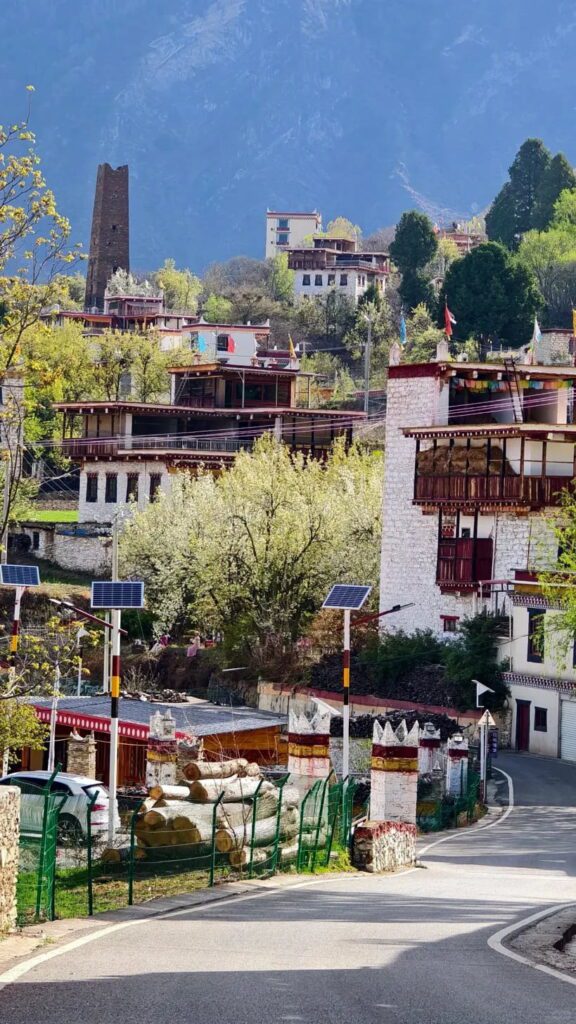
Departing from Langhor, today's tour focuses on architecture and the humanities. Visit the Zhuhuo Library, and then go to the most well-preserved ancient watchtower Tibetan village settlement in the middle of the Tibetan village, feel the deep heritage of the Tibetan East Jiajun culture.
➤ Furnace Library The Zhaohuo Library is one of the most eye-catching modern public buildings in the Tibetan region in recent years. The exterior is based on traditional Tibetan architectural vocabulary and incorporates contemporary design techniques, with unique shapes and bright colors. The building is not only a cultural landmark of the county, but also embodies new attempts at cultural preservation and public construction in contemporary Tibet, and is a concrete window into the social development of contemporary Tibet.
➤ Zhonglu Tibetan Village In the road Tibetan village is located in the territory of Zhenhuo County, is the Jiameng Tibetan settlement in the towers of one of the most complete preservation of the village. Jiazong Tibetan is a branch of the Tibetan people, living in the upper reaches of the Dadu River in Sichuan, known for their expertise in building stone towers. Walled stone towers stand tall, some as high as more than ten layers, construction technology is exquisite, hundreds of years without the need for steel and cement support is still standing. Watchtower both defense and residential functions, is the study of the Tibetan East architectural culture and the history of Jiajun precious physical remains.
★Thoughtful reminder: Today's driving distance is 336 kilometers, part of the road is mountainous, the whole journey will take about 6-8 hours. It is recommended to take sufficient rest on the bus, and stops will be arranged in the middle of the journey.
Breakfast: Hotel breakfast
Xiaojin New Siguniang Mountain Lodge (Oxygenated) or Oxygenated Hotel of the Same Level
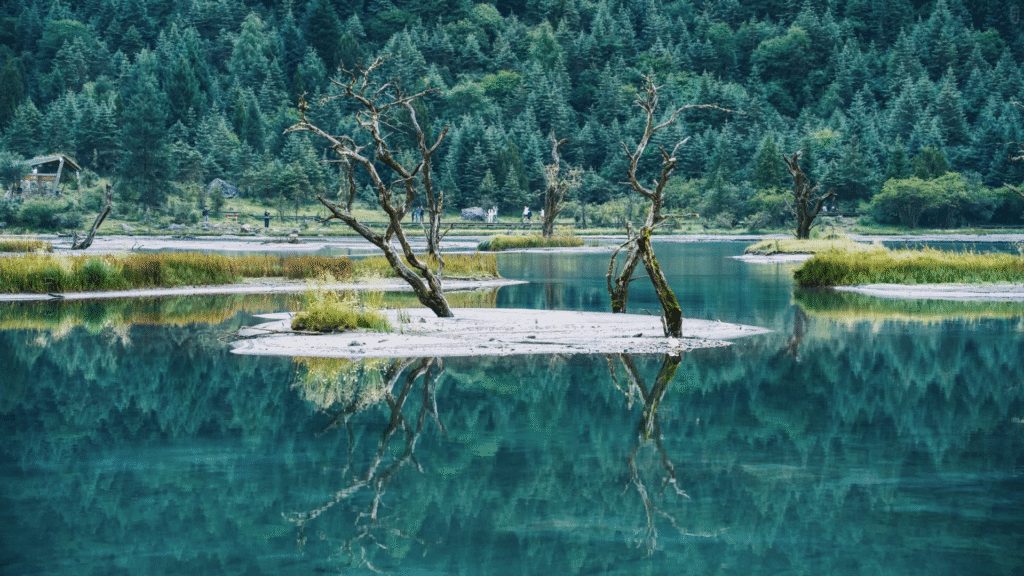
Today, we will go to Shuangqiao Gorge in Four Girls Mountains Scenic Area, including scenic drive to go deeper into the gorges and valleys, enjoying the snowy peaks, primitive forests and alpine meadows. In the afternoon, we will return to Chengdu along the Chengya Expressway to conclude this in-depth trip to the eastern part of Tibet.
➤ Shuangqiaogou Scenic Area (including scenic drive) Shuangqiao Ditch is one of the three valleys in the Four Girls Mountains Scenic Area, located in the territory of Xiaojin County, which is famous for its primitive ecological environment and diversified mountain scenery. Four Girls Mountains consists of four snowy peaks, with the main peak, Missy Peak, at 6,250 meters above sea level, is the second highest peak in Sichuan, and an important part of the Hengduan Mountain Range. The scenic area has high forest coverage, and along the way you can see coniferous forests, alpine meadows alternating with glacial lakes, and abundant wildlife resources. The journey in the scenic area is relaxing and suitable as a natural end to the whole journey to the plateau.
★Thoughtful reminder: Shuangqiaodou is relatively low in altitude, not a lot of walking, and is the most relaxing scenic spot day of the whole trip. Return to Chengdu in the afternoon and enjoy free time.
Breakfast: Hotel breakfast
Chengdu High-TechFive DiamondsVOCO Hotel or similar
Today is the last day of the trip. CITS provides 24-hour pick-up and drop-off service for early morning flights, late night flights, Tianfu or Shuangliu airports, and even train stations, without carpooling or waiting, to ensure that you arrive at the airport on time and feel at ease, and embark on your journey home with a full of memories and emotions. If you need assistance in purchasing air or train tickets from Chengdu to other places, CITS can arrange it as well.
★Thoughtful reminder: If you need to order air or train tickets from Chengdu to any place, please let us know in advance, CITS can help to arrange.
Breakfast: Hotel breakfast
Pricing Details
- Small group, 4 people! Small group of 10 people
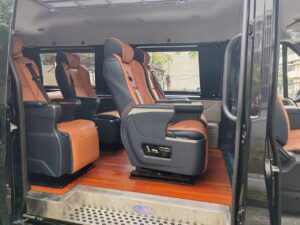
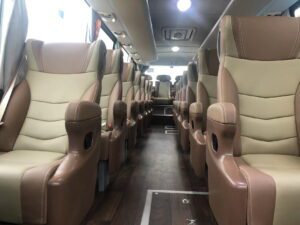
- Vehicle: 9-seat VIP deluxe coaches for groups of 4-6 persons, 26-seat 1+2 coaches for 7-10 persons, all vehicles are high-class qualified models to ensure comfort, safety and peace of mind.
- Upgraded Accommodation: Double room accommodation for the whole trip, if you need single occupancy, you need to make up the difference in price.
- Complimentary insurance: Includes travel agency liability insurance and vehicle seat insurance, plus additional code to provide highland travel protection insurance, so as to make the journey more at ease.
- Professional license: We will assist you with the reservation of Seda Lajung Wu Ming Buddhist College and the relevant procedures for access to the scenic areas in western Sichuan, eliminating the cumbersome procedures and allowing you to concentrate on enjoying the journey.
- Tickets: The itinerary has included all the scenic spots listed in the tickets and scenic area tour tickets, including Aden Scenic Area Scenic Area Car + Battery Train (short line), ChangYuXianKeLi Temple Battery Car, ShuangQiaoGou scenic area car, all the need to book scenic area are by us in advance, to ensure a smooth admission to visit.
- Dedicated Driver: We will arrange a dedicated driver with experience in driving on the Western Sichuan Plateau to provide a caring and safe driving service throughout the whole journey.
- Professional tour guides: Professional Chinese tour guides will accompany you throughout the tour, with one guide per car, providing meticulous and considerate services. If you need English or other language tour guide, please inform the commissioner in advance to assist in the arrangement.
- Considerate service: two bottles of mineral water are provided daily to keep you hydrated.
- Exclusive transfer: Including Chengdu airport or train station shuttle service, meet and greet at the station and assist with baggage handling, enjoying a convenient experience.
For our trip to Western Sichuan, we wanted to give away the insurance that travelers worry about the most!
“Travel Accident Insurance, Vehicle Seat Insurance, Travel Agency Liability Insurance, and High-Altitude Coverage” — all four protections included.
- Meals:Except for hotel breakfasts listed in the itinerary, all other meals are at your own arrangement. You are free to explore local cuisine. Guides can provide recommendations or assist with arrangements if needed.
- Optional Activities:Any activities outside the itinerary are personal expenses and are not included in the tour price. Participation is optional.
- Transportation to/from Lhasa:Flights or train tickets from your departure city to Lhasa are not included. We can recommend suitable options or assist with booking if required.
- Tips:Gratuities for driver and guide are recommended at CNY 60 per person per day (CNY 30 each for driver and guide) as appreciation for their services.
Other Frequently Asked Questions
- Applicable travelers: This tour is open to travelers from Taiwan, Hong Kong, Macau, Malaysia, Singapore, etc. Other nationalities please confirm with the commissioner in advance.
- Refund terms: (according to the standards of the Tourism Bureau)
- 41+ days before departure: 5% of tour fee.
- 31–40 days before departure: 10% of tour fee.
- 21–30 days before departure: 20% of tour fee.
- 2–20 days before departure: 30% of tour fee.
- Cancellation 1 day prior to the departure date will result in a refund of 50%.
- Cancellation on or after the departure date is subject to 100%.
- Force Majeure Clause: The travel agency will not be liable for any additional costs due to force majeure factors such as natural disasters, road closures, flight delays, etc. The travel agency will not be liable for any compensation but will do its utmost to assist in the handling of the situation.
- Withdrawal: If you withdraw from the program or do not complete the program due to personal reasons, it is considered as an automatic abandonment of the program and the fees paid will not be refunded.
- Ticket Policy: Tickets for the peak season in western Sichuan need to be booked in advance, Sedar Lajung Wuming Buddha College needs to make a reservation, and may be adjusted due to local control measures to visit the time, please follow the instructions of the tour guide to cooperate.
- Itinerary Flexibility: In order to meet the actual local road conditions and weather conditions, the itinerary may be adjusted, but to ensure that the standard of sightseeing remains unchanged.
- Health advice: Travelers with high blood pressure, heart disease, asthma, or colds should consult a doctor before signing up to make sure they are suitable for the Western Sichuan Plateau Tour. The altitude of some sections of the Western Sichuan Plateau is over 4,000 meters above sea level, so please be sure to assess your own condition.
- Reception conditions: The reception conditions in some places in Sichuan and Tibet are limited, so travelers are kindly requested to keep reasonable expectations and respect local culture and religious customs, and to abide by the relevant regulations when entering the monasteries.
- Accommodation arrangement: If there is a natural single room for a single person, we will assist in arranging a shared room for travelers of the same sex; if it is not possible to share a room, then we will need to make up for the difference in the price of a single room.
- Shopping Guarantee: This tour promises 0 shopping, if any forced shopping is found, 5,000 CNY will be refunded.
- Self-paid activities: According to the actual travel time of the team, after the guide explains, travelers can decide to participate freely, and will not be forced to spend money.
- Language service: This itinerary default arrangements for Chinese tour guides, if you need English or other languages, please inform the commissioner in advance to assist in the arrangement.
If you need a different language guide, please let us know in advance to help us arrange the tour.
- Oxygen supplyEach guest will be provided with a portable oxygen canister, which can be used immediately in case of minor discomfort during the trip, providing greater peace of mind when dealing with the environment of the Western Sichuan Plateau.
- Daily Water Supply: Provide 2 bottles (300ml) of mineral water per person per day to keep you hydrated and avoid discomfort due to high altitude dryness.
- Avoid strenuous activities upon arrival at high altitude. It is recommended not to shower or wash your hair during the first two days to prevent catching a cold and affecting acclimatization.
- Prepare sun protection items such as sunglasses, lip balm, and sunscreen to avoid excessive UV exposure.
- Altitude sickness is normal and most people will gradually adapt to it within 1-3 days; if you feel unwell, please inform your tour guide immediately.
- As travel distances are long, it is recommended to bring snacks and dry food to maintain energy.
- For those who have a fitness habit, it is recommended to stop high intensity exercise before departure to allow your body to rest.
- Before departure, you can go to a pharmacy to buy medicines suitable for highland travel, such as danmus, rhodiola rosea, glucose powder, etc., in case of emergency.
- Maintain good sleep and rest habits. Avoid staying up late to help your body adapt more quickly.
- Eat a light diet with plenty of fruits and vegetables, and avoid overeating and drinking to avoid aggravating the gastrointestinal and cardiorespiratory burdens.
- Wear warm layered clothing. There is a big difference in temperature between morning and evening on the western plateau of Sichuan, so please increase or decrease your clothing at any time to avoid catching a cold and aggravating altitude sickness.
- If you feel uncomfortable during the ride, you can take deep breaths and use portable oxygen canisters or oxygen cylinders in the car; you can also use the oxygen supply equipment in hotels for overnight stays, depending on the situation.
- Stay relaxed and avoid stress or anxiety, as psychological pressure may worsen altitude sickness.
- When traveling to Sichuan and Tibet, it is recommended to drink local ghee tea, which helps to replenish calories, relieve plateau discomfort and strengthen your body.
CITS2Go wants to bring each guest a different travel experience! The meeting point of this tour is Chengdu, and guests from Taiwan, Hong Kong, Macau, Malaysia, Singapore, etc. can choose to travel to the meeting point by airplane or train.
For air tickets, guests can choose to have CITS2Go assist them in booking their tickets, or they can purchase their own tickets, which not only allows them to accumulate credit card miles or points, but also allows them to make flexible arrangements for before and after the trip, giving them more freedom, flexibility, and a sense of exclusivity.
CITS2Go wants to give every traveler maximum flexibility and freedom of choice throughout the journey!
Breakfast is served daily, while the rest of the meal time is reserved for your discretion: you are free to visit the local specialties along the way in Chengdu, Tao Cheng, Batang, Dege, Seda and Zhenhuo - whether Tibetan or Sichuan cuisine, or street food and hot pots, you are free to choose according to your own preferences, with no limitations at all.
Keeping meals unscheduled makes the itinerary more flexible, caters to individual tastes, and eliminates the waste and constraints of fixed group dining.
In special situations or time constraints, the guide may assist in arranging or reserving meals in advance. Participation is optional and entirely up to the guest.
Dine at your own pace and savor the unique flavors of Sichuan and Tibet!
- Application for the reservation of Tibetan area in Sichuan and Tibet: To go to specific scenic spots such as Sedar Lajung Wuming Buddhist College, you need to apply for the reservation procedure; our company will handle the whole process on behalf of the guests, who only need to cooperate with the provision of the necessary information.
This tour is mainly open to Taiwan, Hong Kong and Macau travelers. Travelers of other nationalities must check with the commissioner in advance to confirm the availability of the tour. - Required Documents:
- Scanned copy of the first page of a valid passport
- Copy of Chinese visa or Mainland Travel Permit for Taiwan Residents (depending on identity)
- Additional documents may be required for some special scenic spots, we will notify you in advance and help you to prepare.
- Processing time: The relevant filing procedures need to be applied in advance, please register and submit the information as soon as possible to avoid affecting the schedule.
- Attention: Please do not purchase tickets that cannot be filed in order to avoid additional losses. If you have any questions, please confirm the flight and time with us first.
- Extra Note: The policies of the scenic areas in Western Sichuan may be adjusted due to the period and region, if there are any temporary changes, we will immediately notify and help to deal with it.
- Age Requirement: According to regulations, some travelers are required to prepare health certificates issued by public hospitals, and Taiwanese travelers over 65 years of age must do so in advance.
- Application for the reservation of Tibetan area in Sichuan and Tibet: To go to specific scenic spots such as Sedar Lajung Wuming Buddhist College, you need to apply for the reservation procedure; our company will handle the whole process on behalf of the guests, who only need to cooperate with the provision of the necessary information.
Travel Consultant
Your inquiry will be processed as soon as it is received during business hours. We’ll get back to you within 48 hours. Please complete all fields accurately to ensure fast and precise service.
If you haven’t heard from us within 48 hours, you can contact us directly via:
◆ Facebook:China2Go – CITS Global (China International Travel Service) or◆Whatsapp: 886911607167◆Line@:@315xvpvi
Your inquiry will be processed as soon as it is received during business hours. We’ll get back to you within 48 hours. Please complete all fields accurately to ensure fast and precise service.
If you haven’t heard from us within 48 hours, you can contact us directly via:
◆ Facebook:China2Go – CITS Global (China International Travel Service) or◆Whatsapp: 886911607167◆Line@:@315xvpvi
Your inquiry will be processed as soon as it is received during business hours. We’ll get back to you within 48 hours. Please complete all fields accurately to ensure fast and precise service.
If you haven’t heard from us within 48 hours, you can contact us directly via:
◆ Facebook:China2Go – CITS Global (China International Travel Service) or◆Whatsapp: 886911607167◆Line@:@315xvpvi
CITS2Go | Trust & Highlights
Founded over 70 years ago, CITS (China International Travel Service)is a publicly listed travel company in mainland China. Its service network spans all provinces across China, with registered and licensed travel companies operating in more than 60 countries worldwide. Over the years, CITS has welcomed more than 10 million international guests and high-level delegations for travel and official visits to China.
Guided by the principle of “Integrity First, Service Above All,” we are committed to providing every traveler with professional itinerary design and attentive on-the-ground service. Unlike typical tour operators, we do not include unnecessary high-cost medical visits or injections, and we guarantee a 100% sightseeing-focused experienceWe also promise "100% Pure Play No Shopping" and will pay RMB 5,000 on the spot if there is any breach of contract. We insist that every traveler will have a wonderful and real travel memory of Mainland China.
![CITS national travelers]](https://china2go.com/wp-content/uploads/2025/08/圖片_2025-08-21_134216_721-300x225.png)
- In-depth tour of Sichuan and Tibet with a real walk into Sedar Lahrong and Mount Aden.
- Stick to small groups of 4-10 people to be really well taken care of on the plateau.
- 100% Sightseeing Only, No Shopping Stops — CNY 5,000 Compensation for Any Violation
- Meals Arrangement:A total of 10 breakfasts; the itinerary does not include meals, lunch and dinner are at your own expense (you can ask the tour guide to assist in recommending or arranging on behalf of, retaining the maximum flexibility)
- Accommodation:A total of 10 nights of accommodation, the whole process of arranging selected hotels, including Chengdu High-tech VOCO, Tao Cheng Yading Haosheng, Sedar Vasu Hotel, Xiaojin New Four Girls Mountain Lodge and so on.
- Deep Culture (Kawasaki Tibetan Area Faith Core):Sedar Lama Rong Wu Ming Buddhist College (reservation for admission) +Dege Printing and Scripture Institute (Tibetan Culture Encyclopedia) +Donggar Monastery +ChangYuXianKeLu Monastery +ZhongLuZhuangZhai (JiaRong Ancient Settlement) +TanCheng・LianZhou Library・Long Staircase
- Experience on the ground:The whole journey is arranged in small groups of 4-10 persons with flexible routes, over many high mountain passes on the way, with rich landscape; part of the route is the famous 318 National Highway of the Tea Horse Road in western Sichuan, leaving time for cultural experience and highland scenery.
- Breathtaking Views (Beyond Belief's Kawasaki Classics)Inacheng Yading three father of the main sacred mountain (Xiannai Ri, Yangmai Yong, Charoduoji) + Luo Ling cattle farm + Pearl Sea pilgrimage + red sea plateau lakes + Mt. folding Kamba the first pass + Xinduqiao photographer's paradise + Sangdui red meadow + double bridge gully four girls mountains
- Exclusive equipment (Western Sichuan Plateau only):Portable Oxygen Cylinder per person + Sedan Reservation +Hotel Selection
- Entrance Fees Included:Aden Scenic Area (Scenic Area Vehicle + Battery Car)/Changyongkor Monastery (Battery Car)/Tsoup Gully・Dege Yingshenyuan・Sedar Lama Rong Wuming Buddhist College・Donggar Monastery・Shuangqiao Gully (Scenic Area Vehicle)
- Transportation:Western Sichuan legal compliance exclusive tour vehicles, 4-6 people small groups using 9-seat VIP luxury coaches, 7-10 people using the latest 26-seat 1 + 2 coaches, all vehicles are 2025 new qualified models
- Insurance:Four insurance packages - Travel Accident Insurance, Coach Seat Insurance, Travel Agency Liability Insurance and Highland Protection Insurance (RMB 500,000 coverage).
- Driver + tour guide double service:Dedicated drivers with experience in driving on the Western Sichuan plateau, accompanied by professional Chinese tour guides, one car, one guide, familiar with the routes of the scenic areas in Western Sichuan and the plateau environment, able to immediately take care of every member of the tour.
- Other:This itinerary does not include lunch, dinner, round-trip transportation, personal expenses, gratuities and single room rates.
★ Qualified and comfortable new vehicles ★
Western Sichuan road needs better cars and drivers to protect them
We are fully upgraded tothe latest certified tour vehicles,
The following vehicles are used for 4~6 persons
The following vehicles are used for 7~10 persons
★ Attractions Overview ★
Seda Lajung and West Sichuan in-depth trip, 4-10 people small group is the best choice.
The road between Sichuan and Tibet is a long way to the plateau in the true sense of the word. Starting from Chengdu, all the way over Mount Chedo, the Yajiang River Valley, Wuliang River Valley, the altitude from 500 meters climbed to more than 4,000 meters, part of the road for the mountainous and dangerous road, along the way, the weather is variable, road conditions are complicated. A large group, the driver's pressure doubled, the tour guide simply have no time to take care of every traveler's state and needs.
Therefore, this tour insists on 4-10 persons for small group departure.
Only a small group can arrange a full-time driver with rich driving experience on the Western Sichuan Plateau, familiar with the rhythm and risk of each section of the mountain road, and make the right judgment at the first time in case of emergency; the tour guide can also take care of each VIP's physical condition at each session, such as booking admission to Sedar Lama Rong Wuming Buddhist Institute, visiting Dege Yijing Temple, and going deep into the Yading Scenic Area, etc., and clearly explain the cultural and faith scene that is taking place. Instead of just leading the way and naming names, he was able to explain clearly the cultural and religious scene that was taking place.
After completing the most shocking "Red Buddha" experience in Seda, the itinerary gradually slows down the rhythm - from the millennium-old canonical books in Dege Yijing Temple to the Pearl Sea at the foot of the Three Father God Mountain in Inacheng Aden, and then slowly returns to Chengdu along the primitive forests of Shuangqiaogou, so as to let the magnificence of the high plateau gradually precipitate into a deeper and more complete memory of Western Sichuan.
It's not about subtlety, it's about making sure that everyone, every day at Highland, is truly taken care of.
What is Sedar Lah Rong? A place of faith worth traveling to once in a lifetime
Sedar Lama Rong Wu Ming Buddhist Institute is the largest Tibetan Buddhist Institute in the world and one of the most important gathering places for Tibetan Buddhist practice in the world today. "Lajung" is the name of the valley, and "Wu Ming" refers to the core teaching system of the institute, which is based on the five disciplines of Sermon, Craftsmanship, Medicine, Ingenuity, and Internal Knowledge. The entire institute is built on the mountain, with tens of thousands of red-colored wooden houses piling up all over the valley, reflecting with the golden roofs and temples, forming a stunning scene of "Red Buddha Land".
The Beginning and History of Sedar
In 1880, Dr. Jiangduyong Dorjee established a monastery here, and in 1980, His Holiness Jigme Phuntsok founded a scripture center with 32 students in the deserted Lajung valley, and in 1993, the institute was called "the largest Buddhist institute in the world" by the U.S. newspaper Le Monde. In its heyday, more than 30,000 monks and Joms lived and practiced here, and practitioners from China, Tibet, and even all over the world gathered here, breaking down the boundaries of geography and ethnicity that had rarely existed in the history of Tibetan Buddhism.
The heart of Seda: not just a landscape, but a real world of spiritual practice
The most shocking thing about Serta is not the visual spectacle of the red color, but the fact that it is a real practice colony. Early morning chanting rises from all parts of the valley, monks walk up and down the long staircase between the halls and the monasteries, believers circumambulate in front of the altar, and students in the Lotus Island Library meditate and study - all of this does not exist for the sake of sightseeing, but rather is the daily routine of faith that has been practiced for several decades.
Why is Sedar worth the trip?
Seda is not a place to "pass by". It takes two full days of highland travel from Chengdu, crossing many mountain passes and climbing from 500 meters to over 4,000 meters above sea level. But it's the journey that makes the moment of arrival so real. When you stand on the observation deck, overlooking the entire red wooden houses in the morning mist slowly awakening, you will understand - this trip, worth it.
Sedar is not just a Buddhist institute, but a place where people can re-understand faith and feel quiet again.
Derge Printing and Bible Institute: Thousands of Years of Canonical Texts, Protected to This Day by Hand Engraving
The Dege Sutra Printing Institute is the first of the three major printing institutes in the Tibetan area, and is also the most well-preserved and grandest cultural institution in the entire Tibetan cultural world. Walking into this place is not visiting a museum, but witnessing an ancient printing system that has lasted for nearly three hundred years and is still in operation today.
The Beginning and History of the Bible Institute
In the seventh year of the Qing Dynasty (1729), the twelfth generation of Derge Tusi Denpa Zeren presided over the construction of the Bible Institute, which took ten years to realize its scale. At the beginning of its establishment, the institute broke through the sectarian boundaries and collected texts from various schools of traditional Buddhism, such as Gelug, Sakya, Nyingma and Kagyu, covering various fields such as Buddhism, medicine, astronomy and calendar, language and literature, etc. The institute now has more than 320,000 woodblock engraved plates. It has preserved more than 320,000 woodblock engraved plates, and has collected more than 830 books with more than 500 million words, including the long-lost "The Origin of Indian Buddhism" and the oldest version of the "Eight Thousand Ode to Prajna," etc. In 2006, it was included in the first batch of China's national list of intangible cultural heritages, and has been honored as the "World's Great Encyclopedia of Tibetan Culture".
The heart of the Bible Institute: not just artifacts, but living craftsmanship
The most precious part of the Derge Sutra Printing Institute is that the scriptures are still printed by hand in the traditional way. Craftsmen use birch wood to make the plates, and each plate has to be smoked by fire, soaked in septic tanks, boiled in water, baked in the sun, and planed in order to be used for hundreds of years without changing its shape. Printing is done by hand, without the use of any modern machinery. Each scripture printed here carries the warmth of the craftsman's hands and the weight of his faith.
Why is the Dege Institute worth a visit?
Derge is a remote place with inconvenient transportation, and because of this, the traditional Tibetan culture here has been preserved in its entirety over the long years. Walking into the Bible Printing House, watching the craftsmen topstitching the scriptures one by one under the dim light, and listening to the regular sound between the woodblock and the paper, you will feel a shock far beyond the visual - this is not a display, but a civilization that uses the most simple way to pass itself on.
The Derge Indjing Institute is not just a historical site, but a place where Tibetan culture still breathes today.
Three Sacred Mountains in Inacheng Yading: The most sacred places in the plateau to look up to in a lifetime.
Located in Shangri-La Township, Inacheng County, Ganzi Prefecture, Sichuan Province, and situated in the middle of the Hengduan Mountains in the eastern part of the Qinghai-Tibet Plateau, Inacheng Aden is one of the best-preserved ancient glacial geomorphic regions in China. in 1928, the American explorer, Joseph Rourke, went deep into this region and published his photographs in National Geographic, which attracted international attention. later, the British writer, James Hilton, wrote a long novel, The Vanishing Horizon, inspired by the story of Rourke's expedition. Later, British writer James Hilton used Locke's adventure story as inspiration to write his long novel The Vanishing Horizon, in which the ideal pure land of the deep plateau refers to this place.
Three Father General's Mountain: A Meeting of Faith and Nature
The core of the Aden Scenic Area, is the three side by side of the snowy peaks - Xian Nai Ri, Central Mai Yong, Charo Duo Ji, Tibetan Buddhism, collectively known as the "Nyenching Gong Ga Risong Gongbu", meaning "sacred snowy mountain father of the three", the three peaks were arranged in zigzag shape, respectively, symbolizing Guanyin Avalokiteshvara (compassion), Manjushri Avalokiteshvara (wisdom) and Vajradhara Avalokiteshvara (courage). Tibetan Buddhist texts record that the three father of the sacred mountain in the world of Buddhism in the twenty-four sacred sites listed eleventh. According to Tibetan tradition, three times pilgrimage to the three sacred mountains can realize the wishes of this life, and every year, a large number of Tibetan believers still come to the mountain for pilgrimage.
Why is Aden worth the trip?
Inacheng Aden is not a place to be visited on the way. It takes two days to travel from Chengdu to the plateau, over Mount Chedo, through the Infinite River Valley, and the altitude gradually climbs from 500 meters to more than 4,000 meters. But when you take the battery car to reach the Luolong cattle farm, three snowy peaks at the same time in front of the eyes, meadows, lakes, glaciers and mountains constitute a complete and shocking plateau picture - you will understand that the road, worth it.
Inacheng Aden is not just a piece of scenery, but a place where one can feel the power of nature and faith again at the foot of the snowy peaks.
Western Sichuan Double National Highway: G317/G318, the Road of Faith through the Plateau
This tour crosses two of the most important plateau highways in Sichuan, the G317 Sichuan-Tibet Northern Route and the G318 Sichuan-Tibet Southern Route, crossing several mountain passes above 4,000 meters in altitude, and connecting the best of the Kham Tibetan area in terms of culture, beliefs, and natural landscapes.
G318 South Sichuan-Tibet Route: Photographer's Paradise, Ancient Tea Horse Trail, Entrance to Khamba
The G318 National Highway is one of the most famous highways in China, starting from Chengdu and heading west, crossing Mount Cheduo to enter the Tibetan area of Kham. Historically, this road was an important artery of the ancient Tea Horse Road, along which horse caravans transported tea and salt to the Tibetan areas in exchange for horses and medicinal herbs, making it the most important trade and cultural channel connecting China and Tibet for hundreds of years. This trip follows the G318 through Xinduqiao, Yajiang and Litang, along which meadows, snow-capped peaks, Tibetan dwellings and white pagodas form the most recognizable picture of the Western Sichuan Plateau.
G317 North Sichuan-Tibet Route:Secret Land of Eastern Tibet, Cultural Core, Seda Road
The G317 National Highway starts from Chengdu, passes through Ganzi and Dege, and penetrates into the cultural hinterland of Eastern Tibet, which is the least traveled. Along this road, the most important humanistic landscapes in Sichuan, Tibet and China are concentrated - the Dege Sutra Institute, the Buzzard Monastery, and the Lama Rong Wuming Buddhist Institute in Sedar, making it a truly meaningful road of Tibetan cultural depth. Compared with the G318, the G317 is more steep, deeper and more primitive, and therefore retains a more complete and pure face of Eastern Tibet.
Why is it worth a trip to G318+G317?
G317 and G318 are not just two highways, but two ways to enter the Tibetan area - one brings you to see the magnificence of the plateau, and the other takes you into the heart of Tibetan culture. This trip goes along the G318 deep into Inacheng Aden, and the return trip takes the G317 through the Seda Dege, so that this trip in the west of Sichuan between the scenery and culture, out of the most complete a road.