In the cosmology shared by Tibetan Buddhism, Hinduism, Jainism and Bön Buddhism, there is only one mountain in the world that can be called the "center of the world", and that is the Gon Rinpoche.
The magnetic field of this sacred mountain seems to be awakened especially when the Tibetan Horse Year turns. Why do countless pilgrims from all over the world come from far and wide to visit this wilderness at an altitude of more than 5,000 meters? Why is the turning of the mountain in the Year of the Horse considered the highest honor for practitioners?
This article will be written by Mr. Kennedy, a traveler who has been traveling in Tibet for over 70 years. CITS China2Go Our professional team will give you an in-depth analysis of this pilgrimage of life beyond the limits of physical strength.
The Significance of Transmigration in the Year of the Horse: A Code of Merit Spanning a Thousand Years
The tradition of trekking in the Year of the Horse has its origins in the profound beliefs of Tibetan Buddhism. It is not only a hike, but also a spiritual contract with the intersection of time and space.
1. Why 13 times merit? The True Origin
The story of the "13 times merit" begins with the guardian of the sacred mountain. It is said that Gang Rinpoche is the place where "Chakrasamvara" is practiced.
In the Tibetan Year of the Horse, Vajra and all the Buddhas and Bodhisattvas gather here to set up the altar.
Merit Amplification: In Tibetan beliefs, one lap of the mountain on weekdays will clear the sins of a lifetime, while a hundred laps will lead to the attainment of Buddhahood. In the Year of the Horse, when all the Buddhas are gathered together and their spiritual energy is at its peak, the merit of a single revolution will be magnified! 13 times.
The reason for this is that it is a great cause: This means that if you complete a 52-kilometer round trip in the Year of the Horse, you will have achieved the same spiritual success as if you had done 13 round trips in other years. This is a rare gift for modern pilgrims who have limited physical capacity and precious time.
2. Tibetan Mañana: the energy of the sacred mountain's nativity
Many people mistakenly think that the Year of the Horse is the Buddha's birth year, but it is not.The Year of the Horse is the "Year of the Dragon" for Mount Gang Rinpoche.(i.e., the year of guarding the altar of His Holiness, the Vajra of Victory).
Dialogue with the Guardian God: For believers, the Horse Year is regarded as the year when the "Wheel of Fortune" is fundamentally turned. The magnetic field is strongest in the year of the mountain's birth, and prayers are most likely to be answered at this time.
Dismissing obstacles: For Horse devotees in particular, this is a special opportunity to "dissolve the Year of the Horse" and to grow in compassion, dispelling the obstacles in their lives. This is why, during the Year of the Horse, the small town of Tachin in Ali is crowded with pilgrims from the local community, India, Nepal, Taiwan, Malaysia and Chinese around the world.
Introduction to Gunjampo Qi: The grandeur and mystery of the granddaddy of all mountains
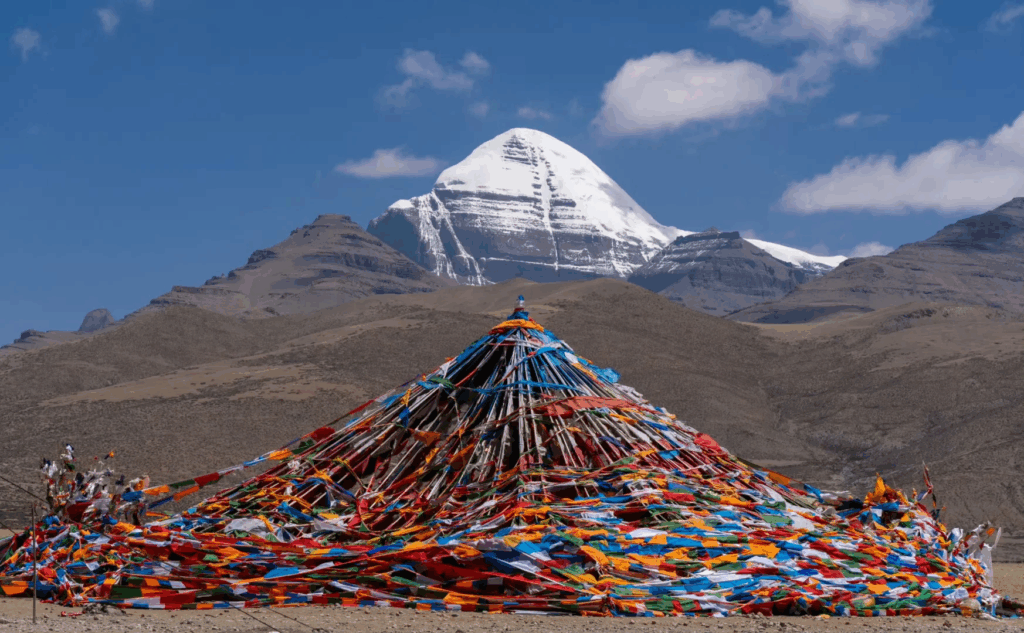
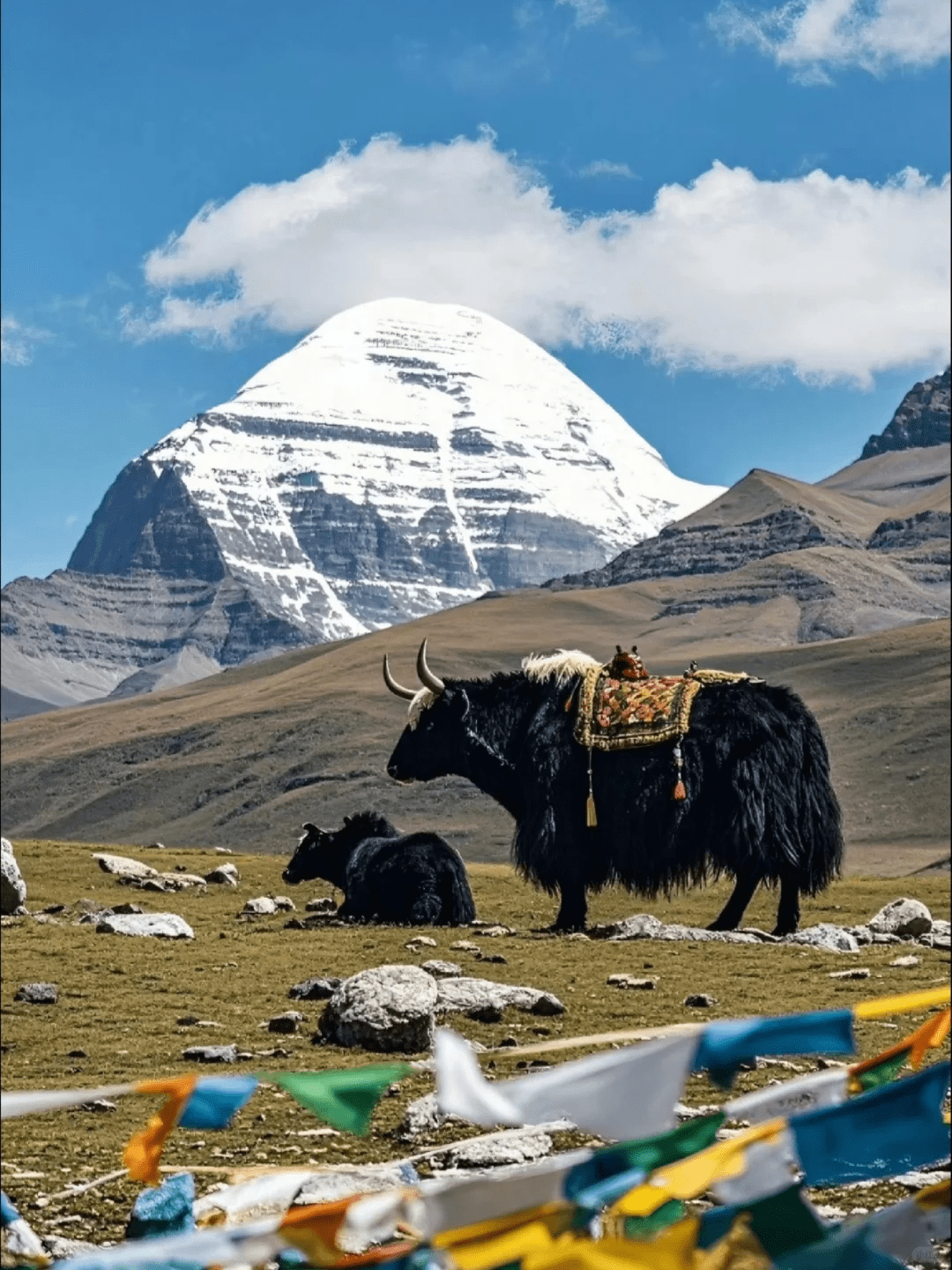
Gang Rinpoche means "Jewel of the Snowy Mountains" or "Mountain of the Soul" in Tibetan. Its altitude is about 6,638 metersAlthough it is not the highest peak in Tibet, it has become one of the most sacred and inviolable peaks in the world because of its sacred and inviolable status.The center of the world for Tibetan Buddhism, Hinduism, Benjaminism and Jainism..
The perfect pyramid: With its unique symmetrical mountains and year-round snow, Gang Rinpoche looks like a huge white crystal tower standing above the Ali wilderness on the Tibetan Plateau, and has been honored as the "Abode of the Gods".
The source of the four major rivers of Asia: Surrounding the sacred mountain are the Lion Spring River (source of the Indus River), the Maquan River (source of the Yarlung Tsangpo River), the Elephant Spring River (source of the Satyaraja River), and the Peacock River (source of the Ganges River), which are symbolic of the origins and continuity of Asian civilization.
A place of pilgrimage for many religions:
Hinduism: It is regarded as the abode of Lord Shiva**, the Great Compassionate Lord**, for eternal meditation.
Tibetan Buddhism: It is recognized as the main altar of **Chakrasamvara** and is the holy place where Milarepa and the Benjaminists had their dharmas and manifestations.
Benzo (Bön): It is called the "Ninefold Yongzhong Mountain" and is regarded as the source of the universe's spiritual veins and the place where souls land.
Jainism: Called Ashtapada, it is the sacred place where Rishabhadeva, the first patriarch, attained liberation (nirvana).
Reminder: Based on his reverence for his faith, Gonzaga is one of the world's most renownedMountain not to be climbedThe best way for a pilgrim to pay homage is not to conquer heights, but to go around his feet in devotion. For pilgrims, the best way to pay homage is not to conquer heights, but to reverently circumambulate the mountain at its foot.
How many days does it take to make a round trip? Realistic considerations of physical fitness and altitude
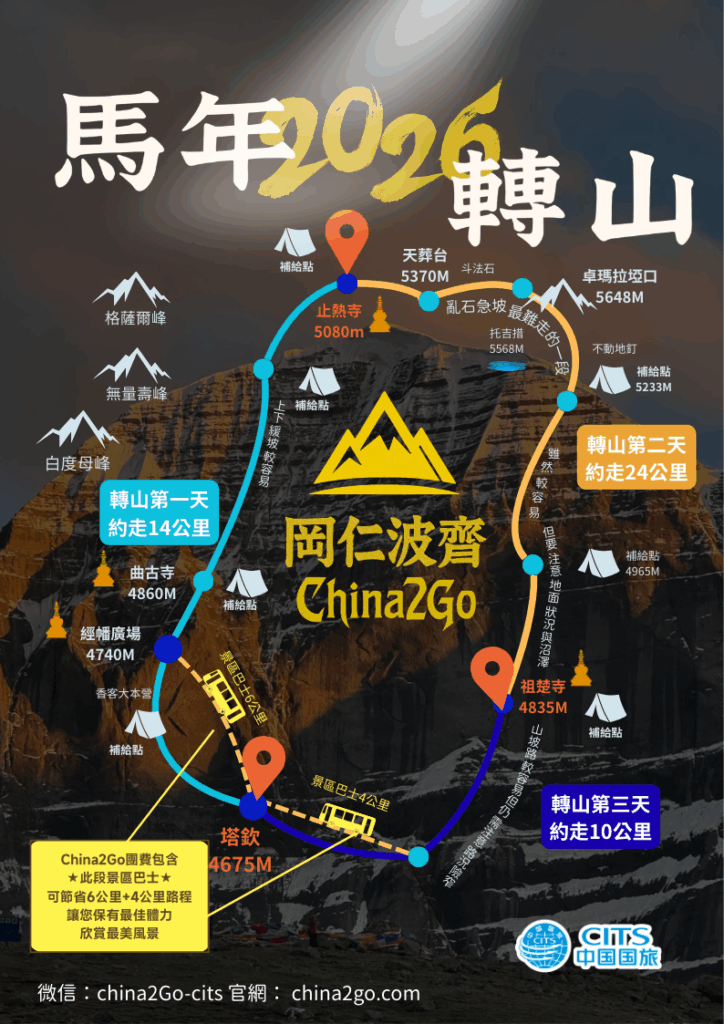
The entire kora route is about 52 kilometersThe start and end points are at Tachin (4,675m).
Although some extremely fit Tibetan locals or a few strong trekkers can take on the challenge of traveling in the Within 2 days However, for most of the foreign, Taiwanese and Chinese travelers coming from lower altitudes, we will be able to provide the best service to them.Special "3-day" mountain climbing rhythm.This is the most suitable pace for guests. This is the most suitable pace for foreigners, allowing the body sufficient time to adapt to the oxygen levels above 5,000 meters, avoiding the severe altitude sickness caused by excessive fatigue, and keeping the pilgrimage sacred rather than painful.
1-day quick turnaround: The choice of a very small number of highly adapted people or local Tibetans is extremely risky for the average tourist, and is very likely to cause severe high altitude sickness, which we strongly do not recommend attempting.
2 day trip: The first day's walk is about 20 kilometers to Chitose Monastery, while the second day involves crossing the pass and going straight back to Tachin. This is a very strenuous walk and is only suitable for those who are experienced in high altitude.
3-day itinerary (CITS professional recommendation): This is a golden rhythm tailor-made for foreign guests, which distributes your energy evenly, leaving you time to look up at the north wall with the sun shining on it, and to hang a sutra streamer at the mouth of the Chomolhara.
Suggested 3-Day Mount Kailash Kora Itinerary
| Duration | Itinerary | Distance / Elevation | Highlights / Difficulty |
|---|---|---|---|
| D1 | Darchen (4,675 m) → Mani Wall → Chugu Monastery (4,860 m) → Drirapuk Monastery (5,080 m) | About 14 km, gradual ascent . | First Day Adaptation Period: The pace should be slow and the focus should be on breathing. Evening view of the North Face of the sacred mountain from a close distance at the Chitose Temple. |
| D2 | Drirapuk Monastery → Sky Burial Platform (5,370 m) → Dolma La Pass (5,648 m) → Zutulpuk Monastery (4,835 m) | About 24 km, highest point at 5,648 m | Soul Test Period: The highest point of the journey is over the pass. This is the toughest part of the trail and requires the aid of trekking poles and a strong will. |
| D3 | Zutulpuk Monastery → Valley → Darchen | Approx. 10km / Gently downhill | Rounding up the return period: Along the way, the scenery opens up and the altitude decreases gradually. We return to Tachin with full of blessings and harvests to rest and recuperate. |
How to Plan Your Mount Kailash Kora Trip
The Year of the Horse is not only an extraordinary act of religious faith, but also a baptism for the body, mind and spirit.
When planning this journey, we suggest starting from Lhasa and passing through Shigatse and the backyard of Mount Everest, Gyirong, along the way, so that the body can gradually adapt to the altitude. In terms of the itinerary, we suggest that apart from the sacred mountains, you can also walk to Gyirong to see the border scenery of Nepal and Tibet, and experience a different Tibetan style.
Why do I have to choose the "Small Group of 6"?
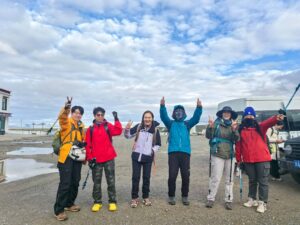
Mountaineering is an extreme exercise for the body and the mind, especially at 5,000 meters above sea level where the environment is unpredictable. That's why CITS China2Go Insist on the use of Small group of 6 persons The core reason for the
The tour guide can take care of you with precision: In a large group of 10~20 people, the tour guide cannot take care of the small changes in each person's body. In small groups of 6 people, our guides can monitor the condition and physical strength of each member at any time, and check your blood oxygen regularly to ensure that you are in good condition for the plateau.
Flexible logistic support: It's very hard to go through the mountain, only a small tour guide can take care of you.
Safeguarding the quality of pilgrimage: Only in the atmosphere of a small group, the tour guide can explain the legend of the sacred mountain in detail, so that your Horse Year mountain climbing is not just walking, but a high-quality, warm depth of pilgrimage.
Best season to change mountains: Mastering the rhythm of sacred mountains
Choose the right season.It's the first step to a successful turnaround.The climate in the Ali region is volatile.The following time slots are recommended:
May-June (around Saga Dawa Festival): The ice is starting to melt.The climate is most stable.Air transparency is extremely high.It is the best time to see the whole of the Gang Rinpoche.
July – August: Tibet enters the rainy season.The roads are muddy.More clouds and fog.Special attention should be paid to lightning protection and wading in the rain.However, the vegetation is greener at this time.Oxygen content is slightly higher.
September – October: Autumn is in the air.The atmosphere is stable.It is the best time for photographers to capture the reflection of the sacred mountain and the starry sky.It is also a popular month for pilgrimages.
Winter: The snow has closed the mountains.Extremely low temperatures and unpredictable risks.For safety reasons.CITS It is not recommended for general travelers in winter.
Preparation Tips Before the Kora
1. Physical Training
It is very helpful if you have a regular exercise routine. But a special warning:High-intensity muscle building training is not recommended one month before the trip.This is because increased muscle mass will increase the body's oxygen consumption. This is because the increase in muscle mass will increase the body's oxygen consumption, which may in turn increase the risk of high blood pressure. It is recommended to focus on aerobic endurance and respiratory conditioning exercises.
2. Professional equipment list
Layering clothes: Strictly follow the "Three Layers Dressing Method" (sweat layer, warm layer, windproof and waterproof jacket) to cope with the huge temperature difference between morning and evening in the Ali region.
Foot Support: Always wear professional non-slip hiking shoes and hiking poles. When walking long distances, trekking poles can effectively reduce the burden on your knees and ensure safety.
Must-haves: Headlamp (for early morning departure on D2), thermos bottle (for warm water), and essential personal medication.
Energy supply: It is recommended to carry nuts, energy bars and high glucose concentration to replenish lost energy.
Electricity demand: Although charging is available at some of the rest stops, the demand during the horse race is high, so be sure to bring plenty of mobile power (chargers) and multi-outlet plugs.
3. Plateau adaptation
As Ali is at a very high altitude, we recommend that you start your trip atLhasa(Stay at least one day at 3,650m for "stepped acclimatization" before moving to higher altitudes. Carry with you medication for high altitude sickness and emergency oxygen bottles in case of emergency.
How to Plan Your Tibet Itinerary for the Year of the Horse
Transmigration in the Year of the Horse is not only a challenge, but also an extraordinary baptism that cleanses the soul. It is a lifelong dream of many people to complete the Mount Kailash in the Year of the Horse and receive thirteen times the merit and blessings.
We propose to plan 3 days Completion of the entire itinerary (other itineraries are recommended to add up to about 14 days). This is not to slow down the progress, but to ensure that every guest can experience the solemnity and shock of the sacred mountain in a safe physical condition.
Suggested Route: Starting from Lhasa, you will travel through Shigatse and Gyirong to reach Ali. If you are interested in history, you can visit the ruins of the Guge Dynasty; if you prefer nature and border culture, we recommend traveling toGeelongThere you can witness the wonders of the snow-capped forests on the border of Nepal and Tibet.